
Die Singphoniker
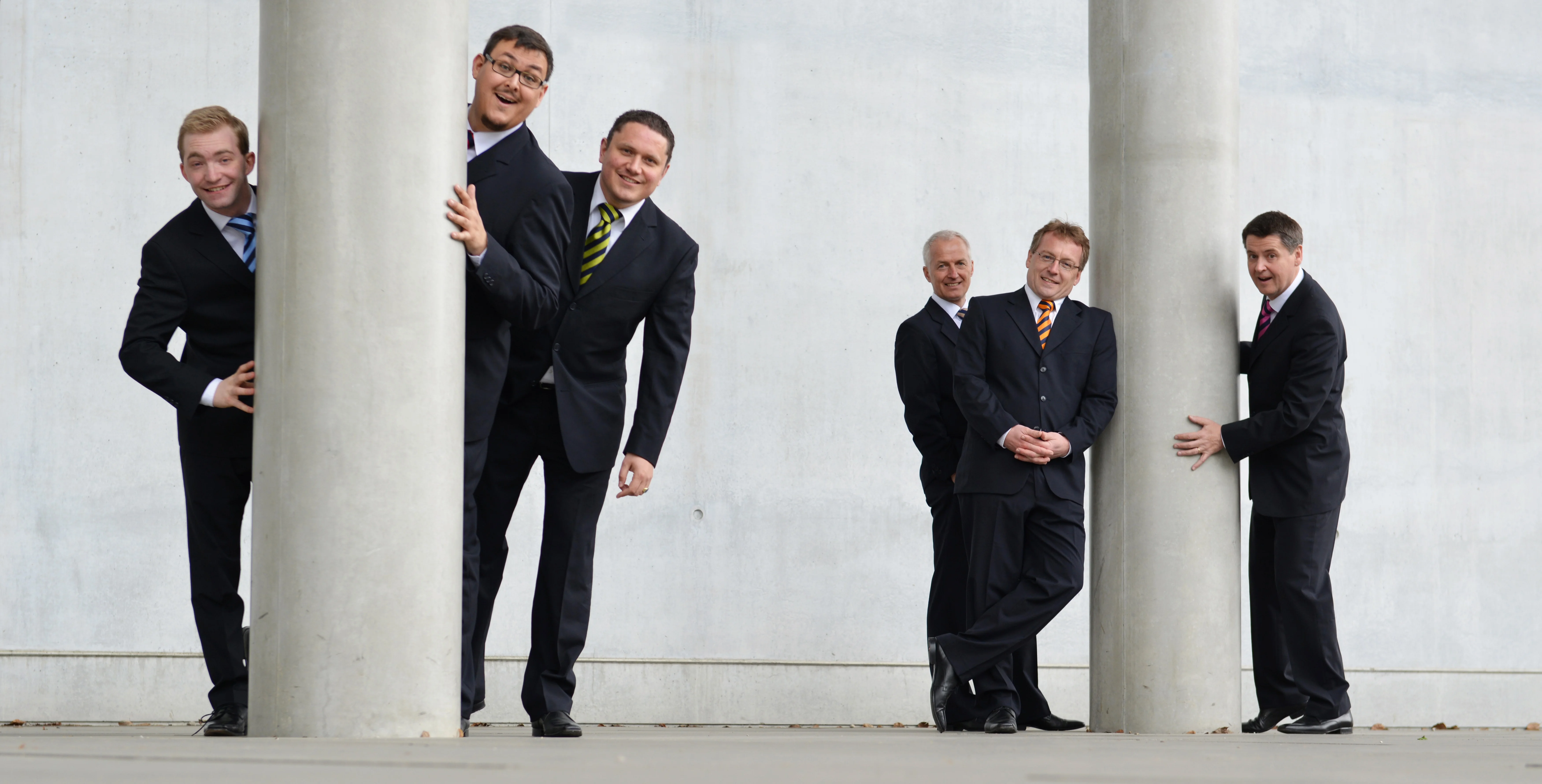
Image from Wikipedia
Image from Wikipedia
The Singphoniker – The Munich Vocal Soloist Ensemble with Sonic Culture, Charm, and Historical Depth
From Munich's Insider Tip to an Institution of A Cappella Art
The Singphoniker have represented vocal excellence, stylistic curiosity, and a distinctive stage presence for four decades. Founded in 1982 by six students from the Munich University of Music, the men's sextet evolved from an inspired university project into one of Europe's most distinguished vocal ensembles. Their musical career narrates a story of careful artistic development: from the roots in the German tradition of vocal chamber music to the rediscovery of forgotten treasures and newly composed works by contemporary composers. With over 1,300 concerts in 29 countries, programs ranging from Gregorian chant to pop, and an award-winning discography, the Singphoniker have a lasting impact on the A-cappella landscape.
Biography: Foundation, Mission, and Artistic Signature
Founded as a model of the Comedian Harmonists, the Singphoniker sought their own sound from the beginning: not imitation, but an authentic German tradition of vocal chamber music for male voices. The ensemble blended solo vocal colors into a homogeneous overall sound and early on integrated the piano part as a coloristic enhancement – a characteristic feature that continues to shape their programming and arrangement aesthetics today. Their reputation grew quickly, leading to international tours across Europe, the USA, and beyond. Contemporary composers such as Enjott Schneider, Max Beckschäfer, and Wilfried Hiller wrote for the group; in 2005, the Singphoniker participated in the premiere of Hiller's church opera "Augustinus," underscoring their claim to productively connect historically grown elements with contemporary art.
Members and Vocal Architecture of the Ensemble
The current lineup combines six characterful solo voices that merge into a finely balanced sound architecture during ensemble work: Johannes Euler (Countertenor), Daniel Schreiber (Tenor), Henning Jensen (Tenor), Berno Scharpf (Baritone and Piano), Marlo Honselmann (Bass-Baritone), and Florian Drexel (Bass). This configuration allows for differentiated vocal lead, chamber-musical breathing, and an elegant articulation balancing text comprehensibility and legato culture – qualities that are equally present in repertoire spanning from the Renaissance to late Romanticism and complex modern compositions.
Repertoire Compass: From Gregorian Chant to Pop – Curated, Contextual, Communicative
In their varied programs, the Singphoniker connect vocal polyphony of the Renaissance, romantic male choirs, sacred music of the 20th century, and intelligent crossover arrangements. Their dramaturgy creates bridges – from the sonically ascetic chorale to song-like intimacy and close-harmony nuances with a wink of humor. This curatorial signature is charmingly moderated on stage, bringing music history into a vibrant, audience-friendly present. The range extends from Orlando di Lasso to Schubert, Mendelssohn, and Brahms, as well as Strauss, Reger, Britten – and in specially arranged sets even to Cole Porter, Gershwin, or Simon & Garfunkel.
Discography: Reference Recordings and Award-Winning Cycles
The Singphoniker's discography – over 30 productions, primarily with cpo and Oehms Classics – is considered a treasure trove of exemplary interpretations. Their recording of Grieg's partsongs for male voices has received international acclaim; critics highlighted the "impeccable vocalism" and "ensemble unity" that shape a seamlessly breathing sound instrument from six voices. Equally significant is the complete collection of multi-voiced songs by Franz Schubert for male voices – a major project that not only demonstrates editorial precision but also combines the historical performance practice of salon-style vocal culture with modern precision. Furthermore, albums such as "Singphonic di Lasso," "Reger & Strauss: Singphonic," the anniversary compilation "Die Singphoniker – 25 Years," and "Gregorian Choral from St. Gallen" mark depth of repertoire and stylistic range.
Awards: Authority through Prizes and International Recognition
The artistic authority of the ensemble is reflected in its awards: in 1988, the Singphoniker won 1st prize at the international choir competition in Gorizia. In 1994, they received the Diapason d’or de l’année for "Singphonic Mendelssohn," and in 1997, the prestigious Grand Prix du Disque "Charles Cros" (Radio France) for the first complete recording of all Schubert songs for male voices. Awards like these anchor the group in European choral and vocal history, documenting consistency, repertoire responsibility, and interpretive substance.
Critical Reception: Sound Aesthetics Between Chamber Music and Rhetorical Clarity
Specialized press and reviewers describe the Singphoniker as an ensemble that unites chamber music intelligence with expressive text declamation. For the Grieg partsongs, critics attested a "world-class" production with ideal acoustics, "outstanding ensemble singing," and a balance that forms touching tableaux from text, harmony, and vocal lead. The complete Schubert recording was also highlighted for its "string ensemble" quality of sound and style-conscious, text-close interpretation – an example of how historical knowledge and modern production techniques merge into a timeless reference.
Compositional Commissions and Collaboration with Contemporary Artists
The list of compositional "originals" for the ensemble emphasizes the relevance of the Singphoniker in the contemporary vocal scene: Enjott Schneider wrote the "Variations on Love" (premiere 1984), Max Beckschäfer dedicated multi-voiced cycles such as "Frammenti e Stanze di Michelangelo" and "Shakespeare Songs" to the sextet, while Wilfried Hiller developed the large-scale church opera "Augustinus" in collaboration with the singers. These collaborations ensure that the repertoire for male voices remains lively, continues to expand, and connects with today's sonic and linguistic spaces.
Recent Activities: Programs, Concert Formats, and Seasons 2025
Current projects showcase the ongoing stage presence: New Year's Eve and end-of-year programs in Munich combine popular vocal art from five centuries with the typically singphonic mix of elegance and spirit. Castle concerts, New Year's galas, and festival appearances – such as in Bamberg, Oberschleißheim, Grünstadt, and Echternach – illustrate the ensemble's energetic live culture. These concerts demonstrate how carefully the Singphoniker continue to nurture their canon from the Renaissance, Romanticism, sacred modernity, and pointed crossover arrangements while making it fruitful for new audiences.
Style and Technique: Sound Control, Intonation, Text – The Singphonic "Method"
In their interpretation, the Singphoniker emphasize vocal sound control that prioritizes intonation and overtone balance over virtuosic effects. The voice groups articulate with text awareness and differentiation, maintaining transparency in polyphonic structures while leading romantic harmonies with elastic phrasing. In arrangements, they connect historically informed practice with modern presence: the piano supports as a harmonic foundation, adds coloristic accents, and gives the overall architecture an orchestral dimension. Thus, program flows emerge that tell stories – stylistically precise, dramaturgically pointed, and emotionally accessible.
Cultural Influence: Bridging the Archive and the Present
The Singphoniker perform a cultural translation work: they bring repertoire outside the major canons into concert life, cultivate romantic male choral art beyond national stereotypes, and simultaneously open doors to the present. Through premieres, carefully edited editions, and internationally recognized recordings, they recontextualize the genre of male voice ensembles – as a vibrant art form that resonates in liturgy, salon, concert hall, and pop aesthetics alike. Their programs show how traditions do not stagnate in museums but instead blossom into a compelling, contemporary musical language.
Voices of the Fans
Fan reactions clearly show: The Singphoniker enchant audiences worldwide. A YouTube comment sums it up: "One of the best-balanced ensemble sounds I've ever heard – goosebumps with every phrase." Another writes: "Precision, warmth, humor – this mix is addictive!" And a listener summarizes: "This is what lived vocal art sounds like: historical depth, modern drive, touching musicality."
Conclusion: Why You Must Listen to the Singphoniker
The Singphoniker unite experience and expertise, repertoire responsibility, and stage elegance. Those who wish to know what intelligently curated vocal music sounds like—music that connects stylistic worlds and evokes emotions—will find here a reference ensemble. Their discography documents interpretive benchmarks; their concerts show how music history becomes present. Recommendation: Experience the Singphoniker live – and let yourself be captivated by their sound culture, precision, and joy in performing.
Official Channels of Die Singphoniker:
- Instagram: No official profile found
- Facebook: No official profile found
- YouTube: https://www.youtube.com/@Singphoniker
- Spotify: No official profile found
- TikTok: No official profile found
Sources:
- Die Singphoniker – Official Website
- Carus Verlag – Artist Profile Die Singphoniker
- ClassicsToday – Review: Grieg Partsongs (David Vernier)
- BBC Music Magazine / classical-music.com – Review: Schubert Complete Partsongs (Hilary Finch)
- Apple Music – Die Singphoniker (Artist Profile and Discography)
- Apple Music – Reger & Strauss: Singphonic (2003)
- Apple Music – Singphonic di Lasso (2002)
- Apple Music Classical – Gregorianischer Choral aus St. Gallen (2013)
- MünchenMusik – A-cappella to Conclude the Year (31.12.2025)
- in München – Castle Concert Oberschleißheim (12.07.2025)
- termine.de – New Year's Gala Concert Bamberg (01.01.2025)
- Treffpunkt Pfalz – Concert Grünstadt (18.01.2025)
- termine.de – Concert Echternach (24.04.2025)
- Wikipedia: Image and Text Source
Upcoming Events
The Singphoniker: New Year Concert 2026 in Landshut
Celebrate the beginning of the year in the Town Hall Grand Hall: The Singphoniker combine Renaissance, Romanticism, and Pop into a sparkling concert experience. 25.01.2026, 17:30, from €38. Pure emotion – secure tickets now. #Landshut
The Singphoniker: Cheers, New Year!
Celebrate the New Year with The Singphoniker in the Town Hall Festivity Hall Landshut: stylish, emotional, virtuosic. 25.01.2026, 19:30, Tickets from 38 €. Experience, enjoy, recommend. #LandshutLive