
Die Seilschaft
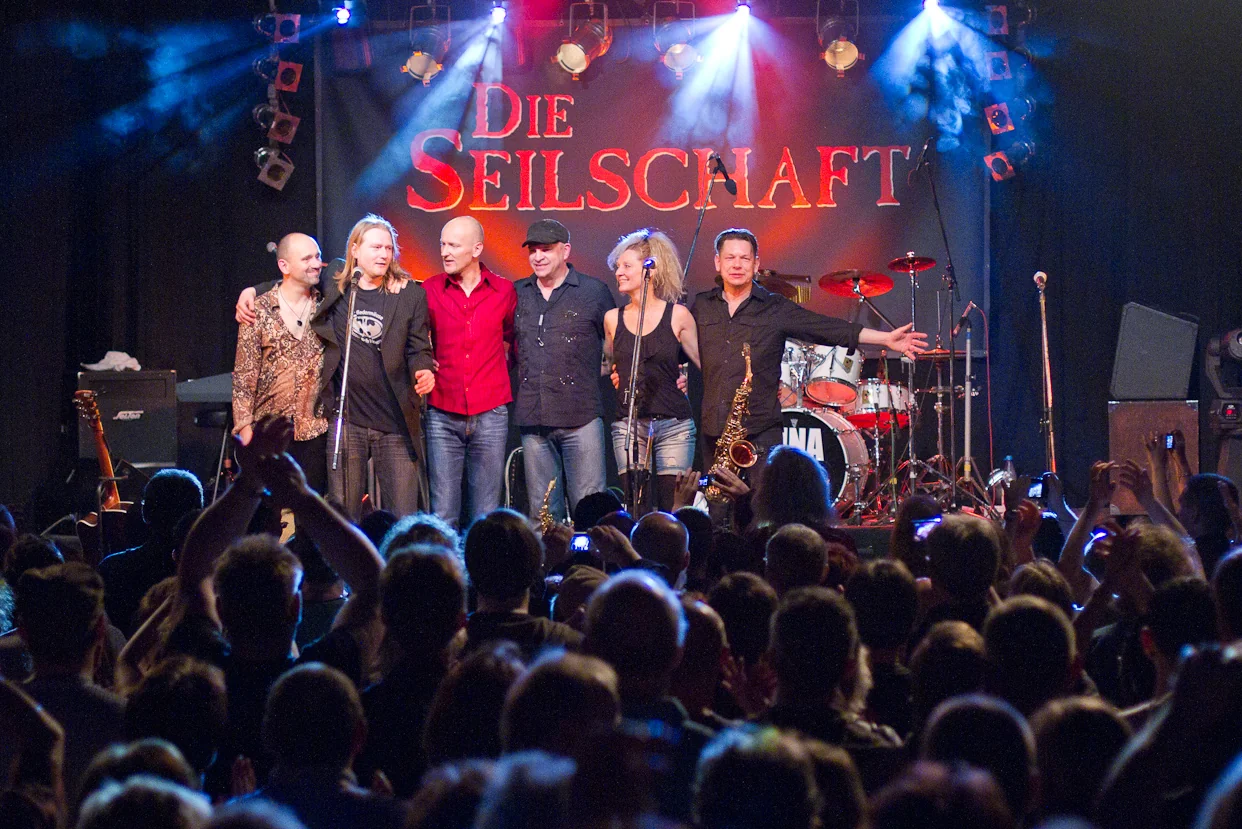
Image from Wikipedia
Image from Wikipedia
The Seilschaft – East German Rock History between Gundermann Legacy and Independent Present
A band with attitude, heart, and unmistakable stage presence
The Seilschaft is one of the names in German rock music that extends far beyond mere nostalgia. Founded in 1992 in Berlin, the band initially gained notoriety as the backing group for singer-songwriter Gerhard Gundermann, helping to shape the sound of an entire generation. Since the reunification in 2008, with Christian Haase as the frontman, the formation has once again emerged as an independent East German rock band, merging cultural memory with new musical energy.
When listening to The Seilschaft, one encounters not a calculated retro act, but rather a musical career where lyrics, attitude, and arrangement are closely intertwined. The band stands for honest rock music with profound German lyrics, folk influences, dynamic live arrangements, and a stage presence that has developed since the 1990s. This blend explains why The Seilschaft continues to be perceived as a vibrant force in the German music scene.
The Beginnings: From Live Formation to Influential Band around Gerhard Gundermann
The story of The Seilschaft begins in 1992 when Gerhard Gundermann sought a new band to bring his material to the stage after the recordings of Einsame Spitze. This collaboration quickly evolved into more than just a support relationship: an artistic unity emerged that combined tours, studio work, and co-writing. By 1993, the next chapter was developed and recorded in the studio with Der 7te Samurai.
In the following years, a characteristic sound took shape, marked by influences from the E Street Band and traditional folk music. Musicians like Michael Nass, Mario Ferraro, and Andreas Wieczorek expanded the palette with keyboards, compositions, and folkloric colors. Thus, The Seilschaft developed into an ensemble that compellingly merged rock, poetry, and musical precision.
Career Highlight in the 1990s: Songs, Albums, and Awards
In 1995, Frühstück für immer was released, an album that garnered attention not only artistically but also critically. For this longplayer, the duo received the German Record Critics’ Award in 1995, after having already won the annual award of the Liederbestenliste for Sehnsucht nach dem Rattenfänger in 1994. This recognition points to the special quality of the lyrics, the production, and the musical implementation.
Until Gundermann's death in June 1998, the band played numerous concerts across Germany and released studio and live recordings. In 1997, Engel über dem Revier was released as Gundermann’s last studio album, followed by the live recording Live im Tränepalast in 1998. The band's impact was evident even in the context of other major names: in the 1990s, they opened for Bob Dylan and Joan Baez.
The Turning Point in 1998 and the Long Hiatus
The death of Gerhard Gundermann in June 1998 marked a deep cut in the band's history. For many listeners, this concluded a formative phase of the East German rock and singer-songwriter scene. The Seilschaft itself later described this situation as a loss of a way of life rather than just a band identity.
In the years that followed, the members went their separate ways: projects, other bands, and new configurations dominated that time. Mario Ferraro and Andreas Wieczorek founded Polkaholix, while Michael Nass worked with BAP and for other artists as a songwriter and producer. However, this biographical hiatus ultimately sharpened the band’s profile in retrospect, as it made the musical independence of its members visible.
The Comeback from 2008: Christian Haase and the New Seilschaft
It was not until 2008 that the band returned to the stage at the memorial concert Alle oder Keiner in Berlin's Columbiahalle. Christian Haase joined as singer and guitarist, forming a new Seilschaft together with the remaining lineup. This reunion was not merely a repertoire project, but a continuation of an artistic line under changed circumstances.
Since then, the band has embraced a dual identity: respect for the Gundermann legacy while maintaining a contemporary presence with new songs. The official band page describes the current program Gegen den Strom as an acoustic format that works with profound German lyrics, folk elements, and an intense live atmosphere. This is where the tension of this phase lies: memory is organized not as a museum piece, but as vibrantly alive.
New Releases: From LIVE IN BERLIN! to SAMURAI 30/7
In 2020, the DVD/Double-CD LIVE IN BERLIN! was released, presenting 25 songs as a cross-section of the repertoire. In 2021, the studio album Dein Paket followed, announced with the singles Dein Paket and Hand aufs Herz. The band connected this release with media presence, TV appearances, and a tour that anchored the new material in a live context.
In 2023, the singles Wenn man liebt and Der Drops ist gelutscht were released, followed by SAMURAI 30/7 in 2024. The album was created for the 30th anniversary of Der 7te Samurai and featured guests like Wolfgang Niedecken and Uwe Hassbecker. In November 2023, the band returned to the studio, demonstrating their ongoing commitment to artistic development.
Discography: An Overview of Key Albums and Singles
The discography of The Seilschaft tells a clear developmental story. Following the early Gundermann years with Der 7te Samurai, Frühstück für immer, and Engel über dem Revier, there were live documents, tribute releases, and the resumption of the band's history with a new frontman. Notably, the band takes both archival preservation and current songwriting very seriously.
Central audio albums also include LIVE IN BERLIN!, Dein Paket, and SAMURAI 30/7. Among the singles, Dein Paket, Hand aufs Herz, Wenn man liebt, and Der Drops ist gelutscht stand out. These releases showcase a band that does not become stagnant in the past, but rather continuously expands and updates its repertoire.
Musical Development: Rock, Folk, and German Lyric Culture
Stylistically, The Seilschaft moves between rock, folk, and song-oriented German pop culture. The sound is based on strong guitars, organic keyboard layers, punchy drums, and melodic arrangements that provide space for the lyrics. The music never feels overloaded; it aims for directness, atmosphere, and emotional clarity.
The band draws audible inspiration from American song culture, without denying its East German roots. Particularly, the blend of Springsteen-like energy, folkloric vibrancy, and precision in the German language is what makes it appealing. In this form, a musical signature emerges that convinces both on large stages and in acoustic settings.
Cultural Influence and Reception in Press and Audience
The Seilschaft has established itself as an important bearer of the Gundermann legacy while also maintaining its own relevance. The success of the film Gundermann and the new attention it brought to the singer-songwriter’s biography further amplified the band’s visibility. In 2019, The Seilschaft presented an award to Alexander Scheer at the Bavarian Film Award, highlighting their cultural standing in the context of Gundermann’s reception.
The press also responded positively to the later releases. The band reported a recommendation for the Liederbestenliste in connection with Wenn man liebt, and the reactions to Dein Paket were reported as positive in the media, according to the band. This creates an image of authority and reliability: The Seilschaft is not only historically relevant but remains capable of discussion.
Current Projects: Against the Current and the Ongoing Live Experience
Currently, the acoustic program Gegen den Strom shapes the band’s public profile. This format encapsulates the strengths of The Seilschaft: lyrics with a stance, a focused stage presence, musical maturity, and an audience that experiences the songs as personal companions. Official communication also shows that the band continues to work on concerts, new dates, and their live cosmos.
Thus, The Seilschaft remains a formation that does not simply preserve tradition but uses it productively. They connect the documentary memory of a formative German rock history with new songs and current performances. This balance between past and present is what makes their musical value so stable.
Conclusion: The Seilschaft is exciting because here is a band that not only manages its own heritage but transforms it into new forms. Between Gundermann history, the Christian Haase phase, and current releases, an artist profile emerges filled with depth, authenticity, and cultural significance. Those seeking powerful German rock music with attitude and heart should experience The Seilschaft live.
Official Channels of Die Seilschaft:
- Instagram: No official profile found
- Facebook: No official profile found
- YouTube: No official profile found
- Spotify: No official profile found
- TikTok: No official profile found