
Dagmar Leupold
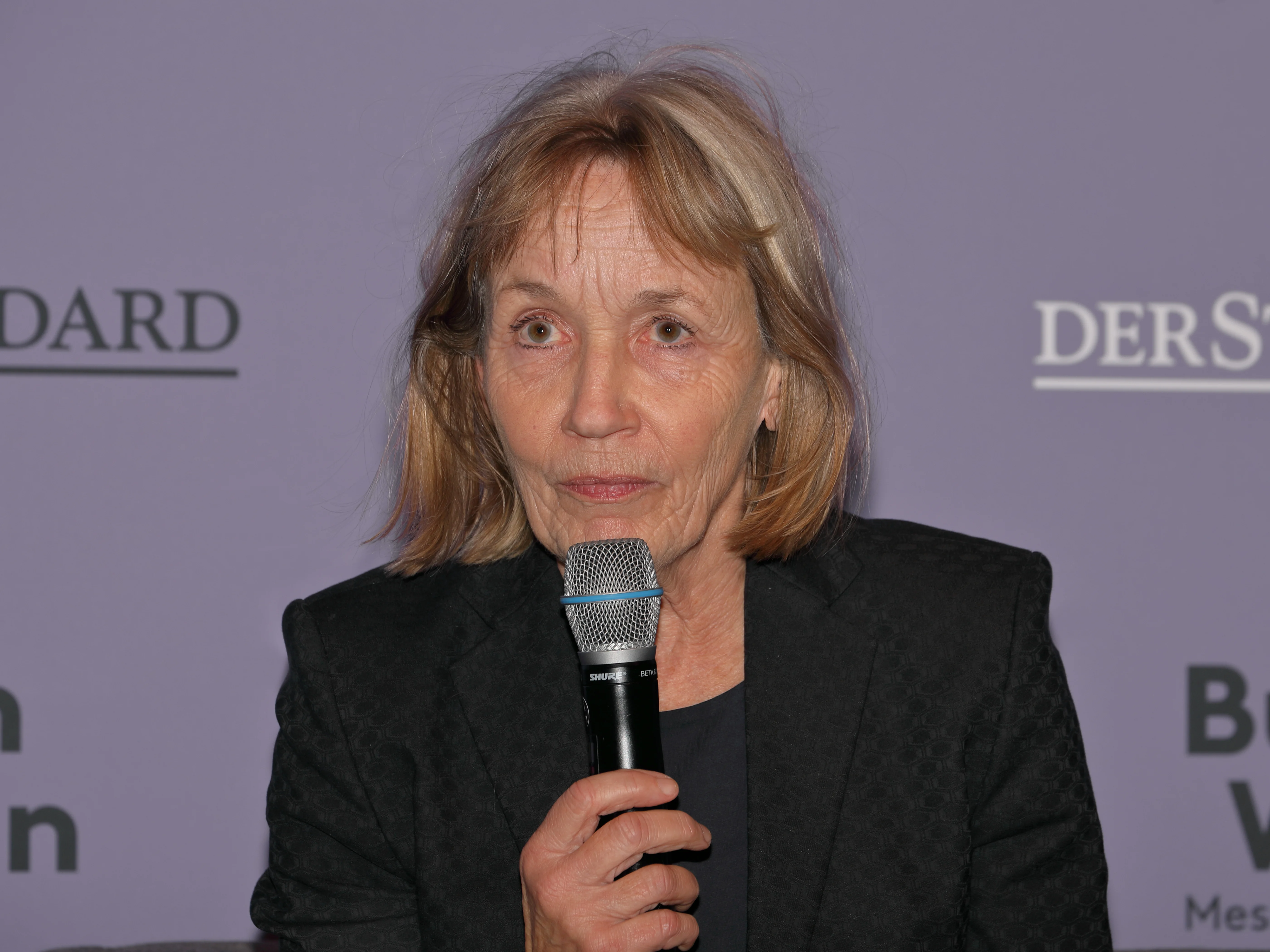
Image from Wikipedia
Image from Wikipedia
Dagmar Leupold: Language Art, Memory, and Literary Precision
An author who makes the unspeakable audible
Dagmar Leupold, born on October 23, 1955, in Niederlahnstein, is one of the most prominent German authors of her generation. Her work spans novels, poetry, storytelling, and essays, characterized by an extraordinary sensitivity to memory, language, and the fragility of biographical truth. As a writer and translator, she lives in Munich and has established a firm position in contemporary German-language literature with her clear, reflective, and often intensively condensed prose. ([de.wikipedia.org](https://de.wikipedia.org/wiki/Dagmar_Leupold))
Biographical Roots and Academic Influence
Leupold studied German Studies, Philosophy, and Classical Philology in Marburg, Tübingen, and New York. This combination of philological rigor, philosophical reflection, and international perspective continues to shape her writing today. Early in her work, an interest in language as a means of understanding, form as a space for thought, and characters whose inner lives are revealed not loudly but with fine psychological precision became evident. ([jungundjung.at](https://jungundjung.at/verfasser/leupold-dagmar/))
From 2004 to 2021, she led the Studio Literature and Theater at the University of Tübingen, playing a significant role in the literary scene for many years. Additionally, she has been a member of the PEN Center Germany since 1998 and the executive chair of the German Literature Fund. These institutional roles underscore her authority as a literary voice that not only writes but also actively shapes the cultural discourse. ([de.wikipedia.org](https://de.wikipedia.org/wiki/Dagmar_Leupold))
The Literary Breakthrough and Development of the Work
Leupold's literary career began as early as the late 1980s and has continuously developed into a body of work notable for its thematic and formal range. Earlier titles like Wie Treibholz and Edmond. Geschichte einer Sehnsucht already mark the span between poetic condensation and narrative expansiveness. Later, she increasingly expanded her writing towards historical, familial, and societal memory, without ever sacrificing linguistic precision for mere action. ([de.wikipedia.org](https://de.wikipedia.org/wiki/Dagmar_Leupold))
This development is particularly visible in novels such as Unter der Hand, Die Witwen, Dagegen die Elefanten!, Lavinia, and now Muttermale. Her texts do not pursue linear effects but rather open experiential spaces where past, linguistic gestures, and family background intertwine. This is precisely where the strength of her literary signature lies: she does not build on sensationalism but rather on layers of meaning. ([de.wikipedia.org](https://de.wikipedia.org/wiki/Dagmar_Leupold))
Works between Novel, Poetry, Essay, and Translation
Dagmar Leupold writes novels, short stories, poems, and essays; this diversity of genres is not just juxtaposed but part of a consistent artistic development. Her poetry reflects the same attention to rhythm, condensation, and imagery that characterizes her prose. The collection Small Talk makes clear how much she perceives poetic miniatures as a diagnostic tool for the present: everyday life, war, weather, language, and social disruption appear there in a tight yet highly concentrated context. ([jungundjung.at](https://jungundjung.at/verfasser/leupold-dagmar/))
As a translator and literarily educated author, Leupold also operates in a space where precise word choice and philological awareness are indispensable. As a result, her texts feel controlled yet never sterile, reflective yet never detached. For her, literary form is always tied to experience and gains its tension from it. ([jungundjung.at](https://jungundjung.at/verfasser/leupold-dagmar/))
Current Projects and New Publications
Among the latest and currently particularly relevant publications is the novel Muttermale, set to be released in 2025 or announced for September 2025, and nominated for the Bavarian Book Prize 2025. The book approaches the mother figure through remnants of memory, objects, words, and buried biographical traces, enriching Leupold's central family of themes with a particularly intimate yet historically charged perspective. Critics have highlighted the stylistic control, psychological accuracy, and linguistic power. ([jungundjung.at](https://jungundjung.at/muttermale/))
Small Talk was also an important current reference point in the author's work in 2025. The collection was presented by the publisher as a poetry anthology that provides a language for societal powerlessness, hope, and resistance against banal chatter. In the literary accompanying texts and reviews, Leupold's poetry is described as attentive, politically aware, and formally controlled. ([jungundjung.at](https://jungundjung.at/small-talk/))
Awards, Nominations, and Institutional Recognition
Dagmar Leupold's work has been awarded multiple times and has received consistent recognition from the literary community and critics over the years. Key milestones include the aspekte Literature Prize in 1992, the Georg-K.-Glaser Prize in 2007, the Tukan Prize in 2013 for Unter der Hand, and the Literature Prize of the City of Munich in 2023. These awards mark not just individual successes but showcase a literary continuity that has lasted for decades. ([jungundjung.at](https://jungundjung.at/verfasser/leupold-dagmar/))
Additionally, several nominations for the German Book Prize have been recorded: Unter der Hand in 2013, Die Witwen in 2016, and Dagegen die Elefanten! in 2022. Such nominations demonstrate that Leupold's writing is regarded as relevant and worthy of discussion not only in literary circles but also in the broader cultural commentary. ([de.wikipedia.org](https://de.wikipedia.org/wiki/Dagmar_Leupold))
Style, Themes, and Cultural Influence
Leupold's style is characterized by linguistic precision, analytical depth, and a striking sensitivity to historical and familial fractures. In Muttermale, she writes about war, flight, foreignness, and the transmission of trauma across generations; the text gains its power precisely from the fact that it does not loudly proclaim the concealed but carefully reveals it. Reviews from FAZ, ZEIT, Deutschlandfunk, and Süddeutsche Zeitung emphasize the formal cohesion, poetic accuracy, and unfaltering clarity of her language. ([jungundjung.at](https://jungundjung.at/muttermale/))
This cultural approach also manifests in Small Talk: the poems respond to political tensions, experiences of war, and societal dehumanization without tipping into slogans. Instead, texts arise that read the mundane as a seismographic surface and transform it into insight through poetic form. Thus, Leupold belongs to those authors who do not illustratively depict the present but penetrate it linguistically. ([jungundjung.at](https://jungundjung.at/small-talk/))
Final Image: An author with quiet strength and great impact
Dagmar Leupold fascinates with the rare combination of intellectual sharpness, lyrical density, and narrative empathy. Her work demonstrates how literature can organize memory, break the silence of words, and transform even familial trauma into precise, moving form. Those seeking contemporary literature with depth, stylistic awareness, and psychological tension will find in her a distinctive voice. A reading with Dagmar Leupold promises not just literature but an intense encounter with language as an art form. ([de.wikipedia.org](https://de.wikipedia.org/wiki/Dagmar_Leupold))
Official Channels of Dagmar Leupold:
- Instagram: no official profile found
- Facebook: no official profile found
- YouTube: no official profile found
- Spotify: no official profile found
- TikTok: no official profile found
Sources:
- Wikipedia – Dagmar Leupold
- Jung und Jung Verlag – Dagmar Leupold
- Jung und Jung Verlag – Muttermale
- Jung und Jung Verlag – Small Talk
- Jung und Jung Verlag – Dates
- Bavarian State Ministry for Science and Art – Literature Awards of the Free State of Bavaria
- Süddeutsche Zeitung – Noteworthy Books by Munich Authors
- DIE ZEIT – Muttermale by Dagmar Leupold