
Astor Piazzolla
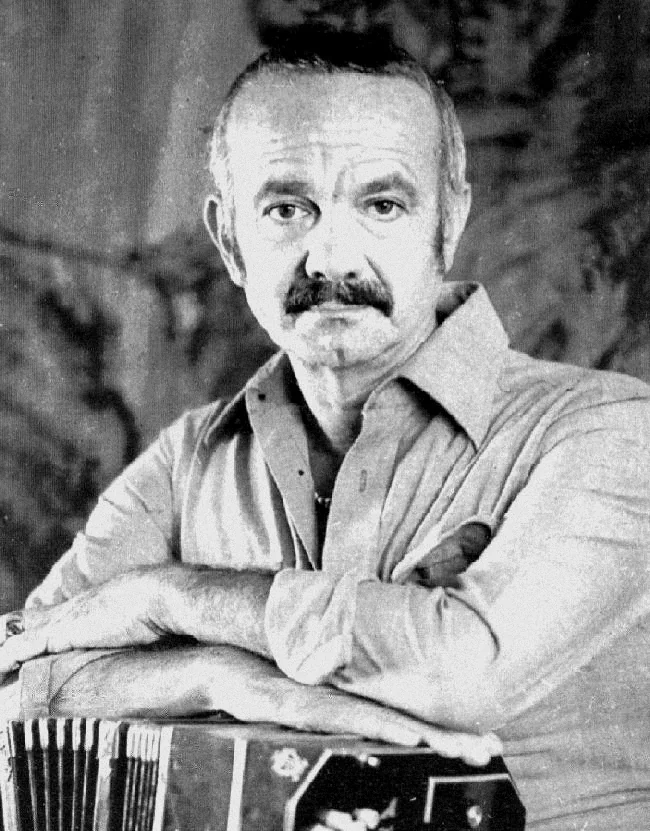
Image from Wikipedia
Image from Wikipedia
Astor Piazzolla – The Architect of Tango Nuevo
Astor Piazzolla: The Revolutionary of Tango Who Turned Tradition into Future
Astor Piazzolla is one of the most influential musicians of the 20th century. The Argentine bandoneon player and composer fused traditional tango with elements of jazz and classical music, creating a new, distinctive sound: Tango Nuevo. Born on March 11, 1921, in Mar del Plata and died on July 4, 1992, in Buenos Aires, he left a profound mark on an entire era and transformed the perception of tango worldwide. ([britannica.com](https://www.britannica.com/biography/Astor-Piazzolla?utm_source=openai))
Early Years Between Mar del Plata and New York
Piazzolla's biography does not begin in the milieu of traditional milongas but rather in the transatlantic tension between Argentina and the USA. In 1925, his family moved to New York, where he grew up in the Lower East Side and Harlem, coming into contact with diverse musical worlds from a young age. His father gifted him his first bandoneon in childhood; soon after, lessons, early recordings, and exposure to a musically open environment followed, which significantly influenced his later artistic development. ([piazzolla.org](https://www.piazzolla.org/biography/biography-english.html?utm_source=openai))
This early shaping is central to Piazzolla's understanding of style. On one hand, there was the emotional power of tango; on the other, the structure of European art music and the freedom of jazz. It was from this friction that the signature of a composer emerged who not only arranged but reimagined musical forms and liberated the bandoneon from its traditional accompaniment role. ([piazzolla.org](https://www.piazzolla.org/biography/biography-english.html?utm_source=openai))
The Breakthrough: From Orchestra to His Own Musical Revolution
In the 1940s, Piazzolla initially worked in established tango formations, gaining experience as an arranger and bandoneonist. The real turning point came in the mid-1950s when he returned from a stay in Paris with a radically new concept. In 1955, he founded the Octeto Buenos Aires, an ensemble that, with its chamber music instrumentation, electric guitar, and the departure from the traditional orquesta típica, ushered tango into a new era. ([piazzolla.org](https://www.piazzolla.org/biography/biography-english.html?utm_source=openai))
This step initially met with fierce rejection. Orthodox tango supporters viewed his music as an assault on tradition, but Piazzolla remained steadfast and consistently continued his artistic development. It is precisely this determination that grants him authority in music history: he did not merely reproduce a form, but transformed it with compositional precision, rhythmic tension, and harmonic daring. ([piazzolla.org](https://www.piazzolla.org/biography/biography-english.html?utm_source=openai))
The Sound Language of Tango Nuevo
Piazzolla's Tango Nuevo is more than a style; it is an attitude. His compositions combine complex harmonies, contrapuntal thinking, abrupt changes in dynamics, and an intensity that recalls the drama of European modernism. At the same time, the tango as body music remains audible: the pulse, the syncopations, the melancholic tension, and the urban pathos underpin each phrase. ([britannica.com](https://www.britannica.com/biography/Astor-Piazzolla?utm_source=openai))
Particularly formative was the quintet format in which Piazzolla combined bandoneon, violin, piano, electric guitar, and double bass into a tightly fused ensemble. This model allowed for greater freedom in improvisation, arrangement, and rhythmic articulation, becoming a hallmark of his career. Later works such as Adiós Nonino, Libertango, Oblivion, and Le Grand Tango demonstrate how adept Piazzolla was at shifting between intimacy and orchestral grandeur. ([piazzolla.org](https://www.piazzolla.org/biography/biography-english.html?utm_source=openai))
Discography, Milestones, and International Recognition
The official discography documents an exceptionally productive career that began in the 1940s and yielded new formations, recordings, and sound experiments over decades. The collection on the official Piazzolla site references early recordings with Fiorentino y su Orquesta Típica, important developmental phases in Buenos Aires, New York, and Europe, as well as the works that ultimately cemented Piazzolla's name internationally. ([astorpiazzolla.com](https://astorpiazzolla.com/discography/))
Among the best-known pieces are Adiós Nonino, which Piazzolla wrote in New York in 1959 after the death of his father, and Libertango, which became a global key piece of Tango Nuevo. Critics and music journalists frequently describe his works as an expression of a unique language whose influence extends far beyond tango. Reception ranges from classical concert stages to jazz and chamber music, from Gidon Kremer and Yo-Yo Ma to symphonic projects and crossover productions. ([piazzolla.org](https://www.piazzolla.org/biography/biography-english.html?utm_source=openai))
Style, Innovation, and Cultural Influence
Piazzolla changed not only the sound of tango but also its cultural status. Dance music became concert music, and popular entertainment evolved into a sophisticated repertoire for stages, studios, and festivals. Today, his music is considered a bridge between tradition and avant-garde, between Latin American identity and global modernity. ([piazzolla.org](https://www.piazzolla.org/biography/biography-english.html?utm_source=openai))
Even decades after his death, his influence remains vibrant. In 2025, an international tour by the Quinteto Astor Piazzolla demonstrated how strongly his work continues to be carried forward; the ensemble is regarded as the official custodian of his heritage and presented a program featuring key works such as Fugata, Escualo, Triunfal, and Adiós Nonino. Piazzolla's music remains not merely a relic but relevant, dynamic, and open to interpretation. ([elpais.com](https://elpais.com/america-colombia/2025-05-31/el-tango-inolvidable-de-astor-piazzolla-sale-a-gira-mundial-con-su-pasado-en-tres-fotos.html?utm_source=openai))
Current Projects and Releases in the Sign of His Legacy
Since Astor Piazzolla passed away in 1992, there have been no new works of his own in a strict sense. However, his legacy lives on through reissues, reinterpretations, and official legacy projects that regularly appear at festivals, concert halls, and specialized labels. The official website and the discography project on the Piazzolla Universe site document this continuous care for the oeuvre and make the historical depth of his music career visible. ([piazzolla.org](https://www.piazzolla.org/))
The ongoing presence in concert programs in 2024 and 2025 shows that Piazzolla exists not just as a historic name but as a living reference point for musicians of all generations. His compositions remain material for new arrangements, chamber music interpretations, and orchestral readings that continually re-examine Tango Nuevo. ([teatromassimocagliari.it](https://teatromassimocagliari.it/eventi/musica-quinteto-astor-piazzolla/?utm_source=openai))
Conclusion: Why Astor Piazzolla Continues to Electrify Today
Astor Piazzolla is fascinating because he did not merely preserve a tradition but renewed it with courage, expertise, and unwavering artistic vision. His works sound passionate, intellectual, urban, and deeply human at the same time. Those who want to understand how music can liberate itself from its history will find in Piazzolla one of the most impressive examples in music history. ([piazzolla.org](https://www.piazzolla.org/biography/biography-english.html?utm_source=openai))
Especially live, his compositions unfold their entire tension: the rhythmic sharpness, the breathless interplay, the shifts between tenderness and explosion. Astor Piazzolla remains an artist who should not only be heard but physically experienced, as his music only reveals its full emotional power in concert. ([elpais.com](https://elpais.com/america-colombia/2025-05-31/el-tango-inolvidable-de-astor-piazzolla-sale-a-gira-mundial-con-su-pasado-en-tres-fotos.html?utm_source=openai))
Official Channels of Astor Piazzolla:
- Instagram: https://www.instagram.com/astorpiazzollaoficial/
- Facebook: https://www.facebook.com/FundacionAstorPiazzolla/
- YouTube: No official profile found
- Spotify: https://open.spotify.com/intl-es/artist/7dsugSamBB7enWE2IrlbFg?autoplay=true
- TikTok: No official profile found
Sources:
- Piazzolla.org – Astor Piazzolla and his Tango Nuevo
- Piazzolla.org – Chronology of a Revolution
- Astor Piazzolla – Discography
- Britannica – Astor Piazzolla
- The Guardian – Piazzolla: Grand Tango review
- El País – Quinteto Astor Piazzolla on World Tour
- El País – Astor, Piazzolla Eternal
- Wikipedia: Astor Piazzolla
Upcoming Events
An Evening for Astor Piazzolla - CANCELLED -
Piazzolla's sound worlds would have enchanted Kassel: chamber music, tango nuevo, and subtle string colors. The evening on May 4, 2026 is cancelled. #Kassel #Piazzolla
Piazzolla – Young String Players with Energy
Tango, Bach, and young string players in St. Jakobus Church: Piazzolla in Bad Endorf promises an evening full of energy and tones. 16.05.2026, 20:00, admission free. #MusicSummer
Get to know pia x What the Antifeminism?!
An evening for all who want to understand antifeminism and rethink democracy. Freiburg on June 22, 2026, at 6:30 PM. Secure your spot now. #Freiburg #EngagedJune
Opera Workshop: María de Buenos Aires
Tango, dream, and theater heat at Theater Duisburg: The opera workshop on María de Buenos Aires makes Piazzolla's sound world tangible. Free entry, limited seats. #TheaterDuisburg #Tango
María de Buenos Aires
Astor Piazzolla
Maria of Buenos Aires
Astor Piazzolla
María de Buenos Aires
A feverish tango evening at the Duisburg Theater: María de Buenos Aires connects Piazzolla's sound world with poetic stage magic. 10.07.2026, starting at €78. #TangoOperita
Argentinian Tango Benefit Concert
Immerse yourself in the world of tango with the German-Argentinian Orchestra under Matías Vivot. An evening full of passion and culture.