
Andreas Schmidt (Schauspieler)
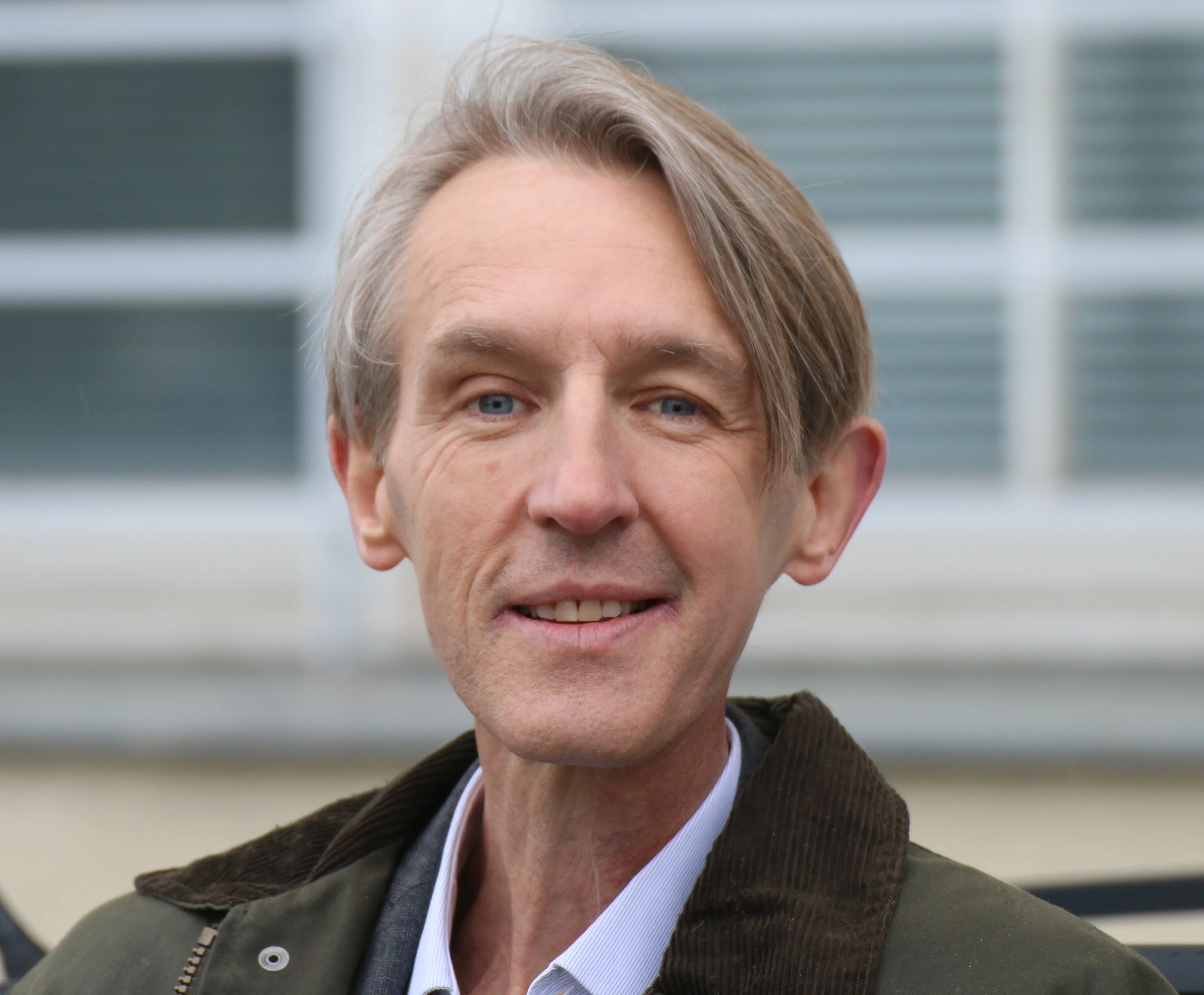
Image from Wikipedia
Image from Wikipedia
Andreas Schmidt: The Distinctive Face of German Contemporary Cinema
An Actor Between Berlin's Scene, Stage Energy, and Cinematic Presence
Andreas M. Schmidt was a German actor and director who, with his unconventional charisma, slender appearance, and distinctive face, was one of the most prominent character actors in German cinema. Born on November 23, 1963, in Heggen in Sauerland and passing away in Berlin in 2017, his path led him from literary and philosophical interests to acting, which ultimately became his artistic home. His career was not merely defined by the glamour of leading roles but by credible characters, intense portrayals of settings, and a strong presence on both stage and screen. ([filmportal.de](https://www.filmportal.de/person/andreas-schmidt_c33ff5600fc34c68b817d1ae2bfdeab0?utm_source=openai))
From Heggen to Berlin: The Early Years and the Search for His Own Voice
After completing school, Schmidt initially studied German studies and philosophy before turning to acting and attending various directing and acting workshops. He gained initial practical experience on theater stages in Mannheim, Dortmund, Bonn, and Berlin, exactly where stage technique, ensemble work, and immediate audience proximity amalgamate into a craft school. These early stages shaped his performance: not mannered but direct, observant, and with a significant presence for social nuances. ([filmportal.de](https://www.filmportal.de/person/andreas-schmidt_c33ff5600fc34c68b817d1ae2bfdeab0?utm_source=openai))
The Berlin background was crucial for his artistic identity. Several sources describe that he lived in Berlin and developed his unique impact as a “Berlin original”; his roles often felt like condensations of urban reality rather than polished studio characters. It was this closeness to everyday life that made him interesting to directors seeking authentic types for precisely told contemporary dramas. ([filmportal.de](https://www.filmportal.de/nachrichten/andreas-schmidt-ist-tot?utm_source=openai))
The Breakthrough in Film: Striking Roles Instead of Exchangeable Supporting Characters
Andreas Schmidt initially gained recognition through his work with director Eoin Moore. Particularly, his roles in “plus-minus null”, “Conamara”, and “Pigs Will Fly” garnered him significant attention; he received a nomination for the German Film Award for Best Actor for his performance in “Pigs Will Fly”. Filmportal emphasizes that in these productions, he convinced critics with his striking charisma and memorable face. ([filmportal.de](https://www.filmportal.de/nachrichten/andreas-schmidt-ist-tot?utm_source=openai))
A further boost in popularity came with Andreas Dresen's comedy “Sommer vorm Balkon”, in which Schmidt co-starred in 2006 and was nominated again for the German Film Award, this time for Best Supporting Actor. This nomination confirmed his reputation as an actor capable of carrying a story even in smaller roles. His strength lay not in pathos but in precise timing, in glances, in a slight resistance against the character, and in that believable roughness that contemporary German cinema desperately needed. ([de.wikipedia.org](https://de.wikipedia.org/wiki/Andreas_Schmidt_%28Schauspieler%29?utm_source=openai))
Between Cinema, Television, and Genre Diversity: A Extensive Body of Work
Throughout his career, Schmidt appeared in far more than 100 film and television productions; one English-language source even cites over 130 film and television productions. His notable works include “Bin ich sexy”, “Im Schwitzkasten”, “Rennschwein Rudi Rüssel 2”, and “Timm Thaler oder das verkaufte Lachen”. This range illustrates an actor who shifted effortlessly between youth films, tragicomedies, family cinema, and demanding auteur films. ([en.wikipedia.org](https://en.wikipedia.org/wiki/Andreas_Schmidt_%28actor%29?utm_source=openai))
His collaboration with various directors remained particularly significant. Filmportal highlights that in 2015 he once again participated in a film by Andreas Dresen, specifically in the remake of “Timm Thaler oder das verkaufte Lachen”. There, he took on the role of a henchman to the evil Baron Lefuet, a character that showcased his talent for precisely crafted supporting roles once again. Schmidt was not an actor of grand gestures but rather one of functional intensity: every scene gained weight through his concentration. ([filmportal.de](https://www.filmportal.de/person/andreas-schmidt_c33ff5600fc34c68b817d1ae2bfdeab0?utm_source=openai))
Theatrical Experience and Directorial Work: Craft as Foundation
Before his career before the camera, theater was central. After his acting training, Schmidt was visible on various stages from 1986 onwards, including Mannheim, the Städtische Bühnen Dortmund, the Kleine Theater in Bonn, and the Vaganten Bühne Berlin. This work in the theater context honed his sense for rhythm, physicality, and immediate responses in the space. For an actor later often praised for authenticity and presence, this phase forms the foundation of his entire artistic development. ([komoedie-berlin.de](https://www.komoedie-berlin.de/personen/andreas-schmidt-.html?utm_source=openai))
He is also noted as a director in the sources. This underlines that his career was not merely based on role interpretation but on a comprehensive understanding of staging, character direction, and dramatic structure. Those who work in both theater and film develop a finer understanding of composition, pace, and the balance between emotional depth and realistic effect. Therein lies Schmidt's strength as an artist. ([filmportal.de](https://www.filmportal.de/person/andreas-schmidt_c33ff5600fc34c68b817d1ae2bfdeab0?utm_source=openai))
Playing Style and Artistic Signature: Edgy, Credible, Unmistakable
Andreas Schmidt belonged to those performers whose charm stemmed from the tension between outward inconspicuousness and inner presence. Several sources describe his distinctive face and lanky figure as part of that charisma which predestined him for complex milieu stories. His characters rarely appeared smooth or heroic; they thrived on fractures, small refusals, and a down-to-earth authenticity that was rarely interchangeable in German film. ([steffi-line.de](https://www.steffi-line.de/archiv_text/nost_buehne/19s_schmidt_andreas.htm?utm_source=openai))
Critics especially valued this ability to set his own tone within an ensemble without dominating the scene. In films about the everyday worlds of Berlin, social outsiders, or fragile life courses, he often was precisely the right type: not a cynical ironist, but an actor who grasped the psychological truth of a character through minimal gestures. His filmography thus reads like a panorama of contemporary German cinema, spanning social realism, tragicomedy, and popular narrative cinema. ([munzinger.de](https://www.munzinger.de/register/portrait/biographien/andreas%2Bm%2Bschmidt/00/27728?utm_source=openai))
Cultural Influence and Reception: A Berlin Original with Consequence
His influence lies less in international awards than in the consistency of his work. Schmidt's oeuvre exemplifies an acting tradition dedicated to milieu, observation, and everyday truth. That he was praised by critics, repeatedly awarded or nominated, and cast in numerous important German productions shows his significance as a reliable figure in the local film and television scene. ([filmportal.de](https://www.filmportal.de/nachrichten/andreas-schmidt-ist-tot?utm_source=openai))
His death in September 2017 after a prolonged battle with cancer marked the end of a unique presence in German cinema for many. Obituaries highlighted his contribution to films that are now regarded as fixed points of German cinema. Particularly because he never resorted to permanent star poses, he remained a memorable character actor. ([de.wikipedia.org](https://de.wikipedia.org/wiki/Andreas_Schmidt_%28Schauspieler%29?utm_source=openai))
Conclusion: Why Andreas Schmidt Remains Interesting Today
Andreas Schmidt was an actor for viewers seeking substance over surface. His career connects theatrical experience, cinematic precision, and a fine sense for social reality. Those who wish to understand German cinema beyond effects and stars will find in his filmography an impressive example of authenticity, craft discipline, and artistic independence. His films are worth rediscovering because they show how powerful a character can be when an actor gives them dignity, friction, and life. ([filmportal.de](https://www.filmportal.de/person/andreas-schmidt_c33ff5600fc34c68b817d1ae2bfdeab0?utm_source=openai))
Official Channels of Andreas Schmidt:
- Instagram: No official profile found
- Facebook: No official profile found
- YouTube: No official profile found
- Spotify: No official profile found
- TikTok: No official profile found