
Andreas Hantke
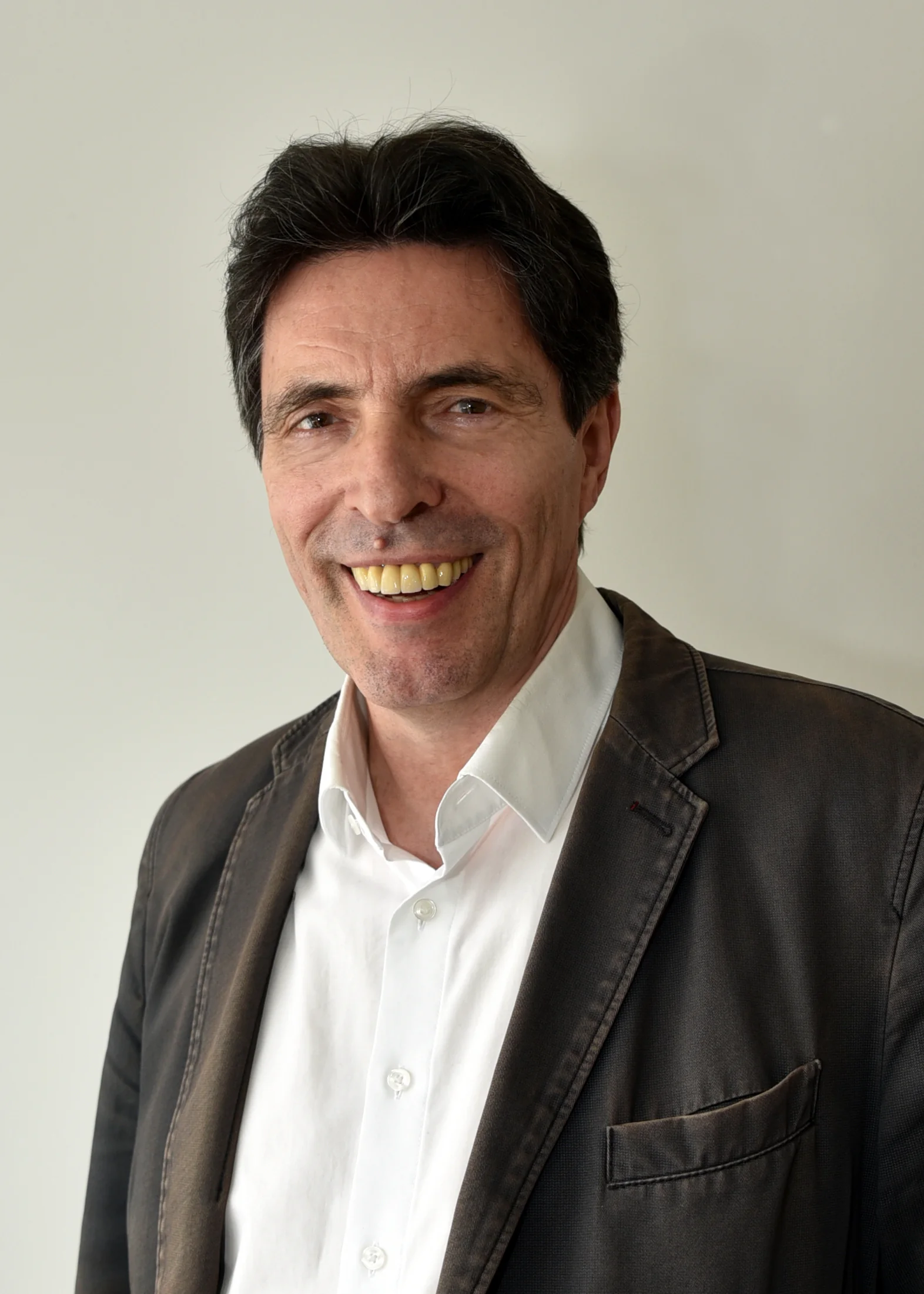
Image from Wikipedia
Image from Wikipedia
Andreas Hantke – Church Music with Heart, Craftsmanship, and Sonic Spaciousness
A German church musician who shaped a distinctive artistic signature through liturgy, concerts, and composition
Andreas Hantke, born on August 22, 1956, in Nuremberg, is one of the defining German church musicians of his generation. As a composer, conductor, and organist, he developed a music career over decades that navigated between church practice, choral work, and his own musical language. Since July 2022, he has been retired, but his work continues to resonate in choirs, communities, and performances across the German-speaking world. ([de.wikipedia.org](https://de.wikipedia.org/wiki/Andreas_Hantke?utm_source=openai))
Biographical Roots: Education, Early Responsibility, and Musical Foundation
Hantke's path to music did not begin as a glamorous meteoric rise, but rather as a consistent development arising from talent, discipline, and spiritual grounding. Since the age of 12, he has led instrumental ensembles and choirs; later he obtained a church music degree in Bayreuth, pursued advanced studies at the Munich Conservatory, and took organ lessons with Prof. Hedwig Bilgram, followed by state examinations in choral conducting with Prof. Fritz Schieri. In 1986, he became a professional church musician at the Protestant St. Johanneskirche in Munich-Haidhausen, and in 2000 he was awarded the title of Church Music Director. ([andreashantke.voog.com](https://www.andreashantke.voog.com/vita?utm_source=openai))
This biographical trajectory explains much about his artistic attitude: Hantke has never viewed church music merely as accompaniment to the service, but as a vibrant practice of listening, learning, and collective creation. In discussions, he emphasized that his motivations were not career interests, but the recognition of the audience and the joy of making music together. This blend of calling and professionalism gives his career the credibility that is rarely so visible in church music. ([sonntagsblatt.de](https://www.sonntagsblatt.de/artikel/bayern/kirchenmusiker-hantke-musizieren-macht-schlau-und-gluecklich))
The Cantata Choir Munich: Ensemble Culture as an Artistic Center
In 1983, Andreas Hantke founded the Cantata Choir Munich, which became a central project in his career. The ensemble presented its audience, both domestically and internationally, with a wide repertoire ranging from the Renaissance to modern works and realized twenty-five Bach nights, over 100 oratorio performances, dozens of services, and hundreds of a cappella concerts throughout its long history. Thus, the choir became not only the singing business card of the conductor but also a place of lived musical education and artistic continuity. ([andreashantke.voog.com](https://www.andreashantke.voog.com/vita?utm_source=openai))
In 2009, Hantke moved to Christuskirche Munich-Neuhausen, where he served as a full-time cantor and district cantor for the Prodekanat Munich-West until his retirement in July 2022. This position represented not just a simple administrative task, but another phase of productive work with choirs, instrumentalists, and liturgical forms. The breadth of his work illustrates how deeply he understood the role of the church musician as a mediator between tradition and contemporary practice. ([andreashantke.voog.com](https://www.andreashantke.voog.com/vita?utm_source=openai))
Compositional Profile: Children's Songs, Musicals, Cantatas, and Organ Works
Andreas Hantke's compositional output is remarkably extensive and clearly defined. According to Wikipedia, he has composed over 300 children's songs, numerous musicals for children and youth, cantatas, and the oratorio Luther; for the organ, he created original works and preludes for liturgical use. His works are published by Strube Verlag, further emphasizing his position in the church music sheet music market. ([de.wikipedia.org](https://de.wikipedia.org/wiki/Andreas_Hantke))
Hantke's strength lies particularly in the form of children's and youth musicals, which he describes as a key component of his compositional work on his official site. His titles include Alles voll!, Aglaia, Am großen Tisch von Jesus, Babel blamabel, Franziskus, Martin Luther King, Die drei Kater, and B-A-C-H Der größte Musiker. These works demonstrate his consistent ability to translate biblical, historical, and educational content into an accessible, scenographic musical language. ([andreashantke.voog.com](https://andreashantke.voog.com/kompositionen/musicals?utm_source=openai))
An Overview of the Works: From Andreas’ Songbook to the Bach Musical
The list of Hantke's works offers a glimpse into the workshop of a productive church musician. Among those listed are Andreas’ Songbook with 171 songs, Bei Jesus ist ein starkes Team with 30 new children's songs, and Alles freut sich, dass du kommst with 17 new Christmas songs. Additionally, there is choral music such as Stufen for mixed choir a cappella, Sieben Segen for choir with piano, as well as organ works like O du fröhliche: The Ultimate Postlude for Christmas and Organo Pleno: 10 Free Organ Pieces. ([de.wikipedia.org](https://de.wikipedia.org/wiki/Andreas_Hantke))
A particularly expressive example of his recent work is the musical B-A-C-H Der größte Musiker, a piece for solos, children's choir, and orchestra about the life of Johann Sebastian Bach. The preface of the score illustrates a typical Hantke quality: historical references, dramatic clarity, and a clear intention to inspire young participants for a vibrant musical life. Here, musical communication is convincingly combined with respectful compositional art. ([strube.de](https://www.strube.de/wp-content/uploads/2025/08/I4419.pdf))
Musical Handwriting: Between Liturgy, Pedagogy, and Choral Sound
Hantke's style navigates between functional church music, singable melodies, and a deliberately practical dramaturgy. His official biography emphasizes the vast array of formats he works in, from children’s choir to orchestra to a cappella settings, and his work reveals a preference for clear forms, text-based composition, and well-sung lines. Particularly in the field of children's and youth music, he successfully achieves a balance between accessibility and musical substance, merging educational benefits with artistic quality. ([andreashantke.voog.com](https://www.andreashantke.voog.com/vita?utm_source=openai))
Interviews also reveal that Hantke understands church music as a living, stylistically open field. He describes a development away from one-sided trends towards a balance of styles and emphasizes that the profession of church musician has become professionalized, yet is also under pressure due to budget cuts. This categorization positions him as an observer of his field, who considers practice, structural change, and artistic responsibility together. ([sonntagsblatt.de](https://www.sonntagsblatt.de/artikel/bayern/kirchenmusiker-hantke-musizieren-macht-schlau-und-gluecklich))
Impact and Reception: Recognition in the Church Music Sphere
The resonance of Hantke’s work is reflected less in pop charts and more in sustainable repertoire development, regular performances, and the integration of his works into church life. His official presentation of achievements highlights performances both domestically and abroad, numerous services, and a significant number of oratorio and choral projects. He himself cites the performances of his children’s musicals across the German-speaking world as one of his most fulfilling artistic moments. ([andreashantke.voog.com](https://www.andreashantke.voog.com/vita?utm_source=openai))
The professional world also recognizes him as a dedicated creator. Hantke has contributed as an editor and participant to songbooks such as Kindergesangbuch, Alive, and Kinderkirchenlieder, and has been involved for decades in the board of Evangelical Church Musicians in Bavaria. Thus, he emerges not only as a composer and conductor but also as a networker and advocate for an entire musical sector. ([de.wikipedia.org](https://de.wikipedia.org/wiki/Andreas_Hantke))
Cultural Influence: Church Music as Living Education and Community Experience
The cultural value of Andreas Hantke’s work lies in his ability to organize music as a communal experience. In his own words, the excited gaze of a three-year-old while singing holds the same value as the grateful response from a 90-year-old concertgoer. This attitude explains why his work aims not only at repertoire but also at relationships: music as a social practice, as an educational space, and as a spiritual experience. ([sonntagsblatt.de](https://www.sonntagsblatt.de/artikel/bayern/kirchenmusiker-hantke-musizieren-macht-schlau-und-gluecklich))
Especially in the transition from traditional church music to a more plural present, Hantke has left his mark. He describes a development over the last few decades, where church music has moved from a romanticizing post-war period and a somewhat exaggerated historicism back towards stylistic balance. His biography shows how a church musician observes this development and actively shapes it through both his work and his influence. ([sonntagsblatt.de](https://www.sonntagsblatt.de/artikel/bayern/kirchenmusiker-hantke-musizieren-macht-schlau-und-gluecklich))
Current Projects and Retirement: Still Present Despite Official Retirement
Although Hantke has been retired since July 2022, he remains artistically visible. His official site announces performances for 2026, including concert and choir projects in Munich and South Tyrol, as well as a birthday concert for his 70th birthday on August 22, 2026, featuring works such as Sommerkantate and Sax Seasons. Thus, artistic presence does not end with formal retirement but continues through projects and performances. ([andreashantke.voog.com](https://www.andreashantke.voog.com/?utm_source=openai))
Another sign of this continuity is the publication of B-A-C-H Der größte Musiker by Strube Verlag in 2025. The work combines educational appeal, historical interest, and the joy of musical storytelling. For Hantke, composition remains a medium even in his later years that brings knowledge, faith, and practice into a resonant form. ([strube.de](https://www.strube.de/wp-content/uploads/2025/08/I4419.pdf))
Conclusion: Why Andreas Hantke Remains Fascinating
Andreas Hantke is fascinating because his music career relies not on effect or quick self-marketing but on substance, community, and craftsmanship. He merges choral culture, church space, children’s song, and oratorio into a coherent body of work that is rarely thought through so consistently in Germany. Anyone wanting to understand how vibrant church music can be will find in Hantke's career a compelling example of artistic development with integrity. ([de.wikipedia.org](https://de.wikipedia.org/wiki/Andreas_Hantke))
His music thrives on singing, ensemble sound, and direct contact with the audience. That is precisely why it is worthwhile to experience Andreas Hantke live in a concert or performance: there unfolds a mixture of intellectual clarity, emotional warmth, and collective energy that characterizes his work. ([sonntagsblatt.de](https://www.sonntagsblatt.de/artikel/bayern/kirchenmusiker-hantke-musizieren-macht-schlau-und-gluecklich))
Official Channels of Andreas Hantke:
- Instagram: no official profile found
- Facebook: no official profile found
- YouTube: no official profile found
- Spotify: no official profile found
- TikTok: no official profile found
Sources:
- KMD Andreas Hantke – Official Website
- KMD Andreas Hantke – Vita
- KMD Andreas Hantke – Compositions
- KMD Andreas Hantke – Musicals
- KMD Andreas Hantke – Children's Songs
- KMD Andreas Hantke – Babel-Duo Sax-Organ
- Wikipedia: Andreas Hantke
- Sonntagsblatt – Church Musician Hantke: “Making Music Makes You Smart and Happy”
- Strube Verlag – Andreas Hantke: B-A-C-H Der größte Musiker