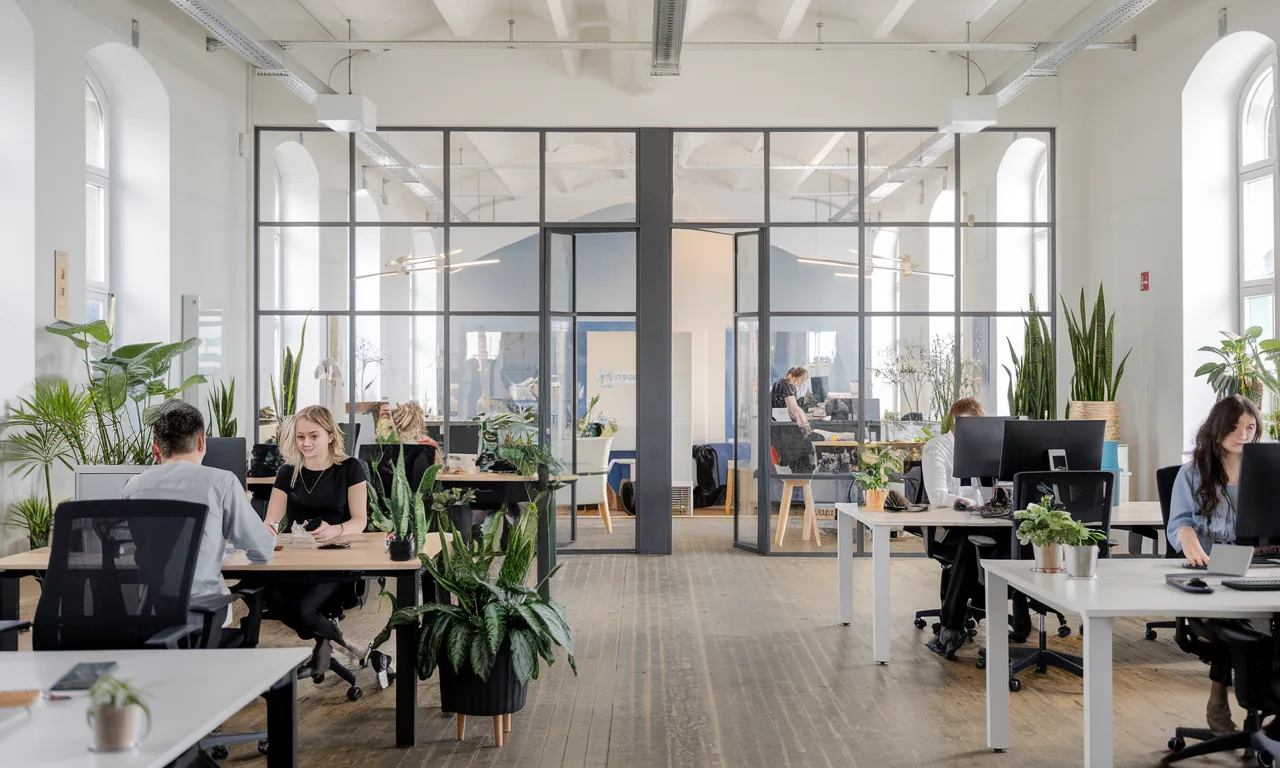
Coworking Spaces in Fürth – Community & Creativity
Coworking & Creative Spaces in Fürth 2026: Upcoming Formats, Workshops, and Networking Events
A future-oriented overview of event formats you can plan or attend in coworking and creative spaces in Fürth in 2026 – including checklists for hybrid workshops, room selection, and booking.
Which Event Formats Work Well in Coworking & Creative Spaces in 2026
To ensure this article looks exclusively forward, here you will find formats you can realistically plan for 2026 – regardless of which specific space you choose. Many providers publish their available slots and house rules online; for fixed dates, you should always check the respective calendars and booking pages.
1) Strategy & Productivity Days (1/2 to 2 days)
- Goal: Roadmap, quarterly planning, retrospectives, OKR workshops.
- Why coworking fits: Focus + breakout opportunities (phone booth, side room, lounge).
- Typical components: Kick-off, work blocks (60–90 min.), breakouts, results gallery.
2) Trainings & Further Education (10–40 people)
- Goal: Tools, processes, specialist topics, onboarding trainings.
- Important in 2026: good sightlines (display/projector), acoustics, break areas.
- Best practice: short exercises with changing small groups to maintain attention.
3) Creative Productions (Photo/Video/Content)
- Goal: Campaign production, reels/short-form series, product shoots.
- Room advantage: Daylight, neutral surfaces, quiet sound environment.
- Planning tip: clear walkways (set/directing/backup), defined quiet times for sound.
4) Community Events (Afterwork, Lightning Talks, Show & Tell)
- Goal: New contacts, collaborations, visibility for projects.
- Format idea: 3–5 short talks + moderated networking (e.g., question cards).
- Success factor: binding schedule (start, slots, break, closing, wind-down).
5) Hybrid Workshops (with Remote Participants)
- Goal: Connect teams without everyone having to travel.
- Important in 2026: stable upload rate, microphone concept, clear moderation.
- Results assurance: shared board (e.g., digital whiteboard) + written minutes.
How to Choose the Right Space (Hotdesk to Loft)
For 2026, it pays to consistently derive your space choice from the event goal and the work modes (plenary, small groups, quiet work, recording/streaming). These criteria help you make a solid decision quickly, without marketing promises:
Criteria Check
- Number of participants: realistic including buffer (e.g., +10% for spontaneous confirmations).
- Room layout: U-shape for discussions, theater for talks, islands for group work.
- Breakout opportunities: Side rooms, niches, phone booths, quiet corners.
- Acoustics: crucial for hybrid formats and recordings (reverberation, background noise).
- Accessibility: step-free access, accessible restroom, easily readable signage.
- Break logistics: Kitchen/bar, water station, space for catering, waste concept.
Hybrid & Workshop Technology: Checklist for 2026
Modern coworking spaces are often prepared for meetings. For workshops and hybrid events in 2026, however: technology is only “simple” if roles and processes are defined. This checklist is deliberately provider-neutral and can be applied to almost any space.
Technology (Minimum)
- Internet: separate Wi-Fi for guests + option for LAN for moderator/streaming.
- Image: large screen/projector with sufficient brightness, suitable connections (HDMI/USB-C).
- Sound: at least one good conference microphone; for group work ideally: additional handheld mic/clip mic.
- Whiteboarding: physical (whiteboard/flipchart) plus optionally digital (board tool).
Organization (so hybrid really works)
- Moderation: one person controls the process and ensures remote voices are heard.
- Co-host: one person manages chat, breakout rooms, and tech questions.
- Rules: hand signals, requests to speak, “one person speaks” principle, clear breaks.
- Documentation: write down results live; at the end, send a compact results PDF.
Planning & Booking: Process, Timing, Cost Logic
Since prices, packages, and conditions vary by provider, the cost logic is especially relevant for 2026: You typically pay by time (hours/day), room type (meeting room/studio/loft), and service scope (technology, support, cleaning, drinks, possibly catering). To plan cleanly without assumptions, this process helps:
Recommended Process in 7 Steps
- Define event goal: Define output (e.g., roadmap, decision, content package).
- Determine participant list: Onsite vs. remote, roles, speakers.
- Derive room profile: Layout, breakouts, acoustics, recording needs.
- Tech call: Clarify screen, audio, camera, Wi-Fi/LAN, adapters.
- Build agenda: Short work blocks, clear breaks, buffer for setup.
- Clarify service: Drinks, catering, house rules (volume, access, times).
- Send participant info: Arrival, start time, “What to bring?”, hybrid rules.
For particularly sought-after time slots (e.g., dates in spring/fall), it makes sense to book well in advance in 2026. The more specific the requirements (studio, streaming, exclusive area), the earlier you should inquire.
Community Value: Networking Design for Upcoming Events
Coworking and creative spaces will be especially valuable in 2026 if you consciously integrate the network into your event design. This works without “unplanned coincidence” – with small, moderated elements:
- Warm-up (5 minutes): “What are you working on right now – and where are you looking for support?”
- Speed-Connect (2×6 minutes): Two short 1:1 rounds with guiding questions.
- Show & Tell: Participants bring an artifact (mockup, pitch, problem statement).
- Cooperation wall: List “I offer / I seek” (digital or flipchart).
- Follow-up ritual: At the end, record 3 concrete next steps per person.
This way, a single workshop day becomes a starting point for reliable collaborations – without having to rely on unpredictable dynamics.
Sources
- Fraunhofer Society (Fraunhofer IAO) – Working World & New Work — Background on modern working methods and requirements for collaboration (accessed 2026-03-25)
- Federal Institute for Occupational Safety and Health (BAuA) – Work Environment — Criteria for work environment, ergonomics, and design (accessed 2026-03-25)
- Federal Office for Information Security (BSI) – Cyber Security for Organizations — Guidance on secure digital work and event processes (accessed 2026-03-25)