
Fürth
Kirchenpl. 4, 90762 Fürth, Deutschland
St. Michael Fürth | Photos & History
St. Michael shapes the Fürth old town as an evangelical-lutheran town church, as a spiritual center, and as one of the most distinctive buildings in the city. Those searching for photos of St. Michael Fürth will find not only a church with a strong recognition value but also a place where architecture, faith, music, and city history are closely intertwined. The community describes St. Michael as a symbol of hope that has changed with the development of Fürth and as the only building to have survived all wars. At the same time, the church is not a closed space of the past but an open place for worship, reflection, and encounters. This blend of historical weight and vibrant presence is what makes it appealing. It is also attractive for visitors that the church is accessible daily, that tours are offered, and that the area around the town church is an important point of orientation in the old town. ([stmichael-fuerth.de](https://www.stmichael-fuerth.de/die-kirche-st-michael?utm_source=openai))
Photos and First Impressions of St. Michael Town Church
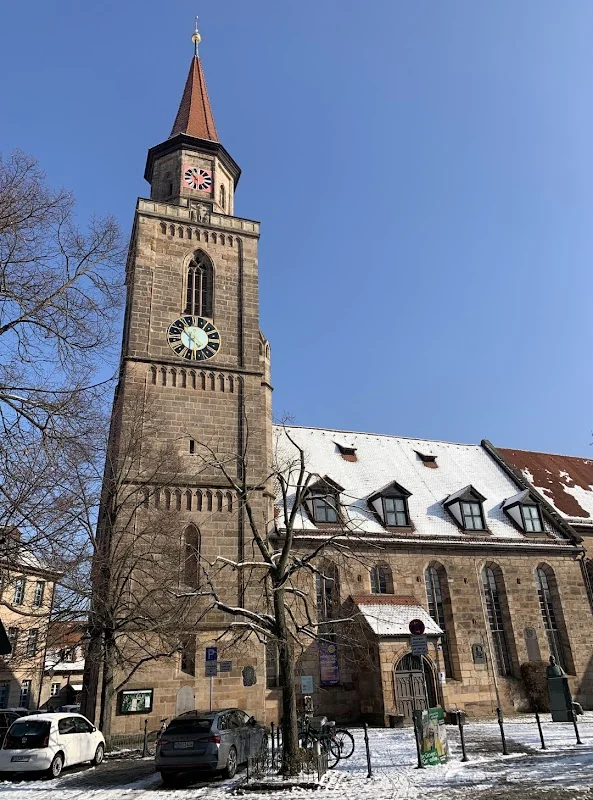
The first impression of St. Michael Fürth is that of a church that not only complements the urban space but visibly organizes it. The location at the church square anchors the building in the middle of the old town, where it still acts as a spatial reference point today. The official tourism website names St. Michael as the center of the revitalized old town and points out that the church has shone in its old splendor again after renovations in 2006 and 2008. Therefore, those photographing the church do not simply capture a single building but an ensemble in which the tower, nave, square, and the historically grown buildings of the surroundings interact. For exterior shots, the clear silhouette, the tall tower, and the view of the church square are particularly interesting. The immediate proximity to rectories and community buildings also ensures that the church does not present itself in isolation but as part of a developed urban structure. This is exactly what makes St. Michael so attractive for inquiries about photos, exterior views, and old town motifs. ([tourismus-fuerth.de](https://www.tourismus-fuerth.de/poi/kirche-st-michael-100036844/))
The second look reveals why the church is much more than a beautiful facade. On the community's website, it is explicitly described as a place that has developed alongside the growth of Fürth. This means: Its appearance tells not only of architecture but also of change, preservation, and reconstruction. The open character is part of this effect. The church is open daily and thus invites not only for a classic sightseeing photo but for a visit where one can consciously experience light, spatial effects, and details inside. The community also points out the candle corner, where visitors can pause for reflection. Such small, quiet motifs also play a role in photos of St. Michael Fürth because they show the character of the place: not monumental in a museum sense but approachable, calm, and at the same time rich in history. Therefore, those looking for images should consider not only the exterior view but also the interior, altar area, bells, and the atmosphere of the church square. ([stmichael-fuerth.de](https://www.stmichael-fuerth.de/die-kirche-st-michael?utm_source=openai))
History and Historical Significance of St. Michael Fürth
The history of St. Michael is closely linked to the early city history of Fürth. According to Wikipedia, the nave was built around 1100 and is thus the oldest preserved, albeit repeatedly redesigned, part of the church. The tower was added later; it was built subsequently and was the only landmark of the city at 45 meters until 1824. The choir is dated around 1480. For its historical significance, it is also crucial that St. Michael became a Protestant church after the Reformation and that the first visitation in 1528 is generally regarded as the beginning of the Reformation in Fürth. In the history of the city, St. Michael was for a long time the only church on site; therefore, the building not only shaped religious daily life but also the cityscape and the community's self-understanding. This early continuity explains why St. Michael is still perceived today as a town church and as a place that shapes identity. ([de.wikipedia.org](https://de.wikipedia.org/wiki/St._Michael_%28F%C3%BCrth%29))
Inside, the different epochs are reflected in several layers. In the 17th century, a baroque style was introduced, and to increase capacity, galleries were built between 1629 and 1704. In the 19th century, further redesigns followed, including the romantic neo-Gothic influence from the renovation of 1830. According to Wikipedia, the choir altar and the pulpit were then framed in neo-Gothic forms; the stone mensa of the altar also dates back to 1497. The community additionally points out the old Gothic wing altar from 1497, which served as the high altar until 1815. The historical sacrament house dates from 1507 and is one of the most important works of art in the interior. Further renovations of the church took place in 2006 and 2008, which brought the old town church back into public consciousness. St. Michael is thus not a static monument but a building where city history, piety, and art history have condensed over centuries. ([de.wikipedia.org](https://de.wikipedia.org/wiki/St._Michael_%28F%C3%BCrth%29))
Opening Hours, Services, and Visits on Site
For visitors, the church is very easily accessible. The community states that St. Michael is open daily from 9 AM until sunset. This is an important signal for a town church, as it makes the church a place of arrival, pause, and quiet visits outside of services. Inside, the candle corner invites reflection; there, visitors can light a candle and leave thoughts in a book. Therefore, those who want to experience not only the architecture but also the spiritual atmosphere will find in St. Michael a space that is not limited to Sunday services. It is also helpful for travelers that the church is suitable for all weather, for groups, and for individual guests, and that admission is free, according to tourism information. This supports the idea of an open urban place that works for both a quick stop and a planned visit. ([stmichael-fuerth.de](https://www.stmichael-fuerth.de/die-kirche-st-michael?utm_source=openai))
The liturgical side also remains present. The community informs that services are celebrated every Sunday at 10 AM in St. Michael; in the cold season, they may move to the community house or start at 11 AM. Thus, St. Michael is not only a historical destination for photos and culture enthusiasts but a lively parish church with regular community life. The website also mentions services on high holidays as well as support during life transitions, which underscores the character of the community: St. Michael accompanies people not only during anniversaries and celebrations but also in phases of transition. The church thus remains in an active tension between tradition and the present. Those planning a visit should keep an eye on the service times, as the church space, while open during the day, is of course more strongly shaped during liturgical celebrations than during a quiet walk. ([stmichael-fuerth.de](https://www.stmichael-fuerth.de/unsere-gemeinde/gottesdienste?utm_source=openai))
Bells, Organ, and Sacred Furnishings
One of the strongest features of St. Michael is the soundscape of the church. The community emphasizes that the oldest bell in the city of Fürth hangs in the tower, dating from around 1400. The second oldest bell is the so-called Gloriosa from 1791, and the other three bells were cast in 1952 after bells were melted down for war purposes during World War I and II. This bell history makes it clear how closely spiritual, urban, and cultural memory levels are intertwined. The official website of the community also points out that the full ringing can be perceived as an impressive auditory experience. For visitors, this is not just an acoustic detail but an essential part of the identity of the place. Therefore, those photographing or visiting St. Michael Fürth should also think about listening: the church is a space of visibility and sound depth at the same time. ([stmichael-fuerth.de](https://www.stmichael-fuerth.de/die-kirche-st-michael/glocken?utm_source=openai))
The interior furnishings are also remarkable. The large organ was built in 1979 by Ekkehard Simon from Landshut; additionally, St. Michael has an Italian organ from 1775, which is particularly valuable for the performance of old music, according to the community. Thus, the church is not only a house of worship but also a place with high musical competence. This is complemented by the stained glass windows, which were made according to designs by Hans Gottfried von Stockhausen and were installed in several stages between 1958 and 1969. The sacred core also includes the sacrament house from 1507 and the old altar: the community mentions a Gothic wing altar from 1497, which stood as the high altar in the choir until 1815. Wikipedia additionally describes the stone mensa from 1497, the neo-Gothic retable from 1830, and the figure of Christ from 1883 as the current altar structure. Therefore, those interested in art, liturgy, and historical spaces will find in St. Michael an unusually dense mix of the Middle Ages, modern times, and contemporary church music. ([stmichael-fuerth.de](https://www.stmichael-fuerth.de/die-kirche-st-michael/orgel?utm_source=openai))
Guided Tours, Tower Tours, and Special Experiences
St. Michael is not only open but also explainably accessible. Those wishing to book a church or tower tour should contact the parish office, as the tower and church guides are explicitly pleased about interest. This is important for visitors because the historical richness of the church is particularly well revealed in the context of a tour. The tour page regularly offers different formats, including Saturday tours and special themes such as sunrise tours, champagne receptions under the bells, or old town Christmas. The homepage also states that one can climb the tower on the first Saturday of each month at 11 AM. This mix of regular appointments and special formats makes St. Michael attractive for people who want more than a quick glance at the building. Those looking for a special photo experience will find a place where architecture, views, and the bell room come together. ([stmichael-fuerth.de](https://www.stmichael-fuerth.de/die-kirche-st-michael/fuehrungen))
The location is also practical for arrival. The tourism information names the church square as the address and recommends all public transport to Fürth Rathaus; from there, St. Michael is easily reachable on foot. Additionally, the tourism site points out the suitability for groups and individual guests and that admission is free. This facilitates planning and makes spontaneous visits as possible as organized cultural walks through the old town. This is particularly important for photo tours because one can integrate the location into a city tour without complicated logistics. Therefore, those wishing to experience St. Michael Fürth can easily combine the visit with a stroll through the old town, a visit to the church square, and a detour into the historic city center. The church thus functions as a cultural anchor point and as an easy entry into the history of the city of Fürth. ([tourismus-fuerth.de](https://www.tourismus-fuerth.de/poi/kirche-st-michael-100036844/))
Location in the Church Square, Community, and Lively Environment
The location of St. Michael is an essential part of its significance. The tourism information names the church as the center of the revitalized old town and the seat of the Evangelical-Lutheran Deanery of Fürth. The community also describes the area with the church square and rectories as a gem in Fürth. These formulations show that St. Michael is not just a single building but a whole ensemble of church, square, administration, community life, and historical surroundings. For visitors, this means: The place is not only visually appealing but also well-developed in content, as religious, social, and urban planning functions converge in the same location. Therefore, those searching for the term St. Michael Fürth or for St. Michael Fürth photos will land at a church that presents itself as the core of a historic district while simultaneously maintaining an active presence. ([tourismus-fuerth.de](https://www.tourismus-fuerth.de/poi/kirche-st-michael-100036844/))
The lively community profile is reflected in music, groups, and offerings. The church music page mentions Ingeborg Schilffarth and Sirka Schwartz-Uppendieck, who are responsible for choir and organ work; there are also children's choirs and a large city choir. The groups and circles page further shows how broadly the community is structured: from the mini club to youth lounge and workshop to Club 60, welcome café, lectors, and sacristan team. This underscores that St. Michael is not only a historical symbol but an active place for children, families, teenagers, adults, and seniors. Even in everyday life, the church remains present with its spaces, music, and meetings. This is precisely why it appears credible and contemporary: as a town church, as a place of worship, as a concert and meeting space, and as part of a larger urban network in the Fürth old town. ([stmichael-fuerth.de](https://www.stmichael-fuerth.de/unsere-gemeinde/kirchenmusik))
Sources:
Mehr anzeigenWeniger anzeigen
St. Michael Fürth | Photos & History
St. Michael shapes the Fürth old town as an evangelical-lutheran town church, as a spiritual center, and as one of the most distinctive buildings in the city. Those searching for photos of St. Michael Fürth will find not only a church with a strong recognition value but also a place where architecture, faith, music, and city history are closely intertwined. The community describes St. Michael as a symbol of hope that has changed with the development of Fürth and as the only building to have survived all wars. At the same time, the church is not a closed space of the past but an open place for worship, reflection, and encounters. This blend of historical weight and vibrant presence is what makes it appealing. It is also attractive for visitors that the church is accessible daily, that tours are offered, and that the area around the town church is an important point of orientation in the old town. ([stmichael-fuerth.de](https://www.stmichael-fuerth.de/die-kirche-st-michael?utm_source=openai))
Photos and First Impressions of St. Michael Town Church
The first impression of St. Michael Fürth is that of a church that not only complements the urban space but visibly organizes it. The location at the church square anchors the building in the middle of the old town, where it still acts as a spatial reference point today. The official tourism website names St. Michael as the center of the revitalized old town and points out that the church has shone in its old splendor again after renovations in 2006 and 2008. Therefore, those photographing the church do not simply capture a single building but an ensemble in which the tower, nave, square, and the historically grown buildings of the surroundings interact. For exterior shots, the clear silhouette, the tall tower, and the view of the church square are particularly interesting. The immediate proximity to rectories and community buildings also ensures that the church does not present itself in isolation but as part of a developed urban structure. This is exactly what makes St. Michael so attractive for inquiries about photos, exterior views, and old town motifs. ([tourismus-fuerth.de](https://www.tourismus-fuerth.de/poi/kirche-st-michael-100036844/))
The second look reveals why the church is much more than a beautiful facade. On the community's website, it is explicitly described as a place that has developed alongside the growth of Fürth. This means: Its appearance tells not only of architecture but also of change, preservation, and reconstruction. The open character is part of this effect. The church is open daily and thus invites not only for a classic sightseeing photo but for a visit where one can consciously experience light, spatial effects, and details inside. The community also points out the candle corner, where visitors can pause for reflection. Such small, quiet motifs also play a role in photos of St. Michael Fürth because they show the character of the place: not monumental in a museum sense but approachable, calm, and at the same time rich in history. Therefore, those looking for images should consider not only the exterior view but also the interior, altar area, bells, and the atmosphere of the church square. ([stmichael-fuerth.de](https://www.stmichael-fuerth.de/die-kirche-st-michael?utm_source=openai))
History and Historical Significance of St. Michael Fürth
The history of St. Michael is closely linked to the early city history of Fürth. According to Wikipedia, the nave was built around 1100 and is thus the oldest preserved, albeit repeatedly redesigned, part of the church. The tower was added later; it was built subsequently and was the only landmark of the city at 45 meters until 1824. The choir is dated around 1480. For its historical significance, it is also crucial that St. Michael became a Protestant church after the Reformation and that the first visitation in 1528 is generally regarded as the beginning of the Reformation in Fürth. In the history of the city, St. Michael was for a long time the only church on site; therefore, the building not only shaped religious daily life but also the cityscape and the community's self-understanding. This early continuity explains why St. Michael is still perceived today as a town church and as a place that shapes identity. ([de.wikipedia.org](https://de.wikipedia.org/wiki/St._Michael_%28F%C3%BCrth%29))
Inside, the different epochs are reflected in several layers. In the 17th century, a baroque style was introduced, and to increase capacity, galleries were built between 1629 and 1704. In the 19th century, further redesigns followed, including the romantic neo-Gothic influence from the renovation of 1830. According to Wikipedia, the choir altar and the pulpit were then framed in neo-Gothic forms; the stone mensa of the altar also dates back to 1497. The community additionally points out the old Gothic wing altar from 1497, which served as the high altar until 1815. The historical sacrament house dates from 1507 and is one of the most important works of art in the interior. Further renovations of the church took place in 2006 and 2008, which brought the old town church back into public consciousness. St. Michael is thus not a static monument but a building where city history, piety, and art history have condensed over centuries. ([de.wikipedia.org](https://de.wikipedia.org/wiki/St._Michael_%28F%C3%BCrth%29))
Opening Hours, Services, and Visits on Site
For visitors, the church is very easily accessible. The community states that St. Michael is open daily from 9 AM until sunset. This is an important signal for a town church, as it makes the church a place of arrival, pause, and quiet visits outside of services. Inside, the candle corner invites reflection; there, visitors can light a candle and leave thoughts in a book. Therefore, those who want to experience not only the architecture but also the spiritual atmosphere will find in St. Michael a space that is not limited to Sunday services. It is also helpful for travelers that the church is suitable for all weather, for groups, and for individual guests, and that admission is free, according to tourism information. This supports the idea of an open urban place that works for both a quick stop and a planned visit. ([stmichael-fuerth.de](https://www.stmichael-fuerth.de/die-kirche-st-michael?utm_source=openai))
The liturgical side also remains present. The community informs that services are celebrated every Sunday at 10 AM in St. Michael; in the cold season, they may move to the community house or start at 11 AM. Thus, St. Michael is not only a historical destination for photos and culture enthusiasts but a lively parish church with regular community life. The website also mentions services on high holidays as well as support during life transitions, which underscores the character of the community: St. Michael accompanies people not only during anniversaries and celebrations but also in phases of transition. The church thus remains in an active tension between tradition and the present. Those planning a visit should keep an eye on the service times, as the church space, while open during the day, is of course more strongly shaped during liturgical celebrations than during a quiet walk. ([stmichael-fuerth.de](https://www.stmichael-fuerth.de/unsere-gemeinde/gottesdienste?utm_source=openai))
Bells, Organ, and Sacred Furnishings
One of the strongest features of St. Michael is the soundscape of the church. The community emphasizes that the oldest bell in the city of Fürth hangs in the tower, dating from around 1400. The second oldest bell is the so-called Gloriosa from 1791, and the other three bells were cast in 1952 after bells were melted down for war purposes during World War I and II. This bell history makes it clear how closely spiritual, urban, and cultural memory levels are intertwined. The official website of the community also points out that the full ringing can be perceived as an impressive auditory experience. For visitors, this is not just an acoustic detail but an essential part of the identity of the place. Therefore, those photographing or visiting St. Michael Fürth should also think about listening: the church is a space of visibility and sound depth at the same time. ([stmichael-fuerth.de](https://www.stmichael-fuerth.de/die-kirche-st-michael/glocken?utm_source=openai))
The interior furnishings are also remarkable. The large organ was built in 1979 by Ekkehard Simon from Landshut; additionally, St. Michael has an Italian organ from 1775, which is particularly valuable for the performance of old music, according to the community. Thus, the church is not only a house of worship but also a place with high musical competence. This is complemented by the stained glass windows, which were made according to designs by Hans Gottfried von Stockhausen and were installed in several stages between 1958 and 1969. The sacred core also includes the sacrament house from 1507 and the old altar: the community mentions a Gothic wing altar from 1497, which stood as the high altar in the choir until 1815. Wikipedia additionally describes the stone mensa from 1497, the neo-Gothic retable from 1830, and the figure of Christ from 1883 as the current altar structure. Therefore, those interested in art, liturgy, and historical spaces will find in St. Michael an unusually dense mix of the Middle Ages, modern times, and contemporary church music. ([stmichael-fuerth.de](https://www.stmichael-fuerth.de/die-kirche-st-michael/orgel?utm_source=openai))
Guided Tours, Tower Tours, and Special Experiences
St. Michael is not only open but also explainably accessible. Those wishing to book a church or tower tour should contact the parish office, as the tower and church guides are explicitly pleased about interest. This is important for visitors because the historical richness of the church is particularly well revealed in the context of a tour. The tour page regularly offers different formats, including Saturday tours and special themes such as sunrise tours, champagne receptions under the bells, or old town Christmas. The homepage also states that one can climb the tower on the first Saturday of each month at 11 AM. This mix of regular appointments and special formats makes St. Michael attractive for people who want more than a quick glance at the building. Those looking for a special photo experience will find a place where architecture, views, and the bell room come together. ([stmichael-fuerth.de](https://www.stmichael-fuerth.de/die-kirche-st-michael/fuehrungen))
The location is also practical for arrival. The tourism information names the church square as the address and recommends all public transport to Fürth Rathaus; from there, St. Michael is easily reachable on foot. Additionally, the tourism site points out the suitability for groups and individual guests and that admission is free. This facilitates planning and makes spontaneous visits as possible as organized cultural walks through the old town. This is particularly important for photo tours because one can integrate the location into a city tour without complicated logistics. Therefore, those wishing to experience St. Michael Fürth can easily combine the visit with a stroll through the old town, a visit to the church square, and a detour into the historic city center. The church thus functions as a cultural anchor point and as an easy entry into the history of the city of Fürth. ([tourismus-fuerth.de](https://www.tourismus-fuerth.de/poi/kirche-st-michael-100036844/))
Location in the Church Square, Community, and Lively Environment
The location of St. Michael is an essential part of its significance. The tourism information names the church as the center of the revitalized old town and the seat of the Evangelical-Lutheran Deanery of Fürth. The community also describes the area with the church square and rectories as a gem in Fürth. These formulations show that St. Michael is not just a single building but a whole ensemble of church, square, administration, community life, and historical surroundings. For visitors, this means: The place is not only visually appealing but also well-developed in content, as religious, social, and urban planning functions converge in the same location. Therefore, those searching for the term St. Michael Fürth or for St. Michael Fürth photos will land at a church that presents itself as the core of a historic district while simultaneously maintaining an active presence. ([tourismus-fuerth.de](https://www.tourismus-fuerth.de/poi/kirche-st-michael-100036844/))
The lively community profile is reflected in music, groups, and offerings. The church music page mentions Ingeborg Schilffarth and Sirka Schwartz-Uppendieck, who are responsible for choir and organ work; there are also children's choirs and a large city choir. The groups and circles page further shows how broadly the community is structured: from the mini club to youth lounge and workshop to Club 60, welcome café, lectors, and sacristan team. This underscores that St. Michael is not only a historical symbol but an active place for children, families, teenagers, adults, and seniors. Even in everyday life, the church remains present with its spaces, music, and meetings. This is precisely why it appears credible and contemporary: as a town church, as a place of worship, as a concert and meeting space, and as part of a larger urban network in the Fürth old town. ([stmichael-fuerth.de](https://www.stmichael-fuerth.de/unsere-gemeinde/kirchenmusik))
Sources:
St. Michael Fürth | Photos & History
St. Michael shapes the Fürth old town as an evangelical-lutheran town church, as a spiritual center, and as one of the most distinctive buildings in the city. Those searching for photos of St. Michael Fürth will find not only a church with a strong recognition value but also a place where architecture, faith, music, and city history are closely intertwined. The community describes St. Michael as a symbol of hope that has changed with the development of Fürth and as the only building to have survived all wars. At the same time, the church is not a closed space of the past but an open place for worship, reflection, and encounters. This blend of historical weight and vibrant presence is what makes it appealing. It is also attractive for visitors that the church is accessible daily, that tours are offered, and that the area around the town church is an important point of orientation in the old town. ([stmichael-fuerth.de](https://www.stmichael-fuerth.de/die-kirche-st-michael?utm_source=openai))
Photos and First Impressions of St. Michael Town Church
The first impression of St. Michael Fürth is that of a church that not only complements the urban space but visibly organizes it. The location at the church square anchors the building in the middle of the old town, where it still acts as a spatial reference point today. The official tourism website names St. Michael as the center of the revitalized old town and points out that the church has shone in its old splendor again after renovations in 2006 and 2008. Therefore, those photographing the church do not simply capture a single building but an ensemble in which the tower, nave, square, and the historically grown buildings of the surroundings interact. For exterior shots, the clear silhouette, the tall tower, and the view of the church square are particularly interesting. The immediate proximity to rectories and community buildings also ensures that the church does not present itself in isolation but as part of a developed urban structure. This is exactly what makes St. Michael so attractive for inquiries about photos, exterior views, and old town motifs. ([tourismus-fuerth.de](https://www.tourismus-fuerth.de/poi/kirche-st-michael-100036844/))
The second look reveals why the church is much more than a beautiful facade. On the community's website, it is explicitly described as a place that has developed alongside the growth of Fürth. This means: Its appearance tells not only of architecture but also of change, preservation, and reconstruction. The open character is part of this effect. The church is open daily and thus invites not only for a classic sightseeing photo but for a visit where one can consciously experience light, spatial effects, and details inside. The community also points out the candle corner, where visitors can pause for reflection. Such small, quiet motifs also play a role in photos of St. Michael Fürth because they show the character of the place: not monumental in a museum sense but approachable, calm, and at the same time rich in history. Therefore, those looking for images should consider not only the exterior view but also the interior, altar area, bells, and the atmosphere of the church square. ([stmichael-fuerth.de](https://www.stmichael-fuerth.de/die-kirche-st-michael?utm_source=openai))
History and Historical Significance of St. Michael Fürth
The history of St. Michael is closely linked to the early city history of Fürth. According to Wikipedia, the nave was built around 1100 and is thus the oldest preserved, albeit repeatedly redesigned, part of the church. The tower was added later; it was built subsequently and was the only landmark of the city at 45 meters until 1824. The choir is dated around 1480. For its historical significance, it is also crucial that St. Michael became a Protestant church after the Reformation and that the first visitation in 1528 is generally regarded as the beginning of the Reformation in Fürth. In the history of the city, St. Michael was for a long time the only church on site; therefore, the building not only shaped religious daily life but also the cityscape and the community's self-understanding. This early continuity explains why St. Michael is still perceived today as a town church and as a place that shapes identity. ([de.wikipedia.org](https://de.wikipedia.org/wiki/St._Michael_%28F%C3%BCrth%29))
Inside, the different epochs are reflected in several layers. In the 17th century, a baroque style was introduced, and to increase capacity, galleries were built between 1629 and 1704. In the 19th century, further redesigns followed, including the romantic neo-Gothic influence from the renovation of 1830. According to Wikipedia, the choir altar and the pulpit were then framed in neo-Gothic forms; the stone mensa of the altar also dates back to 1497. The community additionally points out the old Gothic wing altar from 1497, which served as the high altar until 1815. The historical sacrament house dates from 1507 and is one of the most important works of art in the interior. Further renovations of the church took place in 2006 and 2008, which brought the old town church back into public consciousness. St. Michael is thus not a static monument but a building where city history, piety, and art history have condensed over centuries. ([de.wikipedia.org](https://de.wikipedia.org/wiki/St._Michael_%28F%C3%BCrth%29))
Opening Hours, Services, and Visits on Site
For visitors, the church is very easily accessible. The community states that St. Michael is open daily from 9 AM until sunset. This is an important signal for a town church, as it makes the church a place of arrival, pause, and quiet visits outside of services. Inside, the candle corner invites reflection; there, visitors can light a candle and leave thoughts in a book. Therefore, those who want to experience not only the architecture but also the spiritual atmosphere will find in St. Michael a space that is not limited to Sunday services. It is also helpful for travelers that the church is suitable for all weather, for groups, and for individual guests, and that admission is free, according to tourism information. This supports the idea of an open urban place that works for both a quick stop and a planned visit. ([stmichael-fuerth.de](https://www.stmichael-fuerth.de/die-kirche-st-michael?utm_source=openai))
The liturgical side also remains present. The community informs that services are celebrated every Sunday at 10 AM in St. Michael; in the cold season, they may move to the community house or start at 11 AM. Thus, St. Michael is not only a historical destination for photos and culture enthusiasts but a lively parish church with regular community life. The website also mentions services on high holidays as well as support during life transitions, which underscores the character of the community: St. Michael accompanies people not only during anniversaries and celebrations but also in phases of transition. The church thus remains in an active tension between tradition and the present. Those planning a visit should keep an eye on the service times, as the church space, while open during the day, is of course more strongly shaped during liturgical celebrations than during a quiet walk. ([stmichael-fuerth.de](https://www.stmichael-fuerth.de/unsere-gemeinde/gottesdienste?utm_source=openai))
Bells, Organ, and Sacred Furnishings
One of the strongest features of St. Michael is the soundscape of the church. The community emphasizes that the oldest bell in the city of Fürth hangs in the tower, dating from around 1400. The second oldest bell is the so-called Gloriosa from 1791, and the other three bells were cast in 1952 after bells were melted down for war purposes during World War I and II. This bell history makes it clear how closely spiritual, urban, and cultural memory levels are intertwined. The official website of the community also points out that the full ringing can be perceived as an impressive auditory experience. For visitors, this is not just an acoustic detail but an essential part of the identity of the place. Therefore, those photographing or visiting St. Michael Fürth should also think about listening: the church is a space of visibility and sound depth at the same time. ([stmichael-fuerth.de](https://www.stmichael-fuerth.de/die-kirche-st-michael/glocken?utm_source=openai))
The interior furnishings are also remarkable. The large organ was built in 1979 by Ekkehard Simon from Landshut; additionally, St. Michael has an Italian organ from 1775, which is particularly valuable for the performance of old music, according to the community. Thus, the church is not only a house of worship but also a place with high musical competence. This is complemented by the stained glass windows, which were made according to designs by Hans Gottfried von Stockhausen and were installed in several stages between 1958 and 1969. The sacred core also includes the sacrament house from 1507 and the old altar: the community mentions a Gothic wing altar from 1497, which stood as the high altar in the choir until 1815. Wikipedia additionally describes the stone mensa from 1497, the neo-Gothic retable from 1830, and the figure of Christ from 1883 as the current altar structure. Therefore, those interested in art, liturgy, and historical spaces will find in St. Michael an unusually dense mix of the Middle Ages, modern times, and contemporary church music. ([stmichael-fuerth.de](https://www.stmichael-fuerth.de/die-kirche-st-michael/orgel?utm_source=openai))
Guided Tours, Tower Tours, and Special Experiences
St. Michael is not only open but also explainably accessible. Those wishing to book a church or tower tour should contact the parish office, as the tower and church guides are explicitly pleased about interest. This is important for visitors because the historical richness of the church is particularly well revealed in the context of a tour. The tour page regularly offers different formats, including Saturday tours and special themes such as sunrise tours, champagne receptions under the bells, or old town Christmas. The homepage also states that one can climb the tower on the first Saturday of each month at 11 AM. This mix of regular appointments and special formats makes St. Michael attractive for people who want more than a quick glance at the building. Those looking for a special photo experience will find a place where architecture, views, and the bell room come together. ([stmichael-fuerth.de](https://www.stmichael-fuerth.de/die-kirche-st-michael/fuehrungen))
The location is also practical for arrival. The tourism information names the church square as the address and recommends all public transport to Fürth Rathaus; from there, St. Michael is easily reachable on foot. Additionally, the tourism site points out the suitability for groups and individual guests and that admission is free. This facilitates planning and makes spontaneous visits as possible as organized cultural walks through the old town. This is particularly important for photo tours because one can integrate the location into a city tour without complicated logistics. Therefore, those wishing to experience St. Michael Fürth can easily combine the visit with a stroll through the old town, a visit to the church square, and a detour into the historic city center. The church thus functions as a cultural anchor point and as an easy entry into the history of the city of Fürth. ([tourismus-fuerth.de](https://www.tourismus-fuerth.de/poi/kirche-st-michael-100036844/))
Location in the Church Square, Community, and Lively Environment
The location of St. Michael is an essential part of its significance. The tourism information names the church as the center of the revitalized old town and the seat of the Evangelical-Lutheran Deanery of Fürth. The community also describes the area with the church square and rectories as a gem in Fürth. These formulations show that St. Michael is not just a single building but a whole ensemble of church, square, administration, community life, and historical surroundings. For visitors, this means: The place is not only visually appealing but also well-developed in content, as religious, social, and urban planning functions converge in the same location. Therefore, those searching for the term St. Michael Fürth or for St. Michael Fürth photos will land at a church that presents itself as the core of a historic district while simultaneously maintaining an active presence. ([tourismus-fuerth.de](https://www.tourismus-fuerth.de/poi/kirche-st-michael-100036844/))
The lively community profile is reflected in music, groups, and offerings. The church music page mentions Ingeborg Schilffarth and Sirka Schwartz-Uppendieck, who are responsible for choir and organ work; there are also children's choirs and a large city choir. The groups and circles page further shows how broadly the community is structured: from the mini club to youth lounge and workshop to Club 60, welcome café, lectors, and sacristan team. This underscores that St. Michael is not only a historical symbol but an active place for children, families, teenagers, adults, and seniors. Even in everyday life, the church remains present with its spaces, music, and meetings. This is precisely why it appears credible and contemporary: as a town church, as a place of worship, as a concert and meeting space, and as part of a larger urban network in the Fürth old town. ([stmichael-fuerth.de](https://www.stmichael-fuerth.de/unsere-gemeinde/kirchenmusik))
Sources:
Upcoming Events
Live-Act Bach get the Blues in Fürth
Bach, blues, and festival feeling in Fürth: An extraordinary morning at St. Michael with choir, groove, and Baroque sound. #FürthFestival #LiveMusic
Theater Tour "Do you hear, people" - the Fürth Night Watchman Tour
Immerse yourself in Fürth's history with the Night Watchman Tour 'Do you hear, people'. An unforgettable experience awaits you!
Theater tour 'Hört ihr Leut' - Nightwatchman tour
Join the nightwatchman on a fascinating theater tour through the old town of Fürth. Discover history alive and up close!
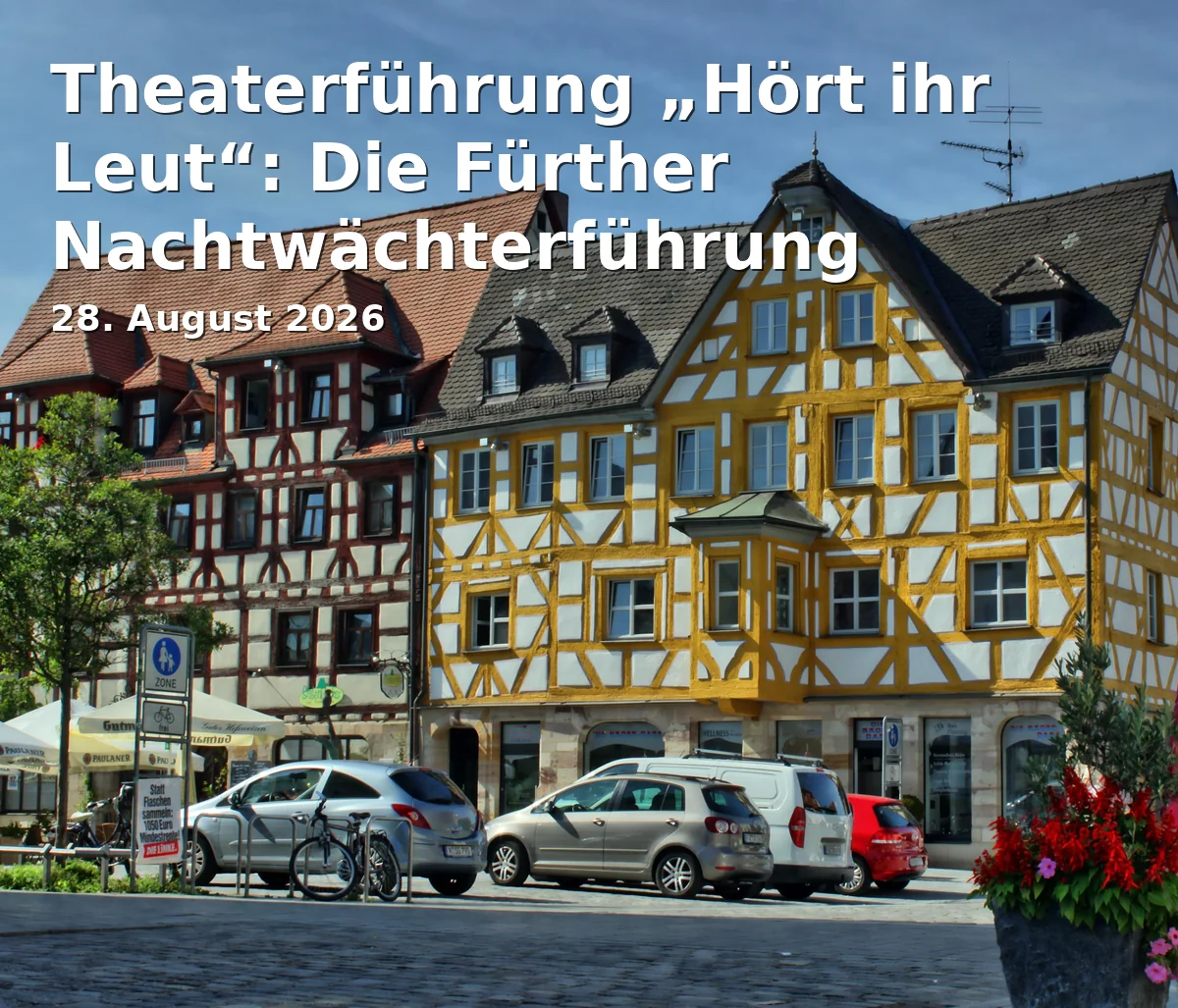
Theater Tour "Can you hear, people": The Fürth Night Watchman Tour
The Night Watchman Tour "Can you hear, people" takes you into the history of the Fürth old town.
City tour "Why the Nuremberg residents were not allowed to go to Fürth & other Kirchweih stories"
Discover Fürth's Kirchweih story at St. Michael: historical curiosities, Franconian traditions, and real festival atmosphere. 02.10.2026, free entry. Secure the tour now! #Fürth #Kirchweih
Frequently Asked Questions
Reviews
Paweł Z.
27. August 2022
Very nice surroundings, helped when the prayer was needed
Evgenia
8. February 2020
Nice
Daggisschatzi
14. August 2025
St. Michael is the oldest still preserved church in Fürth, with origins dating back to the 11th century. St. Michael is possibly the only building in the city of Fürth that has survived the Thirty Years' War. In the summer of 1632, the Swedish King Gustav Adolf took quarters in the rectory of St. Michael. A memorial plaque is attached to the outer wall of the church. The church of St. Michael is a typical Franconian market and fortification church. The church of St. Michael mainly dates from the Gothic period but has been remodeled several times. As a Protestant-Lutheran church, it cannot be compared to the opulence of many Roman Catholic churches and appears somewhat spartan, but that's just my personal opinion.
Fred Eberhardt
1. November 2022
Participated in the old town tour, very informative. We come from the area but have never been to the old town, but we have to admit that we missed out on something.
Doron
27. September 2019
Represents the calm, picturesque Fürth. Nice pubs and cafés, lovely little shops and courtyards. Highly recommended.