
Fürth
Schloßhof 12, 90768 Fürth, Deutschland
Burgfarrnbach Castle - City Archive Fürth | Address & Photos
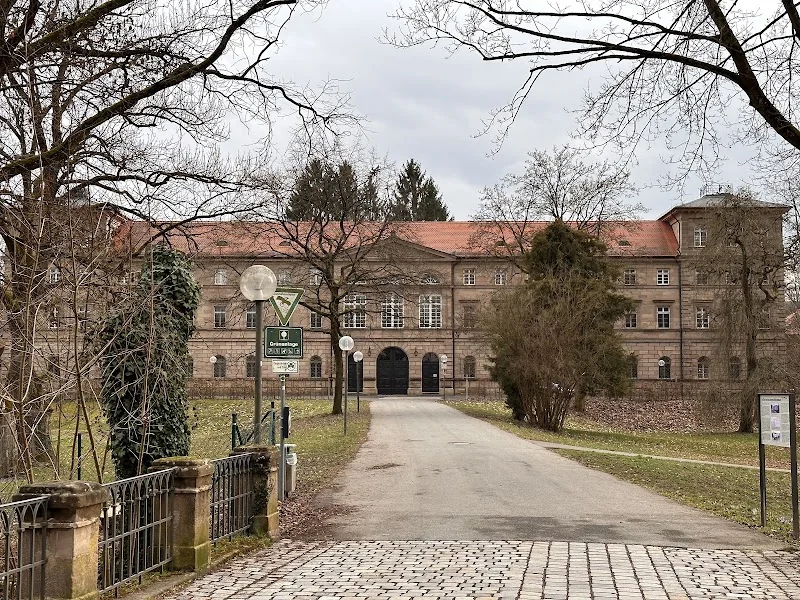
Burgfarrnbach Castle is much more than an address in the western part of Fürth: The neoclassical castle at Schlosshof 12 houses the City Archive Fürth with a scientific library and is also a place for research, music, and special events. The city describes the building as one of the most significant architectural monuments in the region; at the same time, it forms a cultural center with its spacious rooms and castle park, where urban history is not only stored but made visible and usable. Those looking for photos, address, opening hours, or directions will therefore land at a location that is an archive, monument, and event venue in one. Particularly important is that the archive begins with municipal documents and certificates that date back to 1258, so Burgfarrnbach goes far beyond a normal exhibition address. ([fuerth.de](https://www.fuerth.de/kultur-freizeit/stadtarchiv-fuerth/))
City Archive Fürth in Burgfarrnbach Castle
The City Archive Fürth fulfills a central cultural and historical task in Burgfarrnbach Castle. According to the city, it permanently secures the historical memory of the Cloverleaf City, preserves the documents of the municipal offices, and makes them accessible for future generations. The temporal span ranges from the oldest surviving copies of municipal documents from the 13th century to the present day. Thus, the archive is not only a place of storage but also a place of classification, evaluation, and mediation. Those interested in Fürth's history will find a collection that connects administration, everyday history, culture, and urban development. The thematic mix of documents, official books, administrative records, maps, plans, posters, photographs, postcards, films, and audio recordings is particularly strong. Such media not only show what has been documented in writing but also how the city has been visually and acoustically documented over decades. ([fuerth.de](https://www.fuerth.de/kultur-freizeit/stadtarchiv-fuerth/aufgaben-des-stadtarchiv/?utm_source=openai))
The work of the archive also includes collections from company, business, and association archives, as well as estates of significant local and regional personalities. The profile is complemented by the Municipal Collections, which include art objects, autographs, and cultural historical objects. The city of Fürth emphasizes that the collections are made accessible through inventories and finding aids, allowing visitors to research purposefully. Additionally, there is a Historical Library with around 35,000 volumes, which is particularly focused on the history of Fürth and the Nuremberg region with Furthensia and Norica. For family research, scientific studies, and urban historical questions, this is a significant advantage, as not only individual documents but entire contexts become visible. This creates a place where local identity does not appear as a buzzword but as well-documented, tangible history. ([fuerth.de](https://www.fuerth.de/kultur-freizeit/stadtarchiv-fuerth/aufgaben-des-stadtarchiv/?utm_source=openai))
Address, Directions, and Parking at Schlosshof 12
Anyone wishing to visit Burgfarrnbach Castle as the City Archive Fürth should know the official directions precisely. The address is Schlosshof 12, 90768 Fürth. For travel by car, the city refers to the city map as a route planner and mentions parking spaces in the Schlosshof. This makes the way for archive visits, appointments, and cultural events easy to follow, even though the location is not in the center but in the Burgfarrnbach district. This is particularly important for inquiries such as address, directions, and parking, as a historical ensemble connects with practical visitor logic here: First the correct access, then the entrance to the listed building. Those visiting the castle for the first time benefit from planning the navigation in advance and not searching for orientation on-site. ([fuerth.de](https://www.fuerth.de/service-fuerther-rathaus/aemter-von-a-bis-z/detail/stadtarchiv-bibliothek-und-lesesaal-319249/))
The castle is also accessible by public transport. According to the city of Fürth, bus line 172 goes to the Regelsbacher Straße stop; from there, it is about 300 meters on foot to the castle. If arriving by Deutsche Bahn, you get off at Fürth-Burgfarrnbach station and walk about ten minutes from there. For many visitors, this is the most pleasant solution if they want to arrive without searching for parking. At the same time, the location, with the castle park and the historic facility, is more of a destination for conscious visits than for casual pass-throughs. It is also practically relevant to note that the castle is not barrier-free. The city mentions neither disabled toilets nor disabled parking spaces and offers alternative ways for certain concerns, such as delivering files to the registry in the town hall or postal processing if possible. This makes the visit planable but requires additional preparation in case of mobility restrictions. ([fuerth.de](https://www.fuerth.de/service-fuerther-rathaus/aemter-von-a-bis-z/detail/stadtarchiv-bibliothek-und-lesesaal-319249/))
Opening Hours, Appointment Scheduling, and Use of the Reading Room
The City Archive in Burgfarrnbach Castle is not a place for spontaneous visits without preparation but for planned research. The official opening hours of the reading room are Monday to Thursday from 9:00 AM to 4:00 PM. Additionally, the city explicitly points out that an appointment should generally be made before the visit. This is typical and sensible for archives, as files, collections, and consultations must be organized and provided. Those coming with a specific topic, such as family research, local history, association history, or photo searches, save time if they coordinate their visit in advance. Thus, the City Archive follows a service concept that is not designed for mass influx but for concentrated, professional work with sources. Especially in connection with the historical reading room, a quiet working atmosphere is created, which is very valuable for researchers. ([fuerth.de](https://www.fuerth.de/service-fuerther-rathaus/aemter-von-a-bis-z/detail/stadtarchiv-bibliothek-und-lesesaal-319249/))
Using the archive involves more than just reading in the room. The city explains that inquiries about written materials, images, or other archival items may also involve copies and reproductions. However, copyright and usage rights must be observed, especially for photographs, posters, drawings, plans, or maps. Those wishing to use archival material for publications, lectures, or private projects should therefore keep an eye on not only the collection but also the rights issue. The archive supports this work with information, finding aids, and, if possible, with the provision of archival materials in the reading room. For people who want to delve into the city’s history out of professional or family interest, this is ideal: The structure is professional, the help is personal, and the work on the material remains comprehensible. That the castle is not barrier-free further emphasizes how important appointment scheduling is, as the archive staff can respond to individual needs in advance. This blend of historical environment and modern service organization shapes the user experience of the City Archive. ([fuerth.de](https://www.fuerth.de/kultur-freizeit/stadtarchiv-fuerth/benutzung-und-service/?utm_source=openai))
History and Architecture of Burgfarrnbach Castle
Burgfarrnbach Castle is architecturally a neoclassical jewel of the early 19th century. The city of Fürth cites the construction period as the years 1830 to 1834 and refers to the Royal Bavarian Building Inspector Leonhard Schmidtner as the planner. The building was designed in strict symmetry and served as a residence for the noble families of the two brothers Friedrich and Ludwig; each side received its own wing, while the large festival hall in the middle was used jointly. This layout explains why the place still appears so impressive today: It is not only beautifully restored but was conceived from the beginning as representative. The representative column facade, the spacious rooms, and the surrounding castle park make the historical claim immediately visible. Even in today’s archival operation, this remains palpable, as the building is not perceived as a neutral administrative container but as a consciously designed space of remembrance. ([fuerth.de](https://www.fuerth.de/kultur-freizeit/stadtarchiv-fuerth/))
However, the history of the site goes back much further than the neoclassical castle itself. As early as the 14th century, a noble family settled in Burgfarrnbach. Later, a ruling history developed from the possessions of the Counts of Pückler-Limpurg that shaped generations. Particularly interesting is the castle park with the baroque horse stable, which is considered the oldest preserved building of the complex. There, 28 horses found space on the ground floor; the bel étage served as a widow's residence and guest quarters. Two pavilions from the 19th century are also part of the historical resting points of the complex and remain popular places for visitors to this day. This makes a walk through the castle park a small time travel, as neoclassical representation, baroque forerunners, and landscape tranquility meet in one place. Those who want to understand the history quickly realize that Burgfarrnbach is not just a beautiful castle but an ensemble that has grown over centuries. ([fuerth.de](https://www.fuerth.de/kultur-freizeit/stadtarchiv-fuerth/geschichte-des-schloss-burgfarrnbach/))
After World War II, the castle experienced a varied use, including as a refugee camp and transitional home. It was not until the 1980s that the city of Fürth acquired the property, comprehensively renovated it, and made it publicly accessible again. Today, the castle is not only an archive location but also a symbol of how municipal responsibility can be combined with monument preservation. The city explicitly positions the building as an important cultural center. This is a central point for seekers asking about history, peculiarities, or historical backgrounds: The building lives not only from its past but from the fact that this past is conveyed today. Those walking through the castle park, entering the festival hall, or working in the reading room encounter the same fundamental idea that was already visible during the construction period: space, representation, and use should form a unity. ([fuerth.de](https://www.fuerth.de/kultur-freizeit/stadtarchiv-fuerth/geschichte-des-schloss-burgfarrnbach/))
Collections, Photos, Scientific Library, and Special Collections
An important search topic around Burgfarrnbach Castle is the question of photos and collections. Here, the City Archive Fürth offers particularly substantial content. The official collection description mentions a photo collection with around 85,000 already digitized images from various collections and estates. In addition, there is a postcard collection with 1,500 different motifs that vividly document the historical change of the city. So, those looking for images, postcards, or visual sources will find not only individual highlights here but a systematically developed historical image world. Additionally, the city refers to a contemporary historical collection that is thematically organized and covers city history, suburbs, institutions, companies, and associations. In practice, this means: The archive is much more than a storage place; it is an image and knowledge repository that enables many different approaches to the city. ([fuerth.de](https://www.fuerth.de/kultur-freizeit/stadtarchiv-fuerth/bestaende-und-recherche/?utm_source=openai))
Particularly noteworthy is the Fürth painting collection. The city speaks of over a thousand works that have come into the city's possession over decades through donations, purchases, and estates. Some of these works have significant art historical importance but have not been processed in their current form for a long time. Meanwhile, the works are systematically recorded, properly stored, and gradually made accessible. In addition, the scientific library of the archive, according to the city, mainly contains Furthensia and Norica, i.e., literature on the history of Fürth and the Nuremberg region. Digital catalogs and ordering for loan or viewing in the reading room facilitate use. Thus, Burgfarrnbach Castle is not only interesting for archival materials but also for books, research literature, and art historical topics. This combination is particularly relevant for SEO search queries such as collections, photos, scientific library, or city archive, as it covers multiple information needs simultaneously. ([fuerth.de](https://www.fuerth.de/kultur-freizeit/stadtarchiv-fuerth/bestaende-und-recherche/fuerther-gemaeldesammlung/?utm_source=openai))
The city of Fürth also emphasizes that the archive supports researchers in both scientific and local and family historical contexts. This is important because many visitors do not come out of professional interest but out of personal searches for origins, names, residences, or old images. This is precisely what the inventories, collection descriptions, and online research are intended for. They help to assess before the visit whether documents on the desired topic are available. In practice, this creates orientation, saves time, and transforms the archive facility into an open, well-utilizable knowledge site. The historical site remains visible, but digital preliminary work is becoming increasingly important. For family researchers, local historians, students, or journalists, this is a significant advantage, as research does not start from scratch but with a well-structured overview. Thus, Burgfarrnbach Castle connects analog aura with modern archival work and fulfills precisely that role that is crucial for a municipal memory today. ([fuerth.de](https://www.fuerth.de/kultur-freizeit/stadtarchiv-fuerth/aufgaben-des-stadtarchiv/?utm_source=openai))
Festival Hall, Weddings, and Soiree at Burgfarrnbach Castle
Burgfarrnbach Castle is not only an archive and monument but also a stage for special events. The festival hall is particularly well-known, which the city of Fürth uses as a romantic space for civil weddings. According to official information, weddings in the historic festival hall are possible on various Saturdays from May to October. Additionally, there were again special Saturday weddings with musical accompaniment in 2026, making the venue even more attractive for couples. The combination of neoclassical ambiance, festive space, and urban use ensures that the hall is much more than a representation room. It is a place of lived presence, where personal life moments merge with historical surroundings. For inquiries such as festival hall, weddings, or marriage in the castle, this is one of the most important content anchors. ([fuerth.de](https://www.fuerth.de/kultur-freizeit/stadtarchiv-fuerth/))
The castle also plays a significant musical role. The Soiree in the Castle is, according to the city, one of the popular concert series in the greater Fürth area. From September to April, chamber concerts in traditional and unusual formations take place there; the cultural office focuses on high musical quality and the special acoustics of the festival hall. The current program maintenance shows that the place is not only a historical backdrop but a vibrant cultural venue. Especially the mix of string, wind, harp, cello, flute, or guitar ensembles makes it clear how flexibly the space is used. When visitors search for programs, festival halls, or special events, the castle is therefore not just an object but a concrete cultural appointment. Those visiting the ensemble experience architecture, music, and history in a context that convinces precisely because of its tranquility and dignity. Thus, the classic castle atmosphere becomes a lively meeting point that works for both quiet research and festive or artistic events. ([fuerth.de](https://www.fuerth.de/kultur-freizeit/kultur/soiree-im-schloss/))
This very complexity explains why Burgfarrnbach Castle functions so well in public perception: It is an archive, festival hall, monument, event venue, and photo motif at the same time. For seekers who originally only wanted an address or a few pictures, a larger picture quickly opens up: a neoclassical castle with a long history, a rich tradition, a scientific library, and remarkable cultural use. The official city website clearly connects these levels and makes it clear that the place should not be viewed in isolation. Therefore, those planning a visit should differentiate according to their goals: check appointment and opening hours for archival work, look at the current program for weddings and concerts, and use the official information for directions and parking. This way, a simple search for Burgfarrnbach Castle becomes a reliable, well-structured plan. ([fuerth.de](https://www.fuerth.de/service-fuerther-rathaus/aemter-von-a-bis-z/detail/stadtarchiv-bibliothek-und-lesesaal-319249/))
Thus, those visiting Burgfarrnbach Castle do not experience a single function but an ensemble of history, knowledge, and presence. The archive preserves the memory of the city, the festival hall brings together music and festive occasions, and the castle park frames everything in an atmosphere that is both quiet and impressive. This is precisely the special strength of this location: It is open in its use, deep in its history, and immediately recognizable in its effect. For research, photos, family history, or cultural appointments, the castle is therefore one of the most interesting places in Fürth. ([fuerth.de](https://www.fuerth.de/kultur-freizeit/stadtarchiv-fuerth/))
Sources:
Mehr anzeigenWeniger anzeigen
Burgfarrnbach Castle - City Archive Fürth | Address & Photos
Burgfarrnbach Castle is much more than an address in the western part of Fürth: The neoclassical castle at Schlosshof 12 houses the City Archive Fürth with a scientific library and is also a place for research, music, and special events. The city describes the building as one of the most significant architectural monuments in the region; at the same time, it forms a cultural center with its spacious rooms and castle park, where urban history is not only stored but made visible and usable. Those looking for photos, address, opening hours, or directions will therefore land at a location that is an archive, monument, and event venue in one. Particularly important is that the archive begins with municipal documents and certificates that date back to 1258, so Burgfarrnbach goes far beyond a normal exhibition address. ([fuerth.de](https://www.fuerth.de/kultur-freizeit/stadtarchiv-fuerth/))
City Archive Fürth in Burgfarrnbach Castle
The City Archive Fürth fulfills a central cultural and historical task in Burgfarrnbach Castle. According to the city, it permanently secures the historical memory of the Cloverleaf City, preserves the documents of the municipal offices, and makes them accessible for future generations. The temporal span ranges from the oldest surviving copies of municipal documents from the 13th century to the present day. Thus, the archive is not only a place of storage but also a place of classification, evaluation, and mediation. Those interested in Fürth's history will find a collection that connects administration, everyday history, culture, and urban development. The thematic mix of documents, official books, administrative records, maps, plans, posters, photographs, postcards, films, and audio recordings is particularly strong. Such media not only show what has been documented in writing but also how the city has been visually and acoustically documented over decades. ([fuerth.de](https://www.fuerth.de/kultur-freizeit/stadtarchiv-fuerth/aufgaben-des-stadtarchiv/?utm_source=openai))
The work of the archive also includes collections from company, business, and association archives, as well as estates of significant local and regional personalities. The profile is complemented by the Municipal Collections, which include art objects, autographs, and cultural historical objects. The city of Fürth emphasizes that the collections are made accessible through inventories and finding aids, allowing visitors to research purposefully. Additionally, there is a Historical Library with around 35,000 volumes, which is particularly focused on the history of Fürth and the Nuremberg region with Furthensia and Norica. For family research, scientific studies, and urban historical questions, this is a significant advantage, as not only individual documents but entire contexts become visible. This creates a place where local identity does not appear as a buzzword but as well-documented, tangible history. ([fuerth.de](https://www.fuerth.de/kultur-freizeit/stadtarchiv-fuerth/aufgaben-des-stadtarchiv/?utm_source=openai))
Address, Directions, and Parking at Schlosshof 12
Anyone wishing to visit Burgfarrnbach Castle as the City Archive Fürth should know the official directions precisely. The address is Schlosshof 12, 90768 Fürth. For travel by car, the city refers to the city map as a route planner and mentions parking spaces in the Schlosshof. This makes the way for archive visits, appointments, and cultural events easy to follow, even though the location is not in the center but in the Burgfarrnbach district. This is particularly important for inquiries such as address, directions, and parking, as a historical ensemble connects with practical visitor logic here: First the correct access, then the entrance to the listed building. Those visiting the castle for the first time benefit from planning the navigation in advance and not searching for orientation on-site. ([fuerth.de](https://www.fuerth.de/service-fuerther-rathaus/aemter-von-a-bis-z/detail/stadtarchiv-bibliothek-und-lesesaal-319249/))
The castle is also accessible by public transport. According to the city of Fürth, bus line 172 goes to the Regelsbacher Straße stop; from there, it is about 300 meters on foot to the castle. If arriving by Deutsche Bahn, you get off at Fürth-Burgfarrnbach station and walk about ten minutes from there. For many visitors, this is the most pleasant solution if they want to arrive without searching for parking. At the same time, the location, with the castle park and the historic facility, is more of a destination for conscious visits than for casual pass-throughs. It is also practically relevant to note that the castle is not barrier-free. The city mentions neither disabled toilets nor disabled parking spaces and offers alternative ways for certain concerns, such as delivering files to the registry in the town hall or postal processing if possible. This makes the visit planable but requires additional preparation in case of mobility restrictions. ([fuerth.de](https://www.fuerth.de/service-fuerther-rathaus/aemter-von-a-bis-z/detail/stadtarchiv-bibliothek-und-lesesaal-319249/))
Opening Hours, Appointment Scheduling, and Use of the Reading Room
The City Archive in Burgfarrnbach Castle is not a place for spontaneous visits without preparation but for planned research. The official opening hours of the reading room are Monday to Thursday from 9:00 AM to 4:00 PM. Additionally, the city explicitly points out that an appointment should generally be made before the visit. This is typical and sensible for archives, as files, collections, and consultations must be organized and provided. Those coming with a specific topic, such as family research, local history, association history, or photo searches, save time if they coordinate their visit in advance. Thus, the City Archive follows a service concept that is not designed for mass influx but for concentrated, professional work with sources. Especially in connection with the historical reading room, a quiet working atmosphere is created, which is very valuable for researchers. ([fuerth.de](https://www.fuerth.de/service-fuerther-rathaus/aemter-von-a-bis-z/detail/stadtarchiv-bibliothek-und-lesesaal-319249/))
Using the archive involves more than just reading in the room. The city explains that inquiries about written materials, images, or other archival items may also involve copies and reproductions. However, copyright and usage rights must be observed, especially for photographs, posters, drawings, plans, or maps. Those wishing to use archival material for publications, lectures, or private projects should therefore keep an eye on not only the collection but also the rights issue. The archive supports this work with information, finding aids, and, if possible, with the provision of archival materials in the reading room. For people who want to delve into the city’s history out of professional or family interest, this is ideal: The structure is professional, the help is personal, and the work on the material remains comprehensible. That the castle is not barrier-free further emphasizes how important appointment scheduling is, as the archive staff can respond to individual needs in advance. This blend of historical environment and modern service organization shapes the user experience of the City Archive. ([fuerth.de](https://www.fuerth.de/kultur-freizeit/stadtarchiv-fuerth/benutzung-und-service/?utm_source=openai))
History and Architecture of Burgfarrnbach Castle
Burgfarrnbach Castle is architecturally a neoclassical jewel of the early 19th century. The city of Fürth cites the construction period as the years 1830 to 1834 and refers to the Royal Bavarian Building Inspector Leonhard Schmidtner as the planner. The building was designed in strict symmetry and served as a residence for the noble families of the two brothers Friedrich and Ludwig; each side received its own wing, while the large festival hall in the middle was used jointly. This layout explains why the place still appears so impressive today: It is not only beautifully restored but was conceived from the beginning as representative. The representative column facade, the spacious rooms, and the surrounding castle park make the historical claim immediately visible. Even in today’s archival operation, this remains palpable, as the building is not perceived as a neutral administrative container but as a consciously designed space of remembrance. ([fuerth.de](https://www.fuerth.de/kultur-freizeit/stadtarchiv-fuerth/))
However, the history of the site goes back much further than the neoclassical castle itself. As early as the 14th century, a noble family settled in Burgfarrnbach. Later, a ruling history developed from the possessions of the Counts of Pückler-Limpurg that shaped generations. Particularly interesting is the castle park with the baroque horse stable, which is considered the oldest preserved building of the complex. There, 28 horses found space on the ground floor; the bel étage served as a widow's residence and guest quarters. Two pavilions from the 19th century are also part of the historical resting points of the complex and remain popular places for visitors to this day. This makes a walk through the castle park a small time travel, as neoclassical representation, baroque forerunners, and landscape tranquility meet in one place. Those who want to understand the history quickly realize that Burgfarrnbach is not just a beautiful castle but an ensemble that has grown over centuries. ([fuerth.de](https://www.fuerth.de/kultur-freizeit/stadtarchiv-fuerth/geschichte-des-schloss-burgfarrnbach/))
After World War II, the castle experienced a varied use, including as a refugee camp and transitional home. It was not until the 1980s that the city of Fürth acquired the property, comprehensively renovated it, and made it publicly accessible again. Today, the castle is not only an archive location but also a symbol of how municipal responsibility can be combined with monument preservation. The city explicitly positions the building as an important cultural center. This is a central point for seekers asking about history, peculiarities, or historical backgrounds: The building lives not only from its past but from the fact that this past is conveyed today. Those walking through the castle park, entering the festival hall, or working in the reading room encounter the same fundamental idea that was already visible during the construction period: space, representation, and use should form a unity. ([fuerth.de](https://www.fuerth.de/kultur-freizeit/stadtarchiv-fuerth/geschichte-des-schloss-burgfarrnbach/))
Collections, Photos, Scientific Library, and Special Collections
An important search topic around Burgfarrnbach Castle is the question of photos and collections. Here, the City Archive Fürth offers particularly substantial content. The official collection description mentions a photo collection with around 85,000 already digitized images from various collections and estates. In addition, there is a postcard collection with 1,500 different motifs that vividly document the historical change of the city. So, those looking for images, postcards, or visual sources will find not only individual highlights here but a systematically developed historical image world. Additionally, the city refers to a contemporary historical collection that is thematically organized and covers city history, suburbs, institutions, companies, and associations. In practice, this means: The archive is much more than a storage place; it is an image and knowledge repository that enables many different approaches to the city. ([fuerth.de](https://www.fuerth.de/kultur-freizeit/stadtarchiv-fuerth/bestaende-und-recherche/?utm_source=openai))
Particularly noteworthy is the Fürth painting collection. The city speaks of over a thousand works that have come into the city's possession over decades through donations, purchases, and estates. Some of these works have significant art historical importance but have not been processed in their current form for a long time. Meanwhile, the works are systematically recorded, properly stored, and gradually made accessible. In addition, the scientific library of the archive, according to the city, mainly contains Furthensia and Norica, i.e., literature on the history of Fürth and the Nuremberg region. Digital catalogs and ordering for loan or viewing in the reading room facilitate use. Thus, Burgfarrnbach Castle is not only interesting for archival materials but also for books, research literature, and art historical topics. This combination is particularly relevant for SEO search queries such as collections, photos, scientific library, or city archive, as it covers multiple information needs simultaneously. ([fuerth.de](https://www.fuerth.de/kultur-freizeit/stadtarchiv-fuerth/bestaende-und-recherche/fuerther-gemaeldesammlung/?utm_source=openai))
The city of Fürth also emphasizes that the archive supports researchers in both scientific and local and family historical contexts. This is important because many visitors do not come out of professional interest but out of personal searches for origins, names, residences, or old images. This is precisely what the inventories, collection descriptions, and online research are intended for. They help to assess before the visit whether documents on the desired topic are available. In practice, this creates orientation, saves time, and transforms the archive facility into an open, well-utilizable knowledge site. The historical site remains visible, but digital preliminary work is becoming increasingly important. For family researchers, local historians, students, or journalists, this is a significant advantage, as research does not start from scratch but with a well-structured overview. Thus, Burgfarrnbach Castle connects analog aura with modern archival work and fulfills precisely that role that is crucial for a municipal memory today. ([fuerth.de](https://www.fuerth.de/kultur-freizeit/stadtarchiv-fuerth/aufgaben-des-stadtarchiv/?utm_source=openai))
Festival Hall, Weddings, and Soiree at Burgfarrnbach Castle
Burgfarrnbach Castle is not only an archive and monument but also a stage for special events. The festival hall is particularly well-known, which the city of Fürth uses as a romantic space for civil weddings. According to official information, weddings in the historic festival hall are possible on various Saturdays from May to October. Additionally, there were again special Saturday weddings with musical accompaniment in 2026, making the venue even more attractive for couples. The combination of neoclassical ambiance, festive space, and urban use ensures that the hall is much more than a representation room. It is a place of lived presence, where personal life moments merge with historical surroundings. For inquiries such as festival hall, weddings, or marriage in the castle, this is one of the most important content anchors. ([fuerth.de](https://www.fuerth.de/kultur-freizeit/stadtarchiv-fuerth/))
The castle also plays a significant musical role. The Soiree in the Castle is, according to the city, one of the popular concert series in the greater Fürth area. From September to April, chamber concerts in traditional and unusual formations take place there; the cultural office focuses on high musical quality and the special acoustics of the festival hall. The current program maintenance shows that the place is not only a historical backdrop but a vibrant cultural venue. Especially the mix of string, wind, harp, cello, flute, or guitar ensembles makes it clear how flexibly the space is used. When visitors search for programs, festival halls, or special events, the castle is therefore not just an object but a concrete cultural appointment. Those visiting the ensemble experience architecture, music, and history in a context that convinces precisely because of its tranquility and dignity. Thus, the classic castle atmosphere becomes a lively meeting point that works for both quiet research and festive or artistic events. ([fuerth.de](https://www.fuerth.de/kultur-freizeit/kultur/soiree-im-schloss/))
This very complexity explains why Burgfarrnbach Castle functions so well in public perception: It is an archive, festival hall, monument, event venue, and photo motif at the same time. For seekers who originally only wanted an address or a few pictures, a larger picture quickly opens up: a neoclassical castle with a long history, a rich tradition, a scientific library, and remarkable cultural use. The official city website clearly connects these levels and makes it clear that the place should not be viewed in isolation. Therefore, those planning a visit should differentiate according to their goals: check appointment and opening hours for archival work, look at the current program for weddings and concerts, and use the official information for directions and parking. This way, a simple search for Burgfarrnbach Castle becomes a reliable, well-structured plan. ([fuerth.de](https://www.fuerth.de/service-fuerther-rathaus/aemter-von-a-bis-z/detail/stadtarchiv-bibliothek-und-lesesaal-319249/))
Thus, those visiting Burgfarrnbach Castle do not experience a single function but an ensemble of history, knowledge, and presence. The archive preserves the memory of the city, the festival hall brings together music and festive occasions, and the castle park frames everything in an atmosphere that is both quiet and impressive. This is precisely the special strength of this location: It is open in its use, deep in its history, and immediately recognizable in its effect. For research, photos, family history, or cultural appointments, the castle is therefore one of the most interesting places in Fürth. ([fuerth.de](https://www.fuerth.de/kultur-freizeit/stadtarchiv-fuerth/))
Sources:
Burgfarrnbach Castle - City Archive Fürth | Address & Photos
Burgfarrnbach Castle is much more than an address in the western part of Fürth: The neoclassical castle at Schlosshof 12 houses the City Archive Fürth with a scientific library and is also a place for research, music, and special events. The city describes the building as one of the most significant architectural monuments in the region; at the same time, it forms a cultural center with its spacious rooms and castle park, where urban history is not only stored but made visible and usable. Those looking for photos, address, opening hours, or directions will therefore land at a location that is an archive, monument, and event venue in one. Particularly important is that the archive begins with municipal documents and certificates that date back to 1258, so Burgfarrnbach goes far beyond a normal exhibition address. ([fuerth.de](https://www.fuerth.de/kultur-freizeit/stadtarchiv-fuerth/))
City Archive Fürth in Burgfarrnbach Castle
The City Archive Fürth fulfills a central cultural and historical task in Burgfarrnbach Castle. According to the city, it permanently secures the historical memory of the Cloverleaf City, preserves the documents of the municipal offices, and makes them accessible for future generations. The temporal span ranges from the oldest surviving copies of municipal documents from the 13th century to the present day. Thus, the archive is not only a place of storage but also a place of classification, evaluation, and mediation. Those interested in Fürth's history will find a collection that connects administration, everyday history, culture, and urban development. The thematic mix of documents, official books, administrative records, maps, plans, posters, photographs, postcards, films, and audio recordings is particularly strong. Such media not only show what has been documented in writing but also how the city has been visually and acoustically documented over decades. ([fuerth.de](https://www.fuerth.de/kultur-freizeit/stadtarchiv-fuerth/aufgaben-des-stadtarchiv/?utm_source=openai))
The work of the archive also includes collections from company, business, and association archives, as well as estates of significant local and regional personalities. The profile is complemented by the Municipal Collections, which include art objects, autographs, and cultural historical objects. The city of Fürth emphasizes that the collections are made accessible through inventories and finding aids, allowing visitors to research purposefully. Additionally, there is a Historical Library with around 35,000 volumes, which is particularly focused on the history of Fürth and the Nuremberg region with Furthensia and Norica. For family research, scientific studies, and urban historical questions, this is a significant advantage, as not only individual documents but entire contexts become visible. This creates a place where local identity does not appear as a buzzword but as well-documented, tangible history. ([fuerth.de](https://www.fuerth.de/kultur-freizeit/stadtarchiv-fuerth/aufgaben-des-stadtarchiv/?utm_source=openai))
Address, Directions, and Parking at Schlosshof 12
Anyone wishing to visit Burgfarrnbach Castle as the City Archive Fürth should know the official directions precisely. The address is Schlosshof 12, 90768 Fürth. For travel by car, the city refers to the city map as a route planner and mentions parking spaces in the Schlosshof. This makes the way for archive visits, appointments, and cultural events easy to follow, even though the location is not in the center but in the Burgfarrnbach district. This is particularly important for inquiries such as address, directions, and parking, as a historical ensemble connects with practical visitor logic here: First the correct access, then the entrance to the listed building. Those visiting the castle for the first time benefit from planning the navigation in advance and not searching for orientation on-site. ([fuerth.de](https://www.fuerth.de/service-fuerther-rathaus/aemter-von-a-bis-z/detail/stadtarchiv-bibliothek-und-lesesaal-319249/))
The castle is also accessible by public transport. According to the city of Fürth, bus line 172 goes to the Regelsbacher Straße stop; from there, it is about 300 meters on foot to the castle. If arriving by Deutsche Bahn, you get off at Fürth-Burgfarrnbach station and walk about ten minutes from there. For many visitors, this is the most pleasant solution if they want to arrive without searching for parking. At the same time, the location, with the castle park and the historic facility, is more of a destination for conscious visits than for casual pass-throughs. It is also practically relevant to note that the castle is not barrier-free. The city mentions neither disabled toilets nor disabled parking spaces and offers alternative ways for certain concerns, such as delivering files to the registry in the town hall or postal processing if possible. This makes the visit planable but requires additional preparation in case of mobility restrictions. ([fuerth.de](https://www.fuerth.de/service-fuerther-rathaus/aemter-von-a-bis-z/detail/stadtarchiv-bibliothek-und-lesesaal-319249/))
Opening Hours, Appointment Scheduling, and Use of the Reading Room
The City Archive in Burgfarrnbach Castle is not a place for spontaneous visits without preparation but for planned research. The official opening hours of the reading room are Monday to Thursday from 9:00 AM to 4:00 PM. Additionally, the city explicitly points out that an appointment should generally be made before the visit. This is typical and sensible for archives, as files, collections, and consultations must be organized and provided. Those coming with a specific topic, such as family research, local history, association history, or photo searches, save time if they coordinate their visit in advance. Thus, the City Archive follows a service concept that is not designed for mass influx but for concentrated, professional work with sources. Especially in connection with the historical reading room, a quiet working atmosphere is created, which is very valuable for researchers. ([fuerth.de](https://www.fuerth.de/service-fuerther-rathaus/aemter-von-a-bis-z/detail/stadtarchiv-bibliothek-und-lesesaal-319249/))
Using the archive involves more than just reading in the room. The city explains that inquiries about written materials, images, or other archival items may also involve copies and reproductions. However, copyright and usage rights must be observed, especially for photographs, posters, drawings, plans, or maps. Those wishing to use archival material for publications, lectures, or private projects should therefore keep an eye on not only the collection but also the rights issue. The archive supports this work with information, finding aids, and, if possible, with the provision of archival materials in the reading room. For people who want to delve into the city’s history out of professional or family interest, this is ideal: The structure is professional, the help is personal, and the work on the material remains comprehensible. That the castle is not barrier-free further emphasizes how important appointment scheduling is, as the archive staff can respond to individual needs in advance. This blend of historical environment and modern service organization shapes the user experience of the City Archive. ([fuerth.de](https://www.fuerth.de/kultur-freizeit/stadtarchiv-fuerth/benutzung-und-service/?utm_source=openai))
History and Architecture of Burgfarrnbach Castle
Burgfarrnbach Castle is architecturally a neoclassical jewel of the early 19th century. The city of Fürth cites the construction period as the years 1830 to 1834 and refers to the Royal Bavarian Building Inspector Leonhard Schmidtner as the planner. The building was designed in strict symmetry and served as a residence for the noble families of the two brothers Friedrich and Ludwig; each side received its own wing, while the large festival hall in the middle was used jointly. This layout explains why the place still appears so impressive today: It is not only beautifully restored but was conceived from the beginning as representative. The representative column facade, the spacious rooms, and the surrounding castle park make the historical claim immediately visible. Even in today’s archival operation, this remains palpable, as the building is not perceived as a neutral administrative container but as a consciously designed space of remembrance. ([fuerth.de](https://www.fuerth.de/kultur-freizeit/stadtarchiv-fuerth/))
However, the history of the site goes back much further than the neoclassical castle itself. As early as the 14th century, a noble family settled in Burgfarrnbach. Later, a ruling history developed from the possessions of the Counts of Pückler-Limpurg that shaped generations. Particularly interesting is the castle park with the baroque horse stable, which is considered the oldest preserved building of the complex. There, 28 horses found space on the ground floor; the bel étage served as a widow's residence and guest quarters. Two pavilions from the 19th century are also part of the historical resting points of the complex and remain popular places for visitors to this day. This makes a walk through the castle park a small time travel, as neoclassical representation, baroque forerunners, and landscape tranquility meet in one place. Those who want to understand the history quickly realize that Burgfarrnbach is not just a beautiful castle but an ensemble that has grown over centuries. ([fuerth.de](https://www.fuerth.de/kultur-freizeit/stadtarchiv-fuerth/geschichte-des-schloss-burgfarrnbach/))
After World War II, the castle experienced a varied use, including as a refugee camp and transitional home. It was not until the 1980s that the city of Fürth acquired the property, comprehensively renovated it, and made it publicly accessible again. Today, the castle is not only an archive location but also a symbol of how municipal responsibility can be combined with monument preservation. The city explicitly positions the building as an important cultural center. This is a central point for seekers asking about history, peculiarities, or historical backgrounds: The building lives not only from its past but from the fact that this past is conveyed today. Those walking through the castle park, entering the festival hall, or working in the reading room encounter the same fundamental idea that was already visible during the construction period: space, representation, and use should form a unity. ([fuerth.de](https://www.fuerth.de/kultur-freizeit/stadtarchiv-fuerth/geschichte-des-schloss-burgfarrnbach/))
Collections, Photos, Scientific Library, and Special Collections
An important search topic around Burgfarrnbach Castle is the question of photos and collections. Here, the City Archive Fürth offers particularly substantial content. The official collection description mentions a photo collection with around 85,000 already digitized images from various collections and estates. In addition, there is a postcard collection with 1,500 different motifs that vividly document the historical change of the city. So, those looking for images, postcards, or visual sources will find not only individual highlights here but a systematically developed historical image world. Additionally, the city refers to a contemporary historical collection that is thematically organized and covers city history, suburbs, institutions, companies, and associations. In practice, this means: The archive is much more than a storage place; it is an image and knowledge repository that enables many different approaches to the city. ([fuerth.de](https://www.fuerth.de/kultur-freizeit/stadtarchiv-fuerth/bestaende-und-recherche/?utm_source=openai))
Particularly noteworthy is the Fürth painting collection. The city speaks of over a thousand works that have come into the city's possession over decades through donations, purchases, and estates. Some of these works have significant art historical importance but have not been processed in their current form for a long time. Meanwhile, the works are systematically recorded, properly stored, and gradually made accessible. In addition, the scientific library of the archive, according to the city, mainly contains Furthensia and Norica, i.e., literature on the history of Fürth and the Nuremberg region. Digital catalogs and ordering for loan or viewing in the reading room facilitate use. Thus, Burgfarrnbach Castle is not only interesting for archival materials but also for books, research literature, and art historical topics. This combination is particularly relevant for SEO search queries such as collections, photos, scientific library, or city archive, as it covers multiple information needs simultaneously. ([fuerth.de](https://www.fuerth.de/kultur-freizeit/stadtarchiv-fuerth/bestaende-und-recherche/fuerther-gemaeldesammlung/?utm_source=openai))
The city of Fürth also emphasizes that the archive supports researchers in both scientific and local and family historical contexts. This is important because many visitors do not come out of professional interest but out of personal searches for origins, names, residences, or old images. This is precisely what the inventories, collection descriptions, and online research are intended for. They help to assess before the visit whether documents on the desired topic are available. In practice, this creates orientation, saves time, and transforms the archive facility into an open, well-utilizable knowledge site. The historical site remains visible, but digital preliminary work is becoming increasingly important. For family researchers, local historians, students, or journalists, this is a significant advantage, as research does not start from scratch but with a well-structured overview. Thus, Burgfarrnbach Castle connects analog aura with modern archival work and fulfills precisely that role that is crucial for a municipal memory today. ([fuerth.de](https://www.fuerth.de/kultur-freizeit/stadtarchiv-fuerth/aufgaben-des-stadtarchiv/?utm_source=openai))
Festival Hall, Weddings, and Soiree at Burgfarrnbach Castle
Burgfarrnbach Castle is not only an archive and monument but also a stage for special events. The festival hall is particularly well-known, which the city of Fürth uses as a romantic space for civil weddings. According to official information, weddings in the historic festival hall are possible on various Saturdays from May to October. Additionally, there were again special Saturday weddings with musical accompaniment in 2026, making the venue even more attractive for couples. The combination of neoclassical ambiance, festive space, and urban use ensures that the hall is much more than a representation room. It is a place of lived presence, where personal life moments merge with historical surroundings. For inquiries such as festival hall, weddings, or marriage in the castle, this is one of the most important content anchors. ([fuerth.de](https://www.fuerth.de/kultur-freizeit/stadtarchiv-fuerth/))
The castle also plays a significant musical role. The Soiree in the Castle is, according to the city, one of the popular concert series in the greater Fürth area. From September to April, chamber concerts in traditional and unusual formations take place there; the cultural office focuses on high musical quality and the special acoustics of the festival hall. The current program maintenance shows that the place is not only a historical backdrop but a vibrant cultural venue. Especially the mix of string, wind, harp, cello, flute, or guitar ensembles makes it clear how flexibly the space is used. When visitors search for programs, festival halls, or special events, the castle is therefore not just an object but a concrete cultural appointment. Those visiting the ensemble experience architecture, music, and history in a context that convinces precisely because of its tranquility and dignity. Thus, the classic castle atmosphere becomes a lively meeting point that works for both quiet research and festive or artistic events. ([fuerth.de](https://www.fuerth.de/kultur-freizeit/kultur/soiree-im-schloss/))
This very complexity explains why Burgfarrnbach Castle functions so well in public perception: It is an archive, festival hall, monument, event venue, and photo motif at the same time. For seekers who originally only wanted an address or a few pictures, a larger picture quickly opens up: a neoclassical castle with a long history, a rich tradition, a scientific library, and remarkable cultural use. The official city website clearly connects these levels and makes it clear that the place should not be viewed in isolation. Therefore, those planning a visit should differentiate according to their goals: check appointment and opening hours for archival work, look at the current program for weddings and concerts, and use the official information for directions and parking. This way, a simple search for Burgfarrnbach Castle becomes a reliable, well-structured plan. ([fuerth.de](https://www.fuerth.de/service-fuerther-rathaus/aemter-von-a-bis-z/detail/stadtarchiv-bibliothek-und-lesesaal-319249/))
Thus, those visiting Burgfarrnbach Castle do not experience a single function but an ensemble of history, knowledge, and presence. The archive preserves the memory of the city, the festival hall brings together music and festive occasions, and the castle park frames everything in an atmosphere that is both quiet and impressive. This is precisely the special strength of this location: It is open in its use, deep in its history, and immediately recognizable in its effect. For research, photos, family history, or cultural appointments, the castle is therefore one of the most interesting places in Fürth. ([fuerth.de](https://www.fuerth.de/kultur-freizeit/stadtarchiv-fuerth/))
Sources:
Upcoming Events
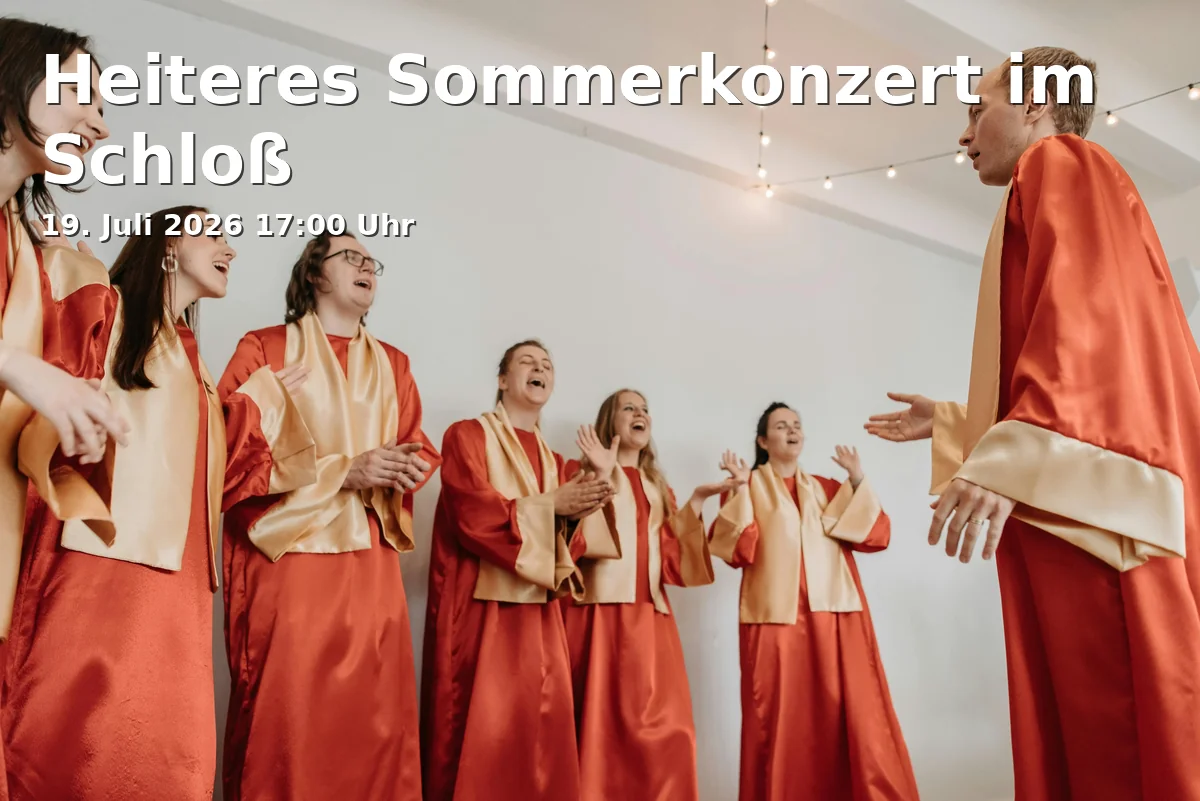
Cheerful Summer Concert at the Castle
A musical summer evening at Burgfarrnbach Castle: cheerful music from the Renaissance and Early Baroque, fine voices, and a historic atmosphere. #Fürth #Concert
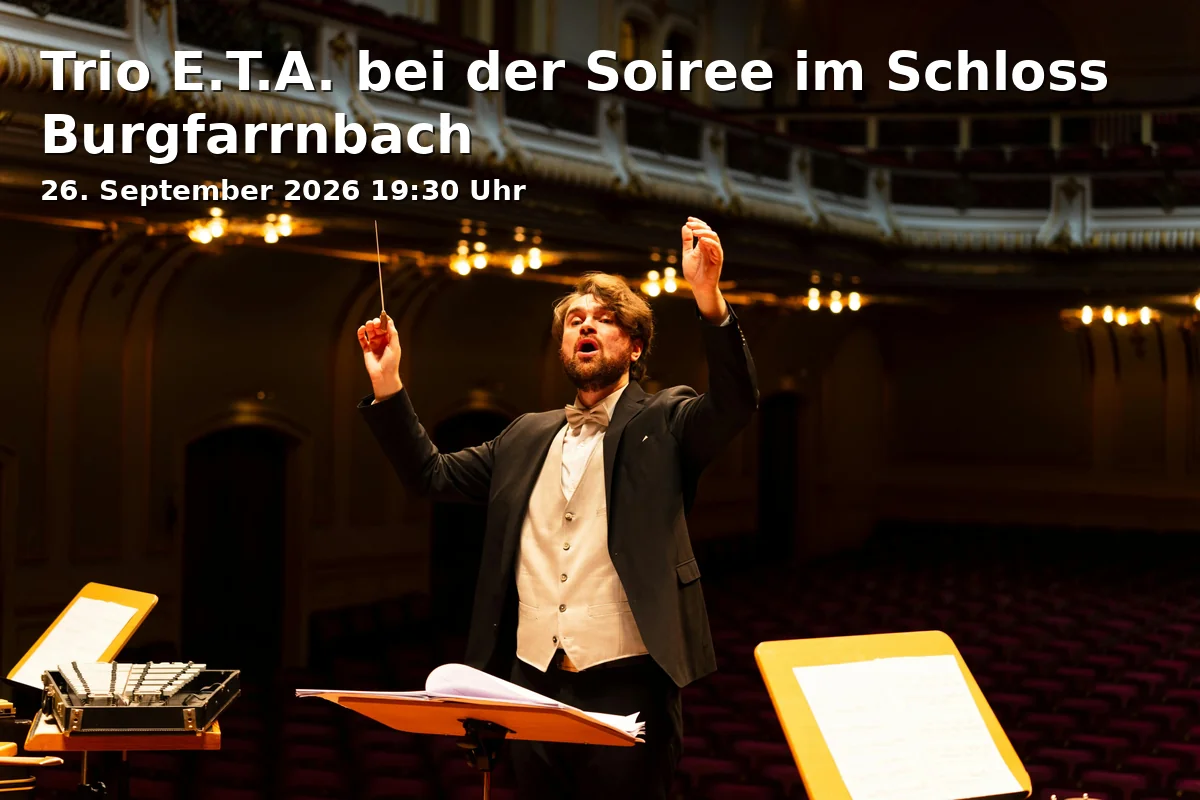
Trio E.T.A. at the Soiree in Schloss Burgfarrnbach
An evening of chamber music full of tension and elegance in Schloss Burgfarrnbach: Trio E.T.A. plays Beethoven, Franck, and Shostakovich. On 26.09.2026 at 19:30, tickets 26 euros. #ChamberMusic #Fürth
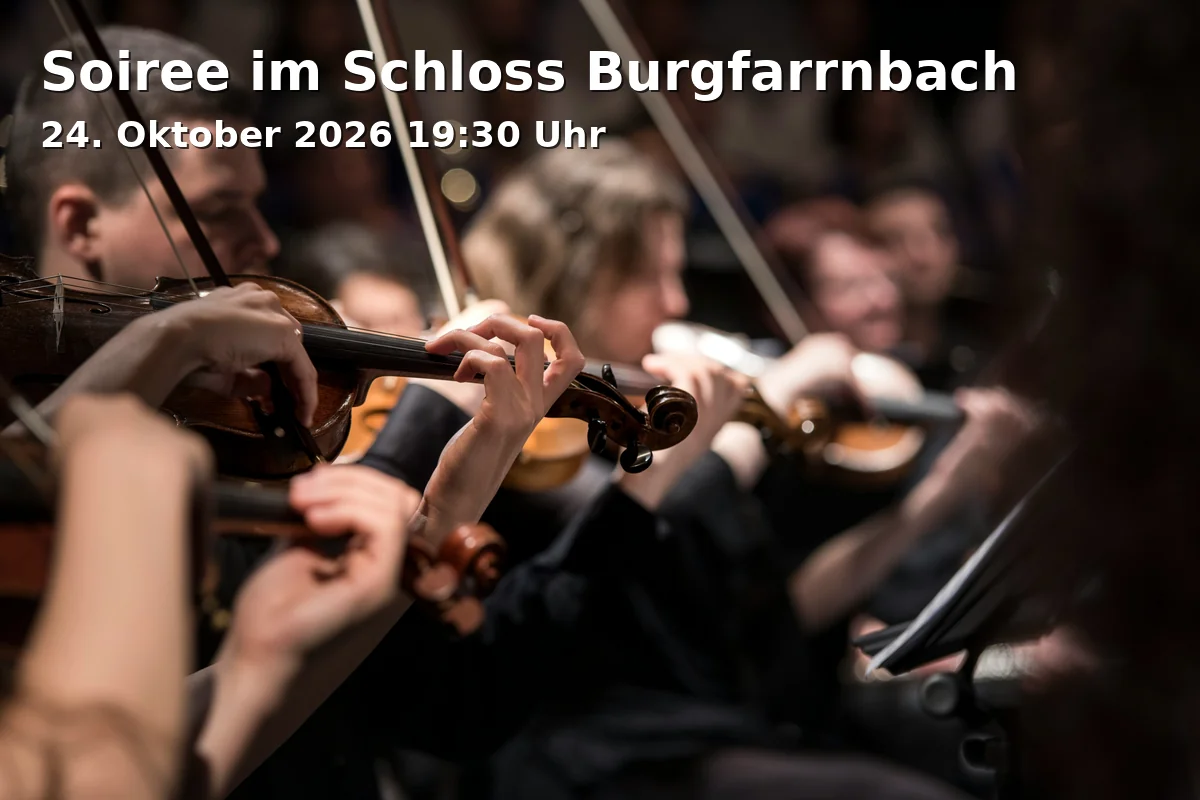
Soiree at Schloss Burgfarrnbach
An evening full of colors and chamber music brilliance at Schloss Burgfarrnbach: The Acelga Quintet plays on 24.10.2026 from 19:30 for 26 euros. #Concert
Acelga Quintett - With Heart and Humor
An evening full of sound colors and charm in Fürth's Schloss Burgfarrnbach: The Acelga Quintett performs on 24.10.2026 at 19:30 for €26. #ClassicalLive
Accordion Duo Yilin Han & Piotr Motyka - East and West
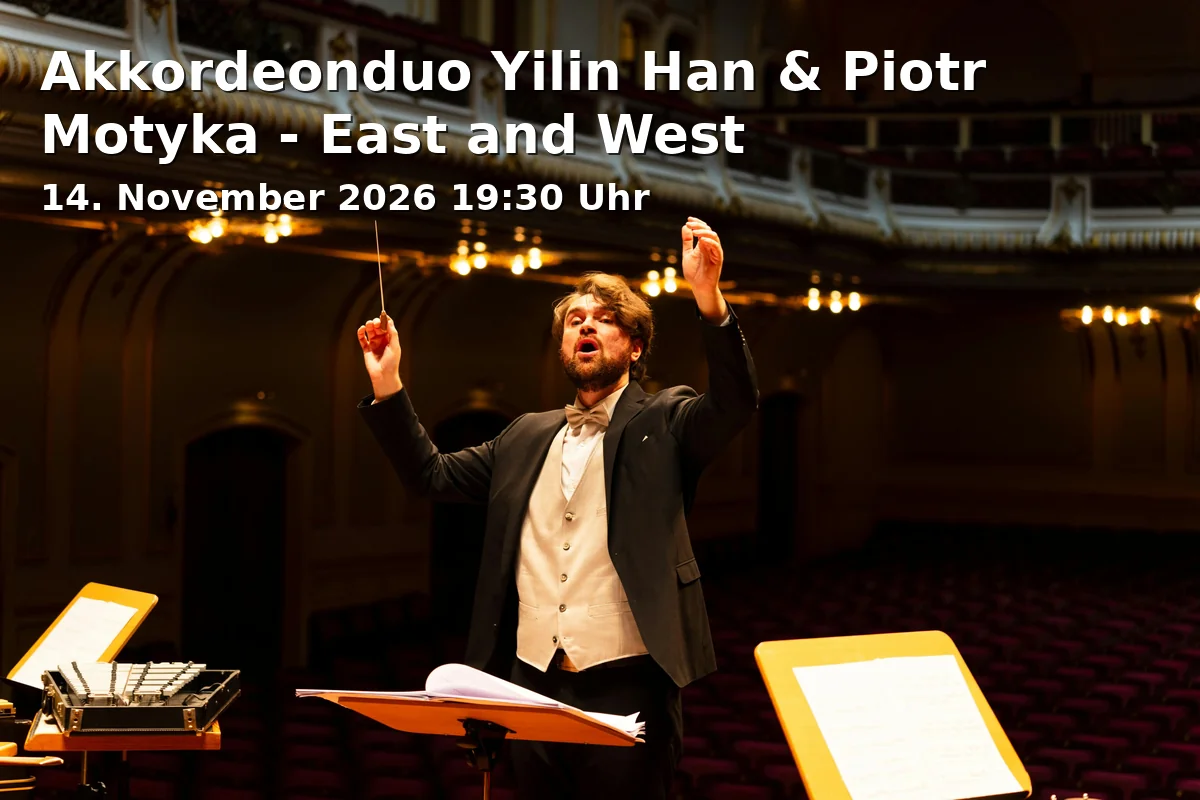
An evening full of sound colors at Schloss Burgfarrnbach: Yilin Han and Piotr Motyka combine Mozart, Ligeti, and Ravel into a strong live experience. 14.11.2026, 19:30, 26 Euro. #Fürth #Accordion
Baroque Plus - The Sweet Reflections of Versailles
Some of the data collected by this provider is for the purposes of personalization and measuring advertising effectiveness. Evening at Schloss Burgfarrnbach Europe dances in the Hall of Mirrors of Versailles – and we are in the midst of it all. As the year comes to a close, Baroque Plus takes its audience back to the time of the Sun King. Inspired by the Gallery of Mirrors, a program full of "sweet reflections" unfolds with splendor and elegance. Baroque masterpieces influenced by antiquity and modernity shape this concert. For the courage to interpret tradition vibrantly and compellingly, Baroque Plus was awarded the Bavarian Arts Promotion Prize in 2025. Tabea Wink – Recorder Marie Sophie Wunder – Recorder Anna Maria Rudolph – Baroque Cello Dominik Heidl – Harpsichord
Baroque Plus: Soiree at Schloss Burgfarrnbach
Baroque highlights at the end of the year in Fürth: Baroque Plus transforms Schloss Burgfarrnbach into a sounding Versailles. 31.12.2026, 3:00 PM, 26 euros. #Classical #Fürth
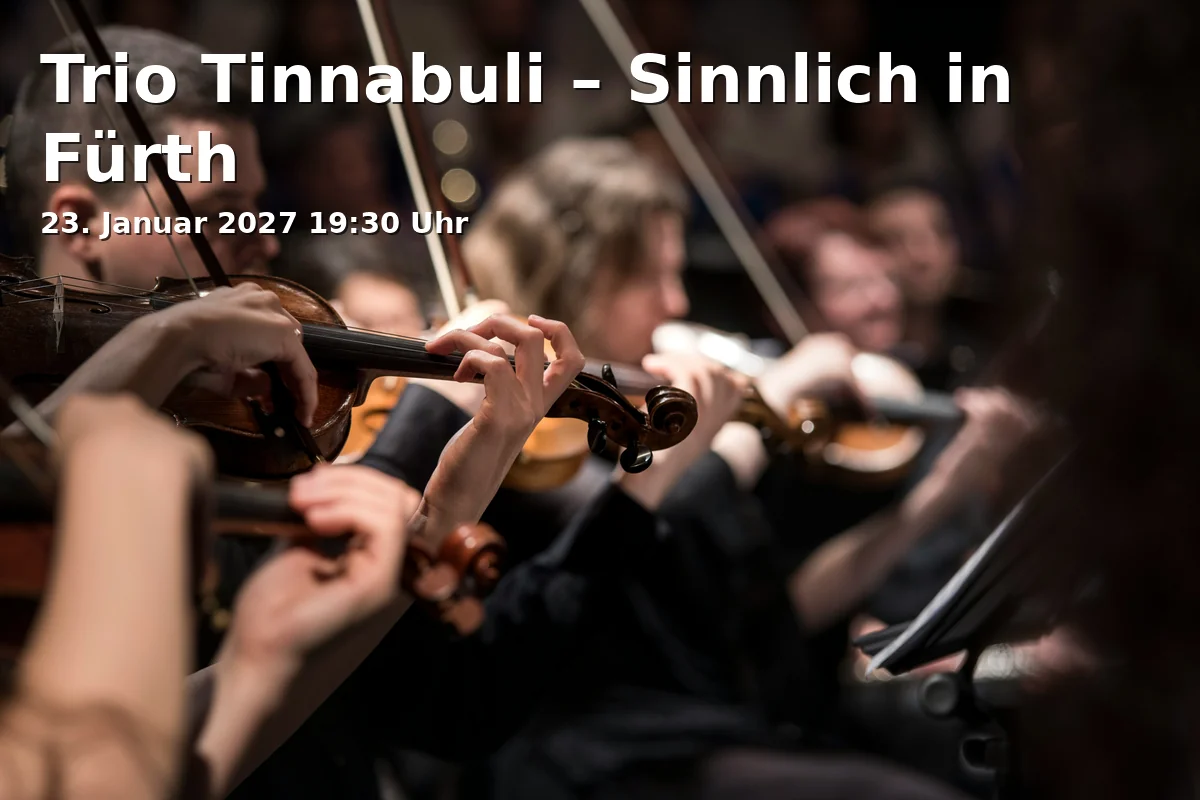
Trio Tinnabuli – Sensual in Fürth
An evening like made of light and breath: Trio Tinnabuli plays at Fürth's Burgfarrnbach Castle. Harp, flute, and impressionistic sound colors on 23.01.2027. #Concert
Duo Kravets-Kassung - Night Pieces Between Dream and Tango
A musical evening between dream and tango awaits Fürth at Schloss Burgfarrnbach. Chamber music, longing, and fine sound colors on 20.02.2027. #Concert
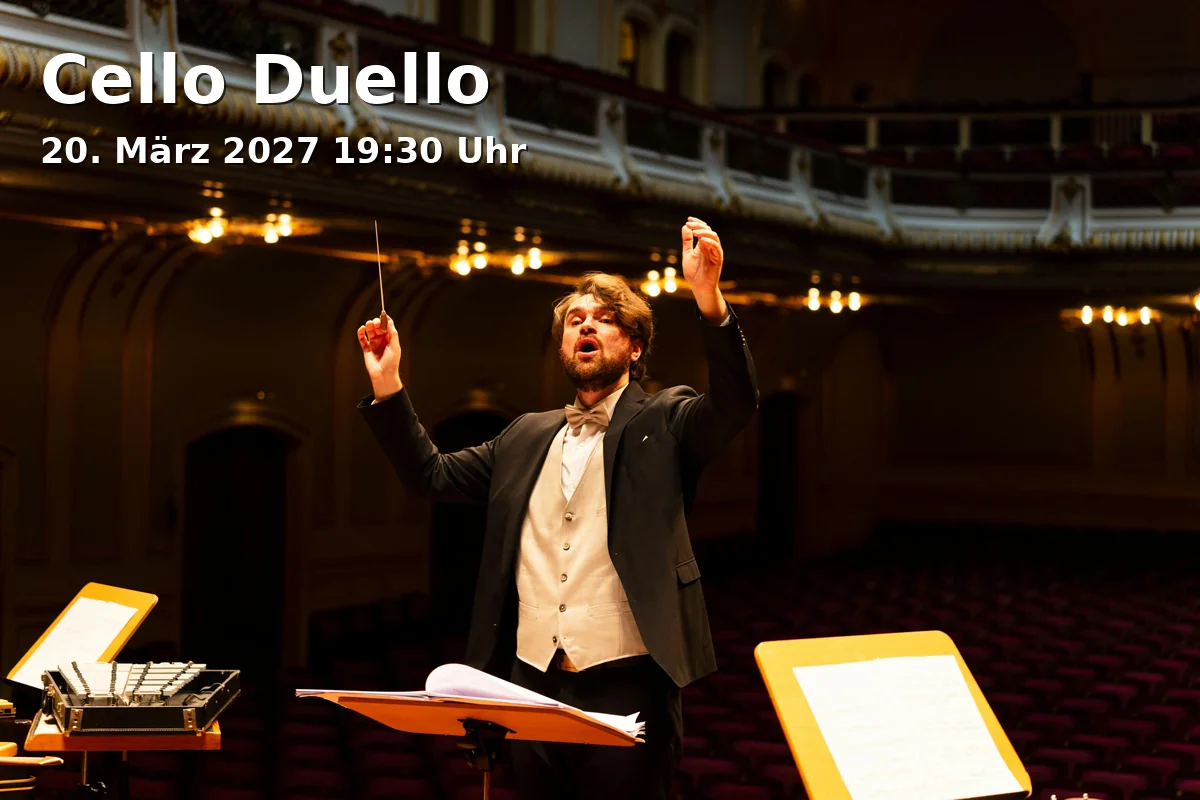
Cello Duello
An evening full of cello magic at Schloss Burgfarrnbach: Cello Duello will resonate in Fürth on 20.03.2027. €26, great virtuosity, strong live atmosphere. #ChamberMusic
Frequently Asked Questions
Reviews
No reviews found