
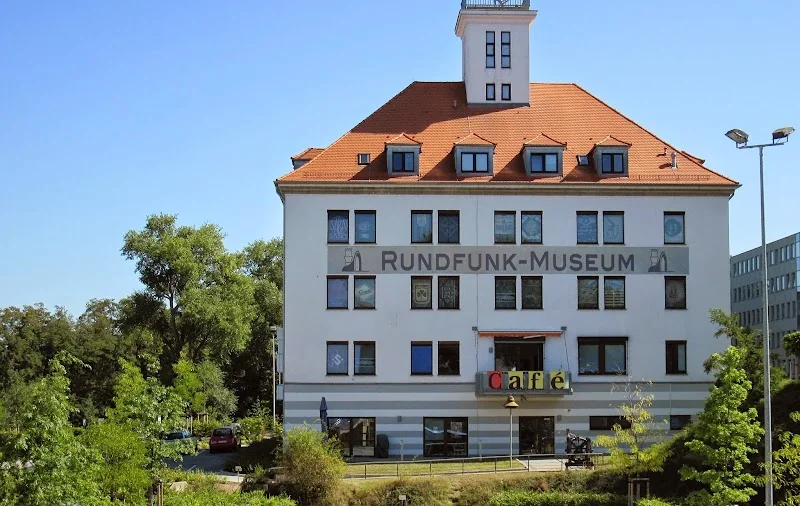
Kurgartenstraße 37a, Fürth
Kurgartenstraße 37a, 90762 Fürth, Germany
Broadcasting Museum Fürth | Renovation & Reopening 2027
The Broadcasting Museum Fürth is a house in transition: It represents the history of radio, television, and audio media, but is currently undergoing a comprehensive reorganization itself. Those looking for opening hours, parking, management, support association, or reopening today need one thing above all: reliable orientation. This overview is designed for exactly that purpose. The museum is currently closed for renovation and museum redesign but continues to work on its profile as a modern educational and experiential venue. In the coming years, the former device exhibition will evolve into a place that connects technology, cultural and social history, and the theme of listening more closely. The location remains the same: Kurgartenstraße 37a in Fürth, in close proximity to the former Grundig World and well integrated into the urban structure. ([fuerth.de](https://www.fuerth.de/service-fuerther-rathaus/aemter-von-a-bis-z/detail/rundfunkmuseum-312583/))
For SEO research, search queries related to reopening, opening hours, renovations, access, and parking are particularly relevant, as they reflect the actual information needs of users. Terms like management, support association, children's birthday, images, reviews, and job offers also indicate that visitors are not only looking for the address but also want to know who is behind the project, how the house will be used in the future, and what services are available. The Broadcasting Museum is not just any museum, but a place with a strong local and technical identity: It has been established as a museum since 1993 and has been housed in the former management building of Grundig since 2001. This combination of historical substance and new concept makes the house particularly interesting for visitors, families, technology enthusiasts, and anyone wanting to better understand Fürth's industrial and media history. ([fuerth.de](https://www.fuerth.de/service-fuerther-rathaus/aemter-von-a-bis-z/detail/rundfunkmuseum-312583/))
Reopening and Renovation of the Broadcasting Museum Fürth
The most important news for everyone keeping an eye on the Broadcasting Museum Fürth is: The house is closed but not shut down. The city of Fürth describes the ongoing work as a comprehensive renovation, expansion, and re-conception of the permanent exhibition. The concept explicitly aims for a new cultural place where people, listening, and audio culture are at the center. From a classic exhibition of technical devices, a place is to emerge that brings together modern mediation, interaction, and inclusion. The official website emphasizes that the museum is to develop into an educational and experiential venue, with interactive and participatory elements that particularly appeal to children and young people. Additionally, an extension will be created to provide space for educational offerings, a recording studio, and other rooms. This is more than a renovation; it is a conceptual realignment. ([rundfunk-museum.de](https://rundfunk-museum.de/))
The city of Fürth also provides specific framework data. According to a report on the construction work, completion is expected around mid to late 2026, with reopening planned for spring 2027. In this context, the total investment is estimated at around 13 million euros, underscoring the project's significance for the city. Particularly interesting is the new architectural and functional orientation: The barrier-free entrance area will be relocated to the side facing the Quellensteg and Pegnitzgrund, an extension will expand the building, and the facade will receive a new coat of paint. In terms of content, the house is moving away from a pure device exhibition and is focusing more on listening as a cultural, technical, and social phenomenon. Therefore, those looking for a classic short-term opening will not find regular visitor operations at this time; however, those following the transformation process will find a museum with a clear future perspective. ([fuerth.de](https://www.fuerth.de/service-fuerther-rathaus/aktuelles/detail/bauarbeiten-am-rundfunkmuseum-auf-hochtouren/))
This repositioning fits well with the long history of the house. The Broadcasting Museum was founded in 1993 and relocated to the former Grundig management villa in 2001. The official representation of the city and the museum emphasizes that the building has aged and therefore a fundamental renovation became necessary. The fact that not only technology but also pedagogy, accessibility, and quality of stay are playing a larger role shows a clear trend in modern museum concepts. From an SEO perspective, this change is relevant: Those searching for the Broadcasting Museum today want not only to understand the past but also to know when it will reopen, how the house will change, and whether a visit will be worthwhile after the reopening. The answer to that is already positive, even if the actual restart is not scheduled until 2027. ([fuerth.de](https://www.fuerth.de/service-fuerther-rathaus/aemter-von-a-bis-z/detail/rundfunkmuseum-312583/))
History and Collection of the Broadcasting Museum Fürth
The Broadcasting Museum Fürth is deeply rooted in German media history. According to Tourism Fürth, the museum has been informing visitors since 2001 in the former building of the Grundig management about the nearly 100-year history of radio and television. The permanent exhibition not only highlights the technical development of entertainment electronics but also its cultural significance. Classic broadcasting devices as well as gramophones, tape recorders, and jukeboxes are presented. Original recordings from the 1920s and hit songs from the 1950s create an auditory experience that makes the history of technology sensually tangible. For many visitors, this mix of object, sound, and memory is the real charm of the house. The museum thus works not only with exhibits but also with atmosphere and media references that appeal to several generations. ([tourismus-fuerth.de](https://www.tourismus-fuerth.de/poi/rundfunkmuseum))
Additionally, the size and depth of the collection are noteworthy. In a recent contribution from the museum, it is described that around 10,000 objects from the history of radio and television, as well as electrical and electronic playback devices, are stored in a total of nine decentralized depots. This number shows how extensive the material heritage of the house is. Especially during the renovation phase, it becomes clear that a museum consists not only of visible showcases but also of a large conservational and curatorial infrastructure in the background. This is important for SEO and user inquiries because it raises the question of what will happen to the collection in the new museum. The official answer is clear: The new concept aims to make the collections more usable and integrate them more into modern forms of mediation. It is not about a break with the past but about a contemporary translation of the existing treasure. ([rundfunk-museum.de](https://rundfunk-museum.de/de/veranstaltungen-und-aktuelles/news))
Visitors who know the museum from previous years often remember the diversity of the collection pieces. The official information mentions not only radios and televisions but also jukeboxes and interactive stations suitable for families and school classes. The tourism site emphasizes that grandparents recognize the devices of their childhood, parents think of record players and televisions they once saved for, and children learn that radio existed before the internet. This intergenerational narrative is a strong unique selling point. The house is thus not only a technology museum but also a place of memory and education. Those looking for images, impressions, or reviews should always consider that the museum's profile has grown historically and is currently being reformed. The ongoing redesign will further develop this character rather than replace it. ([tourismus-fuerth.de](https://www.tourismus-fuerth.de/poi/rundfunkmuseum))
Opening Hours, Contact, and Current Accessibility
The most common search intent for a museum is usually about opening hours. For the Broadcasting Museum Fürth, the answer at the moment is clear and unambiguous: The house is currently closed due to renovation and construction measures. The city detail page explicitly states that there are currently no regular opening hours for a visit. At the same time, it is made clear that the museum remains reachable. This is particularly important for groups, inquiries about the collection, or organizational questions. The team is available by phone and email from Monday to Friday from 9 AM to 5 PM. For current visitors, this means: Do not arrive for free visits, but contact in advance if you have specific questions. This way, unnecessary trips can be avoided while obtaining concrete information about the renovation phase. ([fuerth.de](https://www.fuerth.de/service-fuerther-rathaus/aemter-von-a-bis-z/detail/rundfunkmuseum-312583/))
The address data is currently also split. The house address is Kurgartenstraße 37a, 90762 Fürth, where the museum grounds are located. However, the museum's office has moved to the city center of Fürth and is working at the official address of Friedrichstraße 4-6, 90762 Fürth. The contact page explains that the museum is working in the city center during the construction period and is reachable by appointment. This connects the house with a permanent museum location and a temporary administrative address. Users looking for management, contact, or events should therefore pay attention to the difference between the museum grounds and the office address. This difference is also valuable for the search engine as it shows that the museum has not simply disappeared but is in an organizational transition phase. ([rundfunk-museum.de](https://rundfunk-museum.de/de/kontakt/adresse))
For practical inquiries, it is also important that the official website continues to serve as an information channel. There are notes on events and current news, the new Broadcasting Museum, the support association, and contact options. So, those looking for a phone number, email address, or direct contact person will find this information on the official pages of the house and the city of Fürth. This is particularly helpful for questions about the collection, object donations, or collaborations. Additionally, the museum points out that processing such inquiries may take some time due to necessary research and internal coordination. This underscores once again: Even though the doors are closed, the Broadcasting Museum continues to work in the background. ([rundfunk-museum.de](https://rundfunk-museum.de/de/kontakt/anfragen?utm_source=openai))
Access, Parking, and Location on Kurgartenstraße
For all those preparing for the reopening or wanting to learn about the location, access to the Broadcasting Museum Fürth is well documented. The official page indicates that the route by car is near the A73, exit Nürnberg-Doos. From there, one should follow the signs towards Uferstadt Fürth and Broadcasting Museum. Particularly relevant for the parking search is the note about the museum's free parking, which can be reached via Dr.-Mack-Straße. This is a clear advantage for visitors with cars, groups, or delivery traffic. Those who pay attention to the city location, access, and costs will find a simple and practical solution here. ([rundfunk-museum.de](https://rundfunk-museum.de/de/kontakt/adresse))
Public transport is also well described. According to the official directions, one can reach the museum by subway line U1 to the Stadtgrenze stop and then walk about 500 meters along Ludwig-Quellen-Straße. Through the Kurgartenpassage, one arrives directly at the Broadcasting Museum. Additionally, bus lines 39 and 175 are mentioned; the Kurgartenstraße stop is located only about 100 meters away. This makes the location attractive not only for local guests but also for school classes, groups, and visitors from the entire Fürth and Nuremberg area. Furthermore, the tourism site emphasizes that the museum offers barrier-free access and a barrier-free restroom facility. Therefore, there are many reasons to visit after the reopening: central accessibility, clear directions, and a location that is well connected by car as well as by train and bus. ([rundfunk-museum.de](https://rundfunk-museum.de/de/kontakt/adresse))
Those traveling on foot or by bicycle also benefit from the location. The museum is directly accessible via the Wiesengrund and the Pegnitz cycle path over the Quellensteg; from Kurgartenstraße, the Kurgartenpassage leads to the main entrance. These details show that the location is not only intended for motorized visitors but is also embedded in the everyday traffic of the city. Especially for Fürth, a city with high usage density in the urban area, this is an important signal. From an SEO perspective, this section covers the search terms access, parking, and location with real facts. It also makes it clear that the location itself is an argument for visiting: easily accessible, easy to explain, and suitable for various target groups. ([rundfunk-museum.de](https://rundfunk-museum.de/de/kontakt/adresse))
Management, Support Association, and Offers for Children
Those looking for the management of the Broadcasting Museum Fürth will find two important names on the city information page. Karin Heinzler is mentioned as the museum director, while Dr. Martin Schramm is listed as the head of the city archive and museums of the city of Fürth. This assignment is helpful for inquiries about organization, project development, or professional topics. It also shows that the Broadcasting Museum is organizationally integrated into the city's museum network. For visitors and cooperation partners, this means: The house is supported by a team that combines both museum and city responsibilities. This structure is particularly important during a renovation phase as it creates continuity. ([fuerth.de](https://www.fuerth.de/service-fuerther-rathaus/aemter-von-a-bis-z/detail/rundfunkmuseum-312583/))
A particularly relevant component is the support association. The official support association page explains that radio and television technology enthusiasts have come together to support the museum's activities with advice and assistance. Members help with technical and historical knowledge in the restoration and reactivation of exhibits as well as in the construction of new exhibits. The association also offers a monthly analog meetup and provides information on the basics of broadcasting and audio technology. The regular membership fee is 30 euros per year. So, those who want to connect with the house not just as visitors but as supporters will find a very concrete access point here. For the later reopening, this support circle could even play an important role as it bundles expertise, collection competence, and voluntary energy. ([rundfunk-museum.de](https://rundfunk-museum.de/de/foerderverein))
There are also indications in the current program for families and children. The museum emphasizes on its website that it continues to actively engage in education during the restructuring phase and will focus more on experiments, workshops, and STEM references in the future. A recent news article also mentions the new listening expedition for children, which was presented at the education fair. This is important for anyone looking for children's birthday parties, family offerings, or child-friendly formats. A publicly advertised standard package for children's birthdays is currently not listed, but the educational direction is clear: The museum wants to engage young people through listening, technology, and participation. Those with specific wishes should choose direct contact as the museum is working individually and not through a traditional public operation due to the renovation phase. ([rundfunk-museum.de](https://rundfunk-museum.de/))
Images, Reviews, and What Visitors Can Expect Today
Those looking for images of the Broadcasting Museum Fürth will find current materials of the house on the official website as well as on the tourism page. There, exterior views, museum impressions, and information about the surroundings are shown. This is particularly useful while the museum is closed, as photos help to better place the location and character of the building. At the same time, the images show that it is not just any building but a place with a clear history and distinctive identity. For the later return of the public, this is important because anticipation often builds through visual impressions. Therefore, those making search queries like images of Broadcasting Museum Fürth or Broadcasting Museum Fürth images should use the official pages as their first point of contact. ([rundfunk-museum.de](https://rundfunk-museum.de/))
When it comes to reviews, the current renovation is particularly important because many older reviews reflect the previous state of the exhibition. The official communication makes it clear that the house is currently evolving from a historical device exhibition to a new experiential venue. Therefore, earlier opinions are not automatically transferable to the future museum. Those reading reviews should distinguish between the old state of the house and the future concept. This is not a weakness but a typical feature of places in transition. For an informed decision, it is advisable to consider images, official updates, and possibly older reviews together. This creates a more realistic picture of what the Broadcasting Museum once was and what it soon wants to be. ([fuerth.de](https://www.fuerth.de/service-fuerther-rathaus/aemter-von-a-bis-z/detail/rundfunkmuseum-312583/))
In summary, the Broadcasting Museum Fürth remains an exciting project with much substance and future. The collection is large, the building has history, the city support is visible, and the new content orientation seems coherent. Those planning a visit today must be patient due to the renovation, but they will receive a museum that is set to return significantly modernized and content-sharpened in the coming years. Therefore, for search queries related to the Broadcasting Museum of the city of Fürth, reopening, renovation, parking, and opening hours, a clear message is important: The house is currently closed, but it is actively working on a restart with more space for mediation, listening culture, and encounters. ([fuerth.de](https://www.fuerth.de/service-fuerther-rathaus/aemter-von-a-bis-z/detail/rundfunkmuseum-312583/))
Sources:
Mehr anzeigenWeniger anzeigen
Broadcasting Museum Fürth | Renovation & Reopening 2027
The Broadcasting Museum Fürth is a house in transition: It represents the history of radio, television, and audio media, but is currently undergoing a comprehensive reorganization itself. Those looking for opening hours, parking, management, support association, or reopening today need one thing above all: reliable orientation. This overview is designed for exactly that purpose. The museum is currently closed for renovation and museum redesign but continues to work on its profile as a modern educational and experiential venue. In the coming years, the former device exhibition will evolve into a place that connects technology, cultural and social history, and the theme of listening more closely. The location remains the same: Kurgartenstraße 37a in Fürth, in close proximity to the former Grundig World and well integrated into the urban structure. ([fuerth.de](https://www.fuerth.de/service-fuerther-rathaus/aemter-von-a-bis-z/detail/rundfunkmuseum-312583/))
For SEO research, search queries related to reopening, opening hours, renovations, access, and parking are particularly relevant, as they reflect the actual information needs of users. Terms like management, support association, children's birthday, images, reviews, and job offers also indicate that visitors are not only looking for the address but also want to know who is behind the project, how the house will be used in the future, and what services are available. The Broadcasting Museum is not just any museum, but a place with a strong local and technical identity: It has been established as a museum since 1993 and has been housed in the former management building of Grundig since 2001. This combination of historical substance and new concept makes the house particularly interesting for visitors, families, technology enthusiasts, and anyone wanting to better understand Fürth's industrial and media history. ([fuerth.de](https://www.fuerth.de/service-fuerther-rathaus/aemter-von-a-bis-z/detail/rundfunkmuseum-312583/))
Reopening and Renovation of the Broadcasting Museum Fürth
The most important news for everyone keeping an eye on the Broadcasting Museum Fürth is: The house is closed but not shut down. The city of Fürth describes the ongoing work as a comprehensive renovation, expansion, and re-conception of the permanent exhibition. The concept explicitly aims for a new cultural place where people, listening, and audio culture are at the center. From a classic exhibition of technical devices, a place is to emerge that brings together modern mediation, interaction, and inclusion. The official website emphasizes that the museum is to develop into an educational and experiential venue, with interactive and participatory elements that particularly appeal to children and young people. Additionally, an extension will be created to provide space for educational offerings, a recording studio, and other rooms. This is more than a renovation; it is a conceptual realignment. ([rundfunk-museum.de](https://rundfunk-museum.de/))
The city of Fürth also provides specific framework data. According to a report on the construction work, completion is expected around mid to late 2026, with reopening planned for spring 2027. In this context, the total investment is estimated at around 13 million euros, underscoring the project's significance for the city. Particularly interesting is the new architectural and functional orientation: The barrier-free entrance area will be relocated to the side facing the Quellensteg and Pegnitzgrund, an extension will expand the building, and the facade will receive a new coat of paint. In terms of content, the house is moving away from a pure device exhibition and is focusing more on listening as a cultural, technical, and social phenomenon. Therefore, those looking for a classic short-term opening will not find regular visitor operations at this time; however, those following the transformation process will find a museum with a clear future perspective. ([fuerth.de](https://www.fuerth.de/service-fuerther-rathaus/aktuelles/detail/bauarbeiten-am-rundfunkmuseum-auf-hochtouren/))
This repositioning fits well with the long history of the house. The Broadcasting Museum was founded in 1993 and relocated to the former Grundig management villa in 2001. The official representation of the city and the museum emphasizes that the building has aged and therefore a fundamental renovation became necessary. The fact that not only technology but also pedagogy, accessibility, and quality of stay are playing a larger role shows a clear trend in modern museum concepts. From an SEO perspective, this change is relevant: Those searching for the Broadcasting Museum today want not only to understand the past but also to know when it will reopen, how the house will change, and whether a visit will be worthwhile after the reopening. The answer to that is already positive, even if the actual restart is not scheduled until 2027. ([fuerth.de](https://www.fuerth.de/service-fuerther-rathaus/aemter-von-a-bis-z/detail/rundfunkmuseum-312583/))
History and Collection of the Broadcasting Museum Fürth
The Broadcasting Museum Fürth is deeply rooted in German media history. According to Tourism Fürth, the museum has been informing visitors since 2001 in the former building of the Grundig management about the nearly 100-year history of radio and television. The permanent exhibition not only highlights the technical development of entertainment electronics but also its cultural significance. Classic broadcasting devices as well as gramophones, tape recorders, and jukeboxes are presented. Original recordings from the 1920s and hit songs from the 1950s create an auditory experience that makes the history of technology sensually tangible. For many visitors, this mix of object, sound, and memory is the real charm of the house. The museum thus works not only with exhibits but also with atmosphere and media references that appeal to several generations. ([tourismus-fuerth.de](https://www.tourismus-fuerth.de/poi/rundfunkmuseum))
Additionally, the size and depth of the collection are noteworthy. In a recent contribution from the museum, it is described that around 10,000 objects from the history of radio and television, as well as electrical and electronic playback devices, are stored in a total of nine decentralized depots. This number shows how extensive the material heritage of the house is. Especially during the renovation phase, it becomes clear that a museum consists not only of visible showcases but also of a large conservational and curatorial infrastructure in the background. This is important for SEO and user inquiries because it raises the question of what will happen to the collection in the new museum. The official answer is clear: The new concept aims to make the collections more usable and integrate them more into modern forms of mediation. It is not about a break with the past but about a contemporary translation of the existing treasure. ([rundfunk-museum.de](https://rundfunk-museum.de/de/veranstaltungen-und-aktuelles/news))
Visitors who know the museum from previous years often remember the diversity of the collection pieces. The official information mentions not only radios and televisions but also jukeboxes and interactive stations suitable for families and school classes. The tourism site emphasizes that grandparents recognize the devices of their childhood, parents think of record players and televisions they once saved for, and children learn that radio existed before the internet. This intergenerational narrative is a strong unique selling point. The house is thus not only a technology museum but also a place of memory and education. Those looking for images, impressions, or reviews should always consider that the museum's profile has grown historically and is currently being reformed. The ongoing redesign will further develop this character rather than replace it. ([tourismus-fuerth.de](https://www.tourismus-fuerth.de/poi/rundfunkmuseum))
Opening Hours, Contact, and Current Accessibility
The most common search intent for a museum is usually about opening hours. For the Broadcasting Museum Fürth, the answer at the moment is clear and unambiguous: The house is currently closed due to renovation and construction measures. The city detail page explicitly states that there are currently no regular opening hours for a visit. At the same time, it is made clear that the museum remains reachable. This is particularly important for groups, inquiries about the collection, or organizational questions. The team is available by phone and email from Monday to Friday from 9 AM to 5 PM. For current visitors, this means: Do not arrive for free visits, but contact in advance if you have specific questions. This way, unnecessary trips can be avoided while obtaining concrete information about the renovation phase. ([fuerth.de](https://www.fuerth.de/service-fuerther-rathaus/aemter-von-a-bis-z/detail/rundfunkmuseum-312583/))
The address data is currently also split. The house address is Kurgartenstraße 37a, 90762 Fürth, where the museum grounds are located. However, the museum's office has moved to the city center of Fürth and is working at the official address of Friedrichstraße 4-6, 90762 Fürth. The contact page explains that the museum is working in the city center during the construction period and is reachable by appointment. This connects the house with a permanent museum location and a temporary administrative address. Users looking for management, contact, or events should therefore pay attention to the difference between the museum grounds and the office address. This difference is also valuable for the search engine as it shows that the museum has not simply disappeared but is in an organizational transition phase. ([rundfunk-museum.de](https://rundfunk-museum.de/de/kontakt/adresse))
For practical inquiries, it is also important that the official website continues to serve as an information channel. There are notes on events and current news, the new Broadcasting Museum, the support association, and contact options. So, those looking for a phone number, email address, or direct contact person will find this information on the official pages of the house and the city of Fürth. This is particularly helpful for questions about the collection, object donations, or collaborations. Additionally, the museum points out that processing such inquiries may take some time due to necessary research and internal coordination. This underscores once again: Even though the doors are closed, the Broadcasting Museum continues to work in the background. ([rundfunk-museum.de](https://rundfunk-museum.de/de/kontakt/anfragen?utm_source=openai))
Access, Parking, and Location on Kurgartenstraße
For all those preparing for the reopening or wanting to learn about the location, access to the Broadcasting Museum Fürth is well documented. The official page indicates that the route by car is near the A73, exit Nürnberg-Doos. From there, one should follow the signs towards Uferstadt Fürth and Broadcasting Museum. Particularly relevant for the parking search is the note about the museum's free parking, which can be reached via Dr.-Mack-Straße. This is a clear advantage for visitors with cars, groups, or delivery traffic. Those who pay attention to the city location, access, and costs will find a simple and practical solution here. ([rundfunk-museum.de](https://rundfunk-museum.de/de/kontakt/adresse))
Public transport is also well described. According to the official directions, one can reach the museum by subway line U1 to the Stadtgrenze stop and then walk about 500 meters along Ludwig-Quellen-Straße. Through the Kurgartenpassage, one arrives directly at the Broadcasting Museum. Additionally, bus lines 39 and 175 are mentioned; the Kurgartenstraße stop is located only about 100 meters away. This makes the location attractive not only for local guests but also for school classes, groups, and visitors from the entire Fürth and Nuremberg area. Furthermore, the tourism site emphasizes that the museum offers barrier-free access and a barrier-free restroom facility. Therefore, there are many reasons to visit after the reopening: central accessibility, clear directions, and a location that is well connected by car as well as by train and bus. ([rundfunk-museum.de](https://rundfunk-museum.de/de/kontakt/adresse))
Those traveling on foot or by bicycle also benefit from the location. The museum is directly accessible via the Wiesengrund and the Pegnitz cycle path over the Quellensteg; from Kurgartenstraße, the Kurgartenpassage leads to the main entrance. These details show that the location is not only intended for motorized visitors but is also embedded in the everyday traffic of the city. Especially for Fürth, a city with high usage density in the urban area, this is an important signal. From an SEO perspective, this section covers the search terms access, parking, and location with real facts. It also makes it clear that the location itself is an argument for visiting: easily accessible, easy to explain, and suitable for various target groups. ([rundfunk-museum.de](https://rundfunk-museum.de/de/kontakt/adresse))
Management, Support Association, and Offers for Children
Those looking for the management of the Broadcasting Museum Fürth will find two important names on the city information page. Karin Heinzler is mentioned as the museum director, while Dr. Martin Schramm is listed as the head of the city archive and museums of the city of Fürth. This assignment is helpful for inquiries about organization, project development, or professional topics. It also shows that the Broadcasting Museum is organizationally integrated into the city's museum network. For visitors and cooperation partners, this means: The house is supported by a team that combines both museum and city responsibilities. This structure is particularly important during a renovation phase as it creates continuity. ([fuerth.de](https://www.fuerth.de/service-fuerther-rathaus/aemter-von-a-bis-z/detail/rundfunkmuseum-312583/))
A particularly relevant component is the support association. The official support association page explains that radio and television technology enthusiasts have come together to support the museum's activities with advice and assistance. Members help with technical and historical knowledge in the restoration and reactivation of exhibits as well as in the construction of new exhibits. The association also offers a monthly analog meetup and provides information on the basics of broadcasting and audio technology. The regular membership fee is 30 euros per year. So, those who want to connect with the house not just as visitors but as supporters will find a very concrete access point here. For the later reopening, this support circle could even play an important role as it bundles expertise, collection competence, and voluntary energy. ([rundfunk-museum.de](https://rundfunk-museum.de/de/foerderverein))
There are also indications in the current program for families and children. The museum emphasizes on its website that it continues to actively engage in education during the restructuring phase and will focus more on experiments, workshops, and STEM references in the future. A recent news article also mentions the new listening expedition for children, which was presented at the education fair. This is important for anyone looking for children's birthday parties, family offerings, or child-friendly formats. A publicly advertised standard package for children's birthdays is currently not listed, but the educational direction is clear: The museum wants to engage young people through listening, technology, and participation. Those with specific wishes should choose direct contact as the museum is working individually and not through a traditional public operation due to the renovation phase. ([rundfunk-museum.de](https://rundfunk-museum.de/))
Images, Reviews, and What Visitors Can Expect Today
Those looking for images of the Broadcasting Museum Fürth will find current materials of the house on the official website as well as on the tourism page. There, exterior views, museum impressions, and information about the surroundings are shown. This is particularly useful while the museum is closed, as photos help to better place the location and character of the building. At the same time, the images show that it is not just any building but a place with a clear history and distinctive identity. For the later return of the public, this is important because anticipation often builds through visual impressions. Therefore, those making search queries like images of Broadcasting Museum Fürth or Broadcasting Museum Fürth images should use the official pages as their first point of contact. ([rundfunk-museum.de](https://rundfunk-museum.de/))
When it comes to reviews, the current renovation is particularly important because many older reviews reflect the previous state of the exhibition. The official communication makes it clear that the house is currently evolving from a historical device exhibition to a new experiential venue. Therefore, earlier opinions are not automatically transferable to the future museum. Those reading reviews should distinguish between the old state of the house and the future concept. This is not a weakness but a typical feature of places in transition. For an informed decision, it is advisable to consider images, official updates, and possibly older reviews together. This creates a more realistic picture of what the Broadcasting Museum once was and what it soon wants to be. ([fuerth.de](https://www.fuerth.de/service-fuerther-rathaus/aemter-von-a-bis-z/detail/rundfunkmuseum-312583/))
In summary, the Broadcasting Museum Fürth remains an exciting project with much substance and future. The collection is large, the building has history, the city support is visible, and the new content orientation seems coherent. Those planning a visit today must be patient due to the renovation, but they will receive a museum that is set to return significantly modernized and content-sharpened in the coming years. Therefore, for search queries related to the Broadcasting Museum of the city of Fürth, reopening, renovation, parking, and opening hours, a clear message is important: The house is currently closed, but it is actively working on a restart with more space for mediation, listening culture, and encounters. ([fuerth.de](https://www.fuerth.de/service-fuerther-rathaus/aemter-von-a-bis-z/detail/rundfunkmuseum-312583/))
Sources:
Broadcasting Museum Fürth | Renovation & Reopening 2027
The Broadcasting Museum Fürth is a house in transition: It represents the history of radio, television, and audio media, but is currently undergoing a comprehensive reorganization itself. Those looking for opening hours, parking, management, support association, or reopening today need one thing above all: reliable orientation. This overview is designed for exactly that purpose. The museum is currently closed for renovation and museum redesign but continues to work on its profile as a modern educational and experiential venue. In the coming years, the former device exhibition will evolve into a place that connects technology, cultural and social history, and the theme of listening more closely. The location remains the same: Kurgartenstraße 37a in Fürth, in close proximity to the former Grundig World and well integrated into the urban structure. ([fuerth.de](https://www.fuerth.de/service-fuerther-rathaus/aemter-von-a-bis-z/detail/rundfunkmuseum-312583/))
For SEO research, search queries related to reopening, opening hours, renovations, access, and parking are particularly relevant, as they reflect the actual information needs of users. Terms like management, support association, children's birthday, images, reviews, and job offers also indicate that visitors are not only looking for the address but also want to know who is behind the project, how the house will be used in the future, and what services are available. The Broadcasting Museum is not just any museum, but a place with a strong local and technical identity: It has been established as a museum since 1993 and has been housed in the former management building of Grundig since 2001. This combination of historical substance and new concept makes the house particularly interesting for visitors, families, technology enthusiasts, and anyone wanting to better understand Fürth's industrial and media history. ([fuerth.de](https://www.fuerth.de/service-fuerther-rathaus/aemter-von-a-bis-z/detail/rundfunkmuseum-312583/))
Reopening and Renovation of the Broadcasting Museum Fürth
The most important news for everyone keeping an eye on the Broadcasting Museum Fürth is: The house is closed but not shut down. The city of Fürth describes the ongoing work as a comprehensive renovation, expansion, and re-conception of the permanent exhibition. The concept explicitly aims for a new cultural place where people, listening, and audio culture are at the center. From a classic exhibition of technical devices, a place is to emerge that brings together modern mediation, interaction, and inclusion. The official website emphasizes that the museum is to develop into an educational and experiential venue, with interactive and participatory elements that particularly appeal to children and young people. Additionally, an extension will be created to provide space for educational offerings, a recording studio, and other rooms. This is more than a renovation; it is a conceptual realignment. ([rundfunk-museum.de](https://rundfunk-museum.de/))
The city of Fürth also provides specific framework data. According to a report on the construction work, completion is expected around mid to late 2026, with reopening planned for spring 2027. In this context, the total investment is estimated at around 13 million euros, underscoring the project's significance for the city. Particularly interesting is the new architectural and functional orientation: The barrier-free entrance area will be relocated to the side facing the Quellensteg and Pegnitzgrund, an extension will expand the building, and the facade will receive a new coat of paint. In terms of content, the house is moving away from a pure device exhibition and is focusing more on listening as a cultural, technical, and social phenomenon. Therefore, those looking for a classic short-term opening will not find regular visitor operations at this time; however, those following the transformation process will find a museum with a clear future perspective. ([fuerth.de](https://www.fuerth.de/service-fuerther-rathaus/aktuelles/detail/bauarbeiten-am-rundfunkmuseum-auf-hochtouren/))
This repositioning fits well with the long history of the house. The Broadcasting Museum was founded in 1993 and relocated to the former Grundig management villa in 2001. The official representation of the city and the museum emphasizes that the building has aged and therefore a fundamental renovation became necessary. The fact that not only technology but also pedagogy, accessibility, and quality of stay are playing a larger role shows a clear trend in modern museum concepts. From an SEO perspective, this change is relevant: Those searching for the Broadcasting Museum today want not only to understand the past but also to know when it will reopen, how the house will change, and whether a visit will be worthwhile after the reopening. The answer to that is already positive, even if the actual restart is not scheduled until 2027. ([fuerth.de](https://www.fuerth.de/service-fuerther-rathaus/aemter-von-a-bis-z/detail/rundfunkmuseum-312583/))
History and Collection of the Broadcasting Museum Fürth
The Broadcasting Museum Fürth is deeply rooted in German media history. According to Tourism Fürth, the museum has been informing visitors since 2001 in the former building of the Grundig management about the nearly 100-year history of radio and television. The permanent exhibition not only highlights the technical development of entertainment electronics but also its cultural significance. Classic broadcasting devices as well as gramophones, tape recorders, and jukeboxes are presented. Original recordings from the 1920s and hit songs from the 1950s create an auditory experience that makes the history of technology sensually tangible. For many visitors, this mix of object, sound, and memory is the real charm of the house. The museum thus works not only with exhibits but also with atmosphere and media references that appeal to several generations. ([tourismus-fuerth.de](https://www.tourismus-fuerth.de/poi/rundfunkmuseum))
Additionally, the size and depth of the collection are noteworthy. In a recent contribution from the museum, it is described that around 10,000 objects from the history of radio and television, as well as electrical and electronic playback devices, are stored in a total of nine decentralized depots. This number shows how extensive the material heritage of the house is. Especially during the renovation phase, it becomes clear that a museum consists not only of visible showcases but also of a large conservational and curatorial infrastructure in the background. This is important for SEO and user inquiries because it raises the question of what will happen to the collection in the new museum. The official answer is clear: The new concept aims to make the collections more usable and integrate them more into modern forms of mediation. It is not about a break with the past but about a contemporary translation of the existing treasure. ([rundfunk-museum.de](https://rundfunk-museum.de/de/veranstaltungen-und-aktuelles/news))
Visitors who know the museum from previous years often remember the diversity of the collection pieces. The official information mentions not only radios and televisions but also jukeboxes and interactive stations suitable for families and school classes. The tourism site emphasizes that grandparents recognize the devices of their childhood, parents think of record players and televisions they once saved for, and children learn that radio existed before the internet. This intergenerational narrative is a strong unique selling point. The house is thus not only a technology museum but also a place of memory and education. Those looking for images, impressions, or reviews should always consider that the museum's profile has grown historically and is currently being reformed. The ongoing redesign will further develop this character rather than replace it. ([tourismus-fuerth.de](https://www.tourismus-fuerth.de/poi/rundfunkmuseum))
Opening Hours, Contact, and Current Accessibility
The most common search intent for a museum is usually about opening hours. For the Broadcasting Museum Fürth, the answer at the moment is clear and unambiguous: The house is currently closed due to renovation and construction measures. The city detail page explicitly states that there are currently no regular opening hours for a visit. At the same time, it is made clear that the museum remains reachable. This is particularly important for groups, inquiries about the collection, or organizational questions. The team is available by phone and email from Monday to Friday from 9 AM to 5 PM. For current visitors, this means: Do not arrive for free visits, but contact in advance if you have specific questions. This way, unnecessary trips can be avoided while obtaining concrete information about the renovation phase. ([fuerth.de](https://www.fuerth.de/service-fuerther-rathaus/aemter-von-a-bis-z/detail/rundfunkmuseum-312583/))
The address data is currently also split. The house address is Kurgartenstraße 37a, 90762 Fürth, where the museum grounds are located. However, the museum's office has moved to the city center of Fürth and is working at the official address of Friedrichstraße 4-6, 90762 Fürth. The contact page explains that the museum is working in the city center during the construction period and is reachable by appointment. This connects the house with a permanent museum location and a temporary administrative address. Users looking for management, contact, or events should therefore pay attention to the difference between the museum grounds and the office address. This difference is also valuable for the search engine as it shows that the museum has not simply disappeared but is in an organizational transition phase. ([rundfunk-museum.de](https://rundfunk-museum.de/de/kontakt/adresse))
For practical inquiries, it is also important that the official website continues to serve as an information channel. There are notes on events and current news, the new Broadcasting Museum, the support association, and contact options. So, those looking for a phone number, email address, or direct contact person will find this information on the official pages of the house and the city of Fürth. This is particularly helpful for questions about the collection, object donations, or collaborations. Additionally, the museum points out that processing such inquiries may take some time due to necessary research and internal coordination. This underscores once again: Even though the doors are closed, the Broadcasting Museum continues to work in the background. ([rundfunk-museum.de](https://rundfunk-museum.de/de/kontakt/anfragen?utm_source=openai))
Access, Parking, and Location on Kurgartenstraße
For all those preparing for the reopening or wanting to learn about the location, access to the Broadcasting Museum Fürth is well documented. The official page indicates that the route by car is near the A73, exit Nürnberg-Doos. From there, one should follow the signs towards Uferstadt Fürth and Broadcasting Museum. Particularly relevant for the parking search is the note about the museum's free parking, which can be reached via Dr.-Mack-Straße. This is a clear advantage for visitors with cars, groups, or delivery traffic. Those who pay attention to the city location, access, and costs will find a simple and practical solution here. ([rundfunk-museum.de](https://rundfunk-museum.de/de/kontakt/adresse))
Public transport is also well described. According to the official directions, one can reach the museum by subway line U1 to the Stadtgrenze stop and then walk about 500 meters along Ludwig-Quellen-Straße. Through the Kurgartenpassage, one arrives directly at the Broadcasting Museum. Additionally, bus lines 39 and 175 are mentioned; the Kurgartenstraße stop is located only about 100 meters away. This makes the location attractive not only for local guests but also for school classes, groups, and visitors from the entire Fürth and Nuremberg area. Furthermore, the tourism site emphasizes that the museum offers barrier-free access and a barrier-free restroom facility. Therefore, there are many reasons to visit after the reopening: central accessibility, clear directions, and a location that is well connected by car as well as by train and bus. ([rundfunk-museum.de](https://rundfunk-museum.de/de/kontakt/adresse))
Those traveling on foot or by bicycle also benefit from the location. The museum is directly accessible via the Wiesengrund and the Pegnitz cycle path over the Quellensteg; from Kurgartenstraße, the Kurgartenpassage leads to the main entrance. These details show that the location is not only intended for motorized visitors but is also embedded in the everyday traffic of the city. Especially for Fürth, a city with high usage density in the urban area, this is an important signal. From an SEO perspective, this section covers the search terms access, parking, and location with real facts. It also makes it clear that the location itself is an argument for visiting: easily accessible, easy to explain, and suitable for various target groups. ([rundfunk-museum.de](https://rundfunk-museum.de/de/kontakt/adresse))
Management, Support Association, and Offers for Children
Those looking for the management of the Broadcasting Museum Fürth will find two important names on the city information page. Karin Heinzler is mentioned as the museum director, while Dr. Martin Schramm is listed as the head of the city archive and museums of the city of Fürth. This assignment is helpful for inquiries about organization, project development, or professional topics. It also shows that the Broadcasting Museum is organizationally integrated into the city's museum network. For visitors and cooperation partners, this means: The house is supported by a team that combines both museum and city responsibilities. This structure is particularly important during a renovation phase as it creates continuity. ([fuerth.de](https://www.fuerth.de/service-fuerther-rathaus/aemter-von-a-bis-z/detail/rundfunkmuseum-312583/))
A particularly relevant component is the support association. The official support association page explains that radio and television technology enthusiasts have come together to support the museum's activities with advice and assistance. Members help with technical and historical knowledge in the restoration and reactivation of exhibits as well as in the construction of new exhibits. The association also offers a monthly analog meetup and provides information on the basics of broadcasting and audio technology. The regular membership fee is 30 euros per year. So, those who want to connect with the house not just as visitors but as supporters will find a very concrete access point here. For the later reopening, this support circle could even play an important role as it bundles expertise, collection competence, and voluntary energy. ([rundfunk-museum.de](https://rundfunk-museum.de/de/foerderverein))
There are also indications in the current program for families and children. The museum emphasizes on its website that it continues to actively engage in education during the restructuring phase and will focus more on experiments, workshops, and STEM references in the future. A recent news article also mentions the new listening expedition for children, which was presented at the education fair. This is important for anyone looking for children's birthday parties, family offerings, or child-friendly formats. A publicly advertised standard package for children's birthdays is currently not listed, but the educational direction is clear: The museum wants to engage young people through listening, technology, and participation. Those with specific wishes should choose direct contact as the museum is working individually and not through a traditional public operation due to the renovation phase. ([rundfunk-museum.de](https://rundfunk-museum.de/))
Images, Reviews, and What Visitors Can Expect Today
Those looking for images of the Broadcasting Museum Fürth will find current materials of the house on the official website as well as on the tourism page. There, exterior views, museum impressions, and information about the surroundings are shown. This is particularly useful while the museum is closed, as photos help to better place the location and character of the building. At the same time, the images show that it is not just any building but a place with a clear history and distinctive identity. For the later return of the public, this is important because anticipation often builds through visual impressions. Therefore, those making search queries like images of Broadcasting Museum Fürth or Broadcasting Museum Fürth images should use the official pages as their first point of contact. ([rundfunk-museum.de](https://rundfunk-museum.de/))
When it comes to reviews, the current renovation is particularly important because many older reviews reflect the previous state of the exhibition. The official communication makes it clear that the house is currently evolving from a historical device exhibition to a new experiential venue. Therefore, earlier opinions are not automatically transferable to the future museum. Those reading reviews should distinguish between the old state of the house and the future concept. This is not a weakness but a typical feature of places in transition. For an informed decision, it is advisable to consider images, official updates, and possibly older reviews together. This creates a more realistic picture of what the Broadcasting Museum once was and what it soon wants to be. ([fuerth.de](https://www.fuerth.de/service-fuerther-rathaus/aemter-von-a-bis-z/detail/rundfunkmuseum-312583/))
In summary, the Broadcasting Museum Fürth remains an exciting project with much substance and future. The collection is large, the building has history, the city support is visible, and the new content orientation seems coherent. Those planning a visit today must be patient due to the renovation, but they will receive a museum that is set to return significantly modernized and content-sharpened in the coming years. Therefore, for search queries related to the Broadcasting Museum of the city of Fürth, reopening, renovation, parking, and opening hours, a clear message is important: The house is currently closed, but it is actively working on a restart with more space for mediation, listening culture, and encounters. ([fuerth.de](https://www.fuerth.de/service-fuerther-rathaus/aemter-von-a-bis-z/detail/rundfunkmuseum-312583/))
Sources:
Upcoming Events
No events found
Frequently Asked Questions
Reviews
Andy Bochmann
11. September 2016
A must place to visit for anyone interested in technology history. I'm going to visit it again when I'm around. They also allow you to touch and play with some of the items.
Ulrich Schöne
15. March 2020
To bad, 5 year ago they had an eclectic collection describing in great detail the evolution of Radio technology. It just sad to visit today if you have been there before.
John Thornton
26. July 2018
Not just radios, at the moment television sets from many decades, other products by Grundig plus some books, magazines and records from the 1960s.
Jürgen “vision4foto” Hanzlik
24. March 2018
I visited the Radio Museum today. I'd been meaning to go for a while, but somehow I hadn't managed it before. I really enjoyed it and found it very interesting. It's incredible how technology has advanced. The café located within the museum is also great. The staff were very friendly and helpful. There's parking right in front of the museum. If you haven't been yet, it's definitely worth a visit!
Thomas M.
18. August 2019
The Radio Museum is small but very nice. The exhibition is spread over four floors, plus a section for electronic experiments in the basement. The exhibits are very well presented and especially worth seeing for technology fans. They range from the first wax cylinders to records, tapes, cameras, television cameras, and the technology of the Third Reich and the GDR. On the ground floor, there is a small museum shop and a café. Plenty of parking is available.