
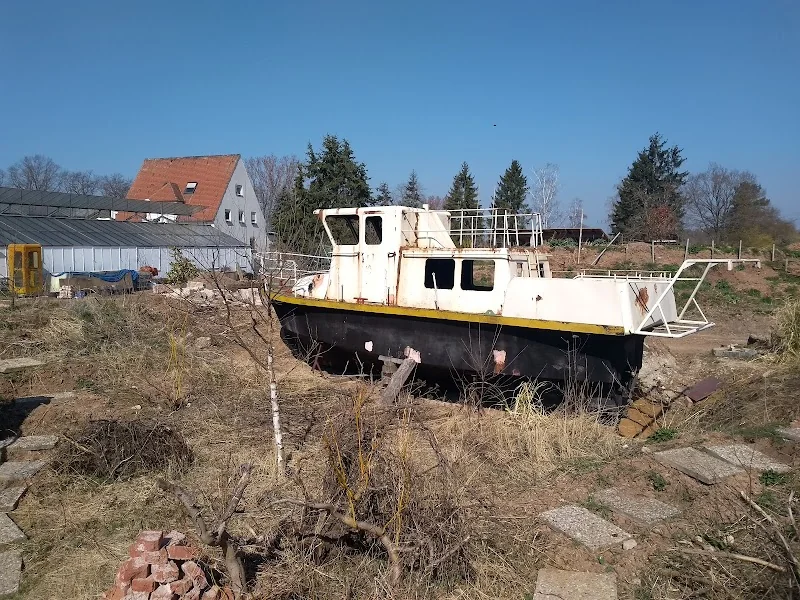
Vacher Str. 204, Fürth-Unterfarrnbach
Vacher Str. 204, 90766 Fürth, Germany
Cultural Greenhouse Fürth | Events & Opening Hours
The Cultural Greenhouse Fürth is not a classic event venue with rigid processes, but a vibrant place in transition, where history, garden culture, sustainability, and cultural programming intertwine. On the grounds of the former Gärtnerei Gumbmann, a long-fallow area has transformed into a project that consciously works with open forms: visitors experience not an anonymous hall, but a site with greenhouse atmosphere, permaculture garden, recycled building materials, and a tangible connection to the past of the place. This very mix makes the Cultural Greenhouse so interesting for inquiries about photos, events, festivals, and opening hours, as the location stands for more than just a space. It represents an idea. The official website describes the house as a meeting place with a farm shop and open garden; the tourism page of the city of Fürth classifies the site as a festival and cultural venue with free admission and a special natural backdrop. At the same time, the team emphasizes that the project is intentionally growing slowly and is regularly being developed further. So, those interested in the Cultural Greenhouse Fürth are often actually looking for a place where culture is not just consumed but experienced in a grown environment. ([kulturgewaechshaus.de](https://www.kulturgewaechshaus.de/))
The current self-presentation of the Cultural Greenhouse shows that various levels come together here: remembrance of the old nursery, pragmatic upcycling, an open garden character, and a program that ranges from festivals to workshops to exhibitions. The official website currently announces, among other things, a spring festival, showcase market, and Günter Derleth exhibition. This speaks for a location that does not only thrive on individual major events but develops a continuous cultural life. At the same time, the Cultural Greenhouse is closely connected to the Fürth city society, as the site is located within the city area of Fürth and is made visible through local cultural channels and tourism offers. It is precisely this proximity to the city, combined with the unusual garden architecture, that makes the place attractive for event visits, photo motifs, and community events. Understanding the Cultural Greenhouse as a location means finding a blend of sustainable construction history, creative use, and changing event character. This combination is the core of the place and explains why it repeatedly appears in inquiries about events, festivals, photos, and opening hours. ([kulturgewaechshaus.de](https://www.kulturgewaechshaus.de/))
Events and Program at the Cultural Greenhouse Fürth
The program of the Cultural Greenhouse Fürth thrives on its adaptability. The official website presents current and future dates not as a rigid seasonal grid but as an open sequence of events that make the place readable anew time and again. This is particularly evident at the festival garden festival, which the website describes as an open, free garden and cultural festival. Bands and DJs from the region perform there, there are workshops, regional food and drinks, and an atmosphere that consciously emphasizes encounters rather than distance. The city of Fürth additionally describes the festival garden festival as a festival on the grounds of a former nursery, amidst nature and a creative environment, with live music, culture, and culinary enjoyment. It can be inferred that the Cultural Greenhouse is programmatically suitable primarily for formats that combine movement, participation, and quality of stay. This makes the location particularly interesting for visitors who want not just to see a concert or an exhibition but to experience a whole environment. The search intent behind keyword combinations like events, festival, or program is therefore very clear: a place is sought where the event itself becomes part of a larger narrative. ([kulturgewaechshaus.de](https://www.kulturgewaechshaus.de/festgartenfest))
The diversity of the program is also reflected in how the project communicates outwardly. The Cultural Greenhouse emphasizes not just individual event days but speaks of an expanded and regular art and cultural program that is to be further developed together with a farm shop. This makes it clear that the location does not see itself solely as a one-time event space but as a long-term cultural space with a growing offer. The website also currently mentions new dates like the spring festival, showcase market, and an exhibition by Günter Derleth, which underscores the breadth of the program: Cultural Greenhouse Fürth means not just festival but also market, exhibition, and seasonal encounter. Additionally, the notes on the festival garden festival show that it involves regional bands, DJs, workshops, and homemade refreshments. From an SEO perspective, this is important because strong thematic clusters can be derived from it: events, program, festival, workshops, regional food, and community experience. The location is therefore not reduced to one event type but thrives on the connection of culture, garden, and local engagement. ([kulturgewaechshaus.de](https://www.kulturgewaechshaus.de/festgartenfest))
Directions, Parking, and Visitor Information at the Cultural Greenhouse Fürth
The address of the Cultural Greenhouse Fürth is clearly defined: Vacher Straße 204, 90766 Fürth. For arrival, three routes are particularly relevant, which are mentioned on the official event page and the tourism portal: bicycle, public transport, and walking. The city of Fürth points out that the site can be reached from the city center by bus or along the Rednitz on foot or by bike. This fits the character of the place, as the Cultural Greenhouse does not see itself as an isolated event island with a large parking area but as a location embedded in its surroundings. This is precisely why the question of parking and access is so important for many inquiries. The good news: the place is accessible, but it is consciously not oriented towards car traffic. There are no parking spaces directly at the site. This information can be found on both the official event page and the tourism portal of the city. Therefore, those arriving by car should plan more in the surrounding area and not expect parking space directly in front of the entrance. For visitors, this means: the Cultural Greenhouse is best experienced when one understands the journey as part of the outing and keeps the option open to arrive by bike, public transport, or on foot. ([kulturgewaechshaus.de](https://www.kulturgewaechshaus.de/festgartenfest))
The logic of visiting itself is also important when searching for opening hours. The official website does not feature a classic weekly schedule with fixed store or house opening hours, but rather the event calendar. This suggests that visits are primarily linked to dates, festivals, or seasonal actions. This interpretation is obvious because the website primarily communicates current events and does not highlight general regular opening hours. In practice, this means: those who want to get to know the Cultural Greenhouse should check the schedule before their visit or follow the current information on the website and social channels. Especially for the festival garden festival, this logic is particularly evident, as the event is time-bound, free admission is highlighted, and access to the site is tied to the respective event. This is a helpful distinction for many users compared to classic cultural houses with fixed box office hours. Here, the focus is not on continuous operation but on the changing experience around individual dates. Therefore, for SEO and user comfort, the topics of access, parking, address, and opening hours are closely connected. ([kulturgewaechshaus.de](https://www.kulturgewaechshaus.de/))
History of the Old Gärtnerei Gumbmann in the Cultural Greenhouse Fürth
The history of the Cultural Greenhouse Fürth is one of the strongest reasons why the location appears so distinctive. For over 80 years, the greenhouse on Vacher Straße was part of the traditional Gärtnerei Gumbmann. Over three generations, useful and ornamental plants were cultivated and sold there. This means: the place was originally not a cultural house but a real production and working space with deep roots in the Fürth horticultural history. The website also describes that since 2008, large parts of the site stood empty and increasingly fell into disrepair. Only in 2019 did a new generation take over the operation and initiate the transformation. This transition is central because it explains why the place today conveys such a strong connection between past and future. An empty greenhouse did not become a smooth new building, but a project that respects the existing history and translates it into contemporary use. The name Cultural Greenhouse is therefore more than a label: it connects culture, growth, and house to an attitude that does not suppress the origin of the site but consciously thinks it further. This makes the place credible for visitors and particularly relevant for search terms related to history. ([kulturgewaechshaus.de](https://www.kulturgewaechshaus.de/festgartenfest))
Especially formative is the nature of the conversion. The website of the festival garden festival describes that an old residential building was dismantled by hand, and the material finds a new purpose in various projects at the Cultural Greenhouse. It is also emphasized that much has been built with painstaking handwork from recycled materials. The BR contribution and local reports locate the project precisely in this upcycling context: from an old nursery, a new cultural place emerges that does not simply replace the existing building substance but translates it into new forms. This is not only architecturally exciting but also communicatively strong, as it gives the place its own identity. Instead of a smooth new building aesthetic, a visible layering of old and new, of garden, craftsmanship, and culture emerges. For visitors, this means: the history is not hidden but can be read in the atmosphere, materials, and the entire site. This form of further construction is also an important unique selling point in the regional cultural offering and explains why the Cultural Greenhouse is often described in reports as a creative transformation of a nursery. ([kulturgewaechshaus.de](https://www.kulturgewaechshaus.de/festgartenfest))
Photos, Atmosphere, and Special Impressions at the Cultural Greenhouse Fürth
Those searching for photos of the Cultural Greenhouse Fürth are usually looking for a very specific mood: natural, slightly improvised, green, warm, and simultaneously creative. This very mix is well recognizable in the official descriptions and regional reports. The tourism portal of the city of Fürth locates the festival garden festival between the old greenhouse, permaculture garden, and lovingly designed stages made from recycled materials. The official site speaks of culinary delights from the garden and of a place of encounter. These are strong imagery because they show that the place is not only functional but also creates atmosphere. Those who photograph here do not get a neutral event backdrop but plants, transparent structures, handmade elements, and a special mix of indoor and outdoor space. This also explains why reports speak of a natural idyll with a retro look. This mood fits very well with search queries containing the word photos, as people want to know in advance how the place feels and whether it visually suits their occasion. For weddings, cultural visits, festivals, or creative meetings, this visual distinctiveness is often crucial. The Cultural Greenhouse therefore provides not only content but also strong motifs. ([tourismus-fuerth.de](https://www.tourismus-fuerth.de/erleben-geniessen/veranstaltungen/festivals/festgartenfest/))
The special atmosphere is not coincidental but part of the concept. The site aims to make sustainability in art, culture, and horticulture tangible. It is a place where plants are not decoration but part of the identity. This is also evident in that the events are not described as neutral mass formats but as encounters in the open air, with workshops, regional food, and music into the evening. Additionally, the location in a residential area prompts the team, according to their own statement, to take the needs of residents into account and to further develop formats. This keeps the atmosphere lively but not arbitrary. The Cultural Greenhouse feels like a place that mediates between work, memory, and celebration. This is precisely what creates the appeal for visitor photos: the combination of cozy garden atmosphere, visible transformation, and cultural openness. The images one takes of this place are therefore not classic stage designs but snapshots of a place that consciously remains in motion. Those who seek this will find an unusual, very characterful backdrop for events and encounters. ([kulturgewaechshaus.de](https://www.kulturgewaechshaus.de/festgartenfest))
Opening Hours, Admission, and Practical Questions about the Cultural Greenhouse Fürth
The most common practical question is: When is the Cultural Greenhouse Fürth actually open? The honest answer is that no classic, fixed opening hours calendar is at the forefront on the published pages. Instead, access is organized through events, festival days, and date announcements. This is not a disadvantage but part of the concept: the Cultural Greenhouse is a growing cultural place that is not defined by daily standard opening hours but by dates, programs, and special events. The website makes it clear that the project logic relies on further development and that the team is currently still a relatively small collective that wants to let the place grow sustainably. For visitors, this means in practice: definitely check the schedule before the visit, as current events and seasonal actions appear there. Those looking for reliable opening hours should therefore think more of an event location than of a regular store operation. This classification also helps with inquiries about opening hours, as it sets the expectation correctly and avoids failed trips. ([kulturgewaechshaus.de](https://www.kulturgewaechshaus.de/))
Also, regarding admission, the situation is clear: the festival garden festival is described as free and open to all. On-site, food and drinks can be purchased, but access itself is free. This makes the place attractive for many families, groups of friends, and culture enthusiasts. For other events, this may be different, but the published examples show a fundamentally open, low-threshold concept. Practically important is also that there are no parking spaces directly at the site and that arrival by bus, bicycle, or on foot is recommended. Therefore, if one is planning an event at the Cultural Greenhouse Fürth, it is advisable to calculate enough time for the journey and not to rely on spontaneous car parking. A fixed seating capacity or a classic hall plan is not mentioned on the published pages, which fits well with the open, garden-like character of the place. For planning, it is also helpful to keep an eye on the website, newsletter, or social channels, as new dates are regularly added. This creates a visitor experience that remains flexible and is therefore interesting for many different occasions. ([kulturgewaechshaus.de](https://www.kulturgewaechshaus.de/festgartenfest))
Sources:
- Cultural Greenhouse Fürth – Urban Agriculture with Space for Art and Culture
- FESTIVAL GARDEN FEST from September 13–14, 2024 at the Cultural Greenhouse Fürth
- Festival Garden Fest Fürth: Culture, Concerts & Workshops
- Nürnberger Nachrichten – Three Bands Perform: The Cultural Greenhouse Gets the Autumn Blues
- BR Frankenschau aktuell – From Old Nursery to Cultural Greenhouse
Mehr anzeigenWeniger anzeigen
Cultural Greenhouse Fürth | Events & Opening Hours
The Cultural Greenhouse Fürth is not a classic event venue with rigid processes, but a vibrant place in transition, where history, garden culture, sustainability, and cultural programming intertwine. On the grounds of the former Gärtnerei Gumbmann, a long-fallow area has transformed into a project that consciously works with open forms: visitors experience not an anonymous hall, but a site with greenhouse atmosphere, permaculture garden, recycled building materials, and a tangible connection to the past of the place. This very mix makes the Cultural Greenhouse so interesting for inquiries about photos, events, festivals, and opening hours, as the location stands for more than just a space. It represents an idea. The official website describes the house as a meeting place with a farm shop and open garden; the tourism page of the city of Fürth classifies the site as a festival and cultural venue with free admission and a special natural backdrop. At the same time, the team emphasizes that the project is intentionally growing slowly and is regularly being developed further. So, those interested in the Cultural Greenhouse Fürth are often actually looking for a place where culture is not just consumed but experienced in a grown environment. ([kulturgewaechshaus.de](https://www.kulturgewaechshaus.de/))
The current self-presentation of the Cultural Greenhouse shows that various levels come together here: remembrance of the old nursery, pragmatic upcycling, an open garden character, and a program that ranges from festivals to workshops to exhibitions. The official website currently announces, among other things, a spring festival, showcase market, and Günter Derleth exhibition. This speaks for a location that does not only thrive on individual major events but develops a continuous cultural life. At the same time, the Cultural Greenhouse is closely connected to the Fürth city society, as the site is located within the city area of Fürth and is made visible through local cultural channels and tourism offers. It is precisely this proximity to the city, combined with the unusual garden architecture, that makes the place attractive for event visits, photo motifs, and community events. Understanding the Cultural Greenhouse as a location means finding a blend of sustainable construction history, creative use, and changing event character. This combination is the core of the place and explains why it repeatedly appears in inquiries about events, festivals, photos, and opening hours. ([kulturgewaechshaus.de](https://www.kulturgewaechshaus.de/))
Events and Program at the Cultural Greenhouse Fürth
The program of the Cultural Greenhouse Fürth thrives on its adaptability. The official website presents current and future dates not as a rigid seasonal grid but as an open sequence of events that make the place readable anew time and again. This is particularly evident at the festival garden festival, which the website describes as an open, free garden and cultural festival. Bands and DJs from the region perform there, there are workshops, regional food and drinks, and an atmosphere that consciously emphasizes encounters rather than distance. The city of Fürth additionally describes the festival garden festival as a festival on the grounds of a former nursery, amidst nature and a creative environment, with live music, culture, and culinary enjoyment. It can be inferred that the Cultural Greenhouse is programmatically suitable primarily for formats that combine movement, participation, and quality of stay. This makes the location particularly interesting for visitors who want not just to see a concert or an exhibition but to experience a whole environment. The search intent behind keyword combinations like events, festival, or program is therefore very clear: a place is sought where the event itself becomes part of a larger narrative. ([kulturgewaechshaus.de](https://www.kulturgewaechshaus.de/festgartenfest))
The diversity of the program is also reflected in how the project communicates outwardly. The Cultural Greenhouse emphasizes not just individual event days but speaks of an expanded and regular art and cultural program that is to be further developed together with a farm shop. This makes it clear that the location does not see itself solely as a one-time event space but as a long-term cultural space with a growing offer. The website also currently mentions new dates like the spring festival, showcase market, and an exhibition by Günter Derleth, which underscores the breadth of the program: Cultural Greenhouse Fürth means not just festival but also market, exhibition, and seasonal encounter. Additionally, the notes on the festival garden festival show that it involves regional bands, DJs, workshops, and homemade refreshments. From an SEO perspective, this is important because strong thematic clusters can be derived from it: events, program, festival, workshops, regional food, and community experience. The location is therefore not reduced to one event type but thrives on the connection of culture, garden, and local engagement. ([kulturgewaechshaus.de](https://www.kulturgewaechshaus.de/festgartenfest))
Directions, Parking, and Visitor Information at the Cultural Greenhouse Fürth
The address of the Cultural Greenhouse Fürth is clearly defined: Vacher Straße 204, 90766 Fürth. For arrival, three routes are particularly relevant, which are mentioned on the official event page and the tourism portal: bicycle, public transport, and walking. The city of Fürth points out that the site can be reached from the city center by bus or along the Rednitz on foot or by bike. This fits the character of the place, as the Cultural Greenhouse does not see itself as an isolated event island with a large parking area but as a location embedded in its surroundings. This is precisely why the question of parking and access is so important for many inquiries. The good news: the place is accessible, but it is consciously not oriented towards car traffic. There are no parking spaces directly at the site. This information can be found on both the official event page and the tourism portal of the city. Therefore, those arriving by car should plan more in the surrounding area and not expect parking space directly in front of the entrance. For visitors, this means: the Cultural Greenhouse is best experienced when one understands the journey as part of the outing and keeps the option open to arrive by bike, public transport, or on foot. ([kulturgewaechshaus.de](https://www.kulturgewaechshaus.de/festgartenfest))
The logic of visiting itself is also important when searching for opening hours. The official website does not feature a classic weekly schedule with fixed store or house opening hours, but rather the event calendar. This suggests that visits are primarily linked to dates, festivals, or seasonal actions. This interpretation is obvious because the website primarily communicates current events and does not highlight general regular opening hours. In practice, this means: those who want to get to know the Cultural Greenhouse should check the schedule before their visit or follow the current information on the website and social channels. Especially for the festival garden festival, this logic is particularly evident, as the event is time-bound, free admission is highlighted, and access to the site is tied to the respective event. This is a helpful distinction for many users compared to classic cultural houses with fixed box office hours. Here, the focus is not on continuous operation but on the changing experience around individual dates. Therefore, for SEO and user comfort, the topics of access, parking, address, and opening hours are closely connected. ([kulturgewaechshaus.de](https://www.kulturgewaechshaus.de/))
History of the Old Gärtnerei Gumbmann in the Cultural Greenhouse Fürth
The history of the Cultural Greenhouse Fürth is one of the strongest reasons why the location appears so distinctive. For over 80 years, the greenhouse on Vacher Straße was part of the traditional Gärtnerei Gumbmann. Over three generations, useful and ornamental plants were cultivated and sold there. This means: the place was originally not a cultural house but a real production and working space with deep roots in the Fürth horticultural history. The website also describes that since 2008, large parts of the site stood empty and increasingly fell into disrepair. Only in 2019 did a new generation take over the operation and initiate the transformation. This transition is central because it explains why the place today conveys such a strong connection between past and future. An empty greenhouse did not become a smooth new building, but a project that respects the existing history and translates it into contemporary use. The name Cultural Greenhouse is therefore more than a label: it connects culture, growth, and house to an attitude that does not suppress the origin of the site but consciously thinks it further. This makes the place credible for visitors and particularly relevant for search terms related to history. ([kulturgewaechshaus.de](https://www.kulturgewaechshaus.de/festgartenfest))
Especially formative is the nature of the conversion. The website of the festival garden festival describes that an old residential building was dismantled by hand, and the material finds a new purpose in various projects at the Cultural Greenhouse. It is also emphasized that much has been built with painstaking handwork from recycled materials. The BR contribution and local reports locate the project precisely in this upcycling context: from an old nursery, a new cultural place emerges that does not simply replace the existing building substance but translates it into new forms. This is not only architecturally exciting but also communicatively strong, as it gives the place its own identity. Instead of a smooth new building aesthetic, a visible layering of old and new, of garden, craftsmanship, and culture emerges. For visitors, this means: the history is not hidden but can be read in the atmosphere, materials, and the entire site. This form of further construction is also an important unique selling point in the regional cultural offering and explains why the Cultural Greenhouse is often described in reports as a creative transformation of a nursery. ([kulturgewaechshaus.de](https://www.kulturgewaechshaus.de/festgartenfest))
Photos, Atmosphere, and Special Impressions at the Cultural Greenhouse Fürth
Those searching for photos of the Cultural Greenhouse Fürth are usually looking for a very specific mood: natural, slightly improvised, green, warm, and simultaneously creative. This very mix is well recognizable in the official descriptions and regional reports. The tourism portal of the city of Fürth locates the festival garden festival between the old greenhouse, permaculture garden, and lovingly designed stages made from recycled materials. The official site speaks of culinary delights from the garden and of a place of encounter. These are strong imagery because they show that the place is not only functional but also creates atmosphere. Those who photograph here do not get a neutral event backdrop but plants, transparent structures, handmade elements, and a special mix of indoor and outdoor space. This also explains why reports speak of a natural idyll with a retro look. This mood fits very well with search queries containing the word photos, as people want to know in advance how the place feels and whether it visually suits their occasion. For weddings, cultural visits, festivals, or creative meetings, this visual distinctiveness is often crucial. The Cultural Greenhouse therefore provides not only content but also strong motifs. ([tourismus-fuerth.de](https://www.tourismus-fuerth.de/erleben-geniessen/veranstaltungen/festivals/festgartenfest/))
The special atmosphere is not coincidental but part of the concept. The site aims to make sustainability in art, culture, and horticulture tangible. It is a place where plants are not decoration but part of the identity. This is also evident in that the events are not described as neutral mass formats but as encounters in the open air, with workshops, regional food, and music into the evening. Additionally, the location in a residential area prompts the team, according to their own statement, to take the needs of residents into account and to further develop formats. This keeps the atmosphere lively but not arbitrary. The Cultural Greenhouse feels like a place that mediates between work, memory, and celebration. This is precisely what creates the appeal for visitor photos: the combination of cozy garden atmosphere, visible transformation, and cultural openness. The images one takes of this place are therefore not classic stage designs but snapshots of a place that consciously remains in motion. Those who seek this will find an unusual, very characterful backdrop for events and encounters. ([kulturgewaechshaus.de](https://www.kulturgewaechshaus.de/festgartenfest))
Opening Hours, Admission, and Practical Questions about the Cultural Greenhouse Fürth
The most common practical question is: When is the Cultural Greenhouse Fürth actually open? The honest answer is that no classic, fixed opening hours calendar is at the forefront on the published pages. Instead, access is organized through events, festival days, and date announcements. This is not a disadvantage but part of the concept: the Cultural Greenhouse is a growing cultural place that is not defined by daily standard opening hours but by dates, programs, and special events. The website makes it clear that the project logic relies on further development and that the team is currently still a relatively small collective that wants to let the place grow sustainably. For visitors, this means in practice: definitely check the schedule before the visit, as current events and seasonal actions appear there. Those looking for reliable opening hours should therefore think more of an event location than of a regular store operation. This classification also helps with inquiries about opening hours, as it sets the expectation correctly and avoids failed trips. ([kulturgewaechshaus.de](https://www.kulturgewaechshaus.de/))
Also, regarding admission, the situation is clear: the festival garden festival is described as free and open to all. On-site, food and drinks can be purchased, but access itself is free. This makes the place attractive for many families, groups of friends, and culture enthusiasts. For other events, this may be different, but the published examples show a fundamentally open, low-threshold concept. Practically important is also that there are no parking spaces directly at the site and that arrival by bus, bicycle, or on foot is recommended. Therefore, if one is planning an event at the Cultural Greenhouse Fürth, it is advisable to calculate enough time for the journey and not to rely on spontaneous car parking. A fixed seating capacity or a classic hall plan is not mentioned on the published pages, which fits well with the open, garden-like character of the place. For planning, it is also helpful to keep an eye on the website, newsletter, or social channels, as new dates are regularly added. This creates a visitor experience that remains flexible and is therefore interesting for many different occasions. ([kulturgewaechshaus.de](https://www.kulturgewaechshaus.de/festgartenfest))
Sources:
- Cultural Greenhouse Fürth – Urban Agriculture with Space for Art and Culture
- FESTIVAL GARDEN FEST from September 13–14, 2024 at the Cultural Greenhouse Fürth
- Festival Garden Fest Fürth: Culture, Concerts & Workshops
- Nürnberger Nachrichten – Three Bands Perform: The Cultural Greenhouse Gets the Autumn Blues
- BR Frankenschau aktuell – From Old Nursery to Cultural Greenhouse
Cultural Greenhouse Fürth | Events & Opening Hours
The Cultural Greenhouse Fürth is not a classic event venue with rigid processes, but a vibrant place in transition, where history, garden culture, sustainability, and cultural programming intertwine. On the grounds of the former Gärtnerei Gumbmann, a long-fallow area has transformed into a project that consciously works with open forms: visitors experience not an anonymous hall, but a site with greenhouse atmosphere, permaculture garden, recycled building materials, and a tangible connection to the past of the place. This very mix makes the Cultural Greenhouse so interesting for inquiries about photos, events, festivals, and opening hours, as the location stands for more than just a space. It represents an idea. The official website describes the house as a meeting place with a farm shop and open garden; the tourism page of the city of Fürth classifies the site as a festival and cultural venue with free admission and a special natural backdrop. At the same time, the team emphasizes that the project is intentionally growing slowly and is regularly being developed further. So, those interested in the Cultural Greenhouse Fürth are often actually looking for a place where culture is not just consumed but experienced in a grown environment. ([kulturgewaechshaus.de](https://www.kulturgewaechshaus.de/))
The current self-presentation of the Cultural Greenhouse shows that various levels come together here: remembrance of the old nursery, pragmatic upcycling, an open garden character, and a program that ranges from festivals to workshops to exhibitions. The official website currently announces, among other things, a spring festival, showcase market, and Günter Derleth exhibition. This speaks for a location that does not only thrive on individual major events but develops a continuous cultural life. At the same time, the Cultural Greenhouse is closely connected to the Fürth city society, as the site is located within the city area of Fürth and is made visible through local cultural channels and tourism offers. It is precisely this proximity to the city, combined with the unusual garden architecture, that makes the place attractive for event visits, photo motifs, and community events. Understanding the Cultural Greenhouse as a location means finding a blend of sustainable construction history, creative use, and changing event character. This combination is the core of the place and explains why it repeatedly appears in inquiries about events, festivals, photos, and opening hours. ([kulturgewaechshaus.de](https://www.kulturgewaechshaus.de/))
Events and Program at the Cultural Greenhouse Fürth
The program of the Cultural Greenhouse Fürth thrives on its adaptability. The official website presents current and future dates not as a rigid seasonal grid but as an open sequence of events that make the place readable anew time and again. This is particularly evident at the festival garden festival, which the website describes as an open, free garden and cultural festival. Bands and DJs from the region perform there, there are workshops, regional food and drinks, and an atmosphere that consciously emphasizes encounters rather than distance. The city of Fürth additionally describes the festival garden festival as a festival on the grounds of a former nursery, amidst nature and a creative environment, with live music, culture, and culinary enjoyment. It can be inferred that the Cultural Greenhouse is programmatically suitable primarily for formats that combine movement, participation, and quality of stay. This makes the location particularly interesting for visitors who want not just to see a concert or an exhibition but to experience a whole environment. The search intent behind keyword combinations like events, festival, or program is therefore very clear: a place is sought where the event itself becomes part of a larger narrative. ([kulturgewaechshaus.de](https://www.kulturgewaechshaus.de/festgartenfest))
The diversity of the program is also reflected in how the project communicates outwardly. The Cultural Greenhouse emphasizes not just individual event days but speaks of an expanded and regular art and cultural program that is to be further developed together with a farm shop. This makes it clear that the location does not see itself solely as a one-time event space but as a long-term cultural space with a growing offer. The website also currently mentions new dates like the spring festival, showcase market, and an exhibition by Günter Derleth, which underscores the breadth of the program: Cultural Greenhouse Fürth means not just festival but also market, exhibition, and seasonal encounter. Additionally, the notes on the festival garden festival show that it involves regional bands, DJs, workshops, and homemade refreshments. From an SEO perspective, this is important because strong thematic clusters can be derived from it: events, program, festival, workshops, regional food, and community experience. The location is therefore not reduced to one event type but thrives on the connection of culture, garden, and local engagement. ([kulturgewaechshaus.de](https://www.kulturgewaechshaus.de/festgartenfest))
Directions, Parking, and Visitor Information at the Cultural Greenhouse Fürth
The address of the Cultural Greenhouse Fürth is clearly defined: Vacher Straße 204, 90766 Fürth. For arrival, three routes are particularly relevant, which are mentioned on the official event page and the tourism portal: bicycle, public transport, and walking. The city of Fürth points out that the site can be reached from the city center by bus or along the Rednitz on foot or by bike. This fits the character of the place, as the Cultural Greenhouse does not see itself as an isolated event island with a large parking area but as a location embedded in its surroundings. This is precisely why the question of parking and access is so important for many inquiries. The good news: the place is accessible, but it is consciously not oriented towards car traffic. There are no parking spaces directly at the site. This information can be found on both the official event page and the tourism portal of the city. Therefore, those arriving by car should plan more in the surrounding area and not expect parking space directly in front of the entrance. For visitors, this means: the Cultural Greenhouse is best experienced when one understands the journey as part of the outing and keeps the option open to arrive by bike, public transport, or on foot. ([kulturgewaechshaus.de](https://www.kulturgewaechshaus.de/festgartenfest))
The logic of visiting itself is also important when searching for opening hours. The official website does not feature a classic weekly schedule with fixed store or house opening hours, but rather the event calendar. This suggests that visits are primarily linked to dates, festivals, or seasonal actions. This interpretation is obvious because the website primarily communicates current events and does not highlight general regular opening hours. In practice, this means: those who want to get to know the Cultural Greenhouse should check the schedule before their visit or follow the current information on the website and social channels. Especially for the festival garden festival, this logic is particularly evident, as the event is time-bound, free admission is highlighted, and access to the site is tied to the respective event. This is a helpful distinction for many users compared to classic cultural houses with fixed box office hours. Here, the focus is not on continuous operation but on the changing experience around individual dates. Therefore, for SEO and user comfort, the topics of access, parking, address, and opening hours are closely connected. ([kulturgewaechshaus.de](https://www.kulturgewaechshaus.de/))
History of the Old Gärtnerei Gumbmann in the Cultural Greenhouse Fürth
The history of the Cultural Greenhouse Fürth is one of the strongest reasons why the location appears so distinctive. For over 80 years, the greenhouse on Vacher Straße was part of the traditional Gärtnerei Gumbmann. Over three generations, useful and ornamental plants were cultivated and sold there. This means: the place was originally not a cultural house but a real production and working space with deep roots in the Fürth horticultural history. The website also describes that since 2008, large parts of the site stood empty and increasingly fell into disrepair. Only in 2019 did a new generation take over the operation and initiate the transformation. This transition is central because it explains why the place today conveys such a strong connection between past and future. An empty greenhouse did not become a smooth new building, but a project that respects the existing history and translates it into contemporary use. The name Cultural Greenhouse is therefore more than a label: it connects culture, growth, and house to an attitude that does not suppress the origin of the site but consciously thinks it further. This makes the place credible for visitors and particularly relevant for search terms related to history. ([kulturgewaechshaus.de](https://www.kulturgewaechshaus.de/festgartenfest))
Especially formative is the nature of the conversion. The website of the festival garden festival describes that an old residential building was dismantled by hand, and the material finds a new purpose in various projects at the Cultural Greenhouse. It is also emphasized that much has been built with painstaking handwork from recycled materials. The BR contribution and local reports locate the project precisely in this upcycling context: from an old nursery, a new cultural place emerges that does not simply replace the existing building substance but translates it into new forms. This is not only architecturally exciting but also communicatively strong, as it gives the place its own identity. Instead of a smooth new building aesthetic, a visible layering of old and new, of garden, craftsmanship, and culture emerges. For visitors, this means: the history is not hidden but can be read in the atmosphere, materials, and the entire site. This form of further construction is also an important unique selling point in the regional cultural offering and explains why the Cultural Greenhouse is often described in reports as a creative transformation of a nursery. ([kulturgewaechshaus.de](https://www.kulturgewaechshaus.de/festgartenfest))
Photos, Atmosphere, and Special Impressions at the Cultural Greenhouse Fürth
Those searching for photos of the Cultural Greenhouse Fürth are usually looking for a very specific mood: natural, slightly improvised, green, warm, and simultaneously creative. This very mix is well recognizable in the official descriptions and regional reports. The tourism portal of the city of Fürth locates the festival garden festival between the old greenhouse, permaculture garden, and lovingly designed stages made from recycled materials. The official site speaks of culinary delights from the garden and of a place of encounter. These are strong imagery because they show that the place is not only functional but also creates atmosphere. Those who photograph here do not get a neutral event backdrop but plants, transparent structures, handmade elements, and a special mix of indoor and outdoor space. This also explains why reports speak of a natural idyll with a retro look. This mood fits very well with search queries containing the word photos, as people want to know in advance how the place feels and whether it visually suits their occasion. For weddings, cultural visits, festivals, or creative meetings, this visual distinctiveness is often crucial. The Cultural Greenhouse therefore provides not only content but also strong motifs. ([tourismus-fuerth.de](https://www.tourismus-fuerth.de/erleben-geniessen/veranstaltungen/festivals/festgartenfest/))
The special atmosphere is not coincidental but part of the concept. The site aims to make sustainability in art, culture, and horticulture tangible. It is a place where plants are not decoration but part of the identity. This is also evident in that the events are not described as neutral mass formats but as encounters in the open air, with workshops, regional food, and music into the evening. Additionally, the location in a residential area prompts the team, according to their own statement, to take the needs of residents into account and to further develop formats. This keeps the atmosphere lively but not arbitrary. The Cultural Greenhouse feels like a place that mediates between work, memory, and celebration. This is precisely what creates the appeal for visitor photos: the combination of cozy garden atmosphere, visible transformation, and cultural openness. The images one takes of this place are therefore not classic stage designs but snapshots of a place that consciously remains in motion. Those who seek this will find an unusual, very characterful backdrop for events and encounters. ([kulturgewaechshaus.de](https://www.kulturgewaechshaus.de/festgartenfest))
Opening Hours, Admission, and Practical Questions about the Cultural Greenhouse Fürth
The most common practical question is: When is the Cultural Greenhouse Fürth actually open? The honest answer is that no classic, fixed opening hours calendar is at the forefront on the published pages. Instead, access is organized through events, festival days, and date announcements. This is not a disadvantage but part of the concept: the Cultural Greenhouse is a growing cultural place that is not defined by daily standard opening hours but by dates, programs, and special events. The website makes it clear that the project logic relies on further development and that the team is currently still a relatively small collective that wants to let the place grow sustainably. For visitors, this means in practice: definitely check the schedule before the visit, as current events and seasonal actions appear there. Those looking for reliable opening hours should therefore think more of an event location than of a regular store operation. This classification also helps with inquiries about opening hours, as it sets the expectation correctly and avoids failed trips. ([kulturgewaechshaus.de](https://www.kulturgewaechshaus.de/))
Also, regarding admission, the situation is clear: the festival garden festival is described as free and open to all. On-site, food and drinks can be purchased, but access itself is free. This makes the place attractive for many families, groups of friends, and culture enthusiasts. For other events, this may be different, but the published examples show a fundamentally open, low-threshold concept. Practically important is also that there are no parking spaces directly at the site and that arrival by bus, bicycle, or on foot is recommended. Therefore, if one is planning an event at the Cultural Greenhouse Fürth, it is advisable to calculate enough time for the journey and not to rely on spontaneous car parking. A fixed seating capacity or a classic hall plan is not mentioned on the published pages, which fits well with the open, garden-like character of the place. For planning, it is also helpful to keep an eye on the website, newsletter, or social channels, as new dates are regularly added. This creates a visitor experience that remains flexible and is therefore interesting for many different occasions. ([kulturgewaechshaus.de](https://www.kulturgewaechshaus.de/festgartenfest))
Sources:
- Cultural Greenhouse Fürth – Urban Agriculture with Space for Art and Culture
- FESTIVAL GARDEN FEST from September 13–14, 2024 at the Cultural Greenhouse Fürth
- Festival Garden Fest Fürth: Culture, Concerts & Workshops
- Nürnberger Nachrichten – Three Bands Perform: The Cultural Greenhouse Gets the Autumn Blues
- BR Frankenschau aktuell – From Old Nursery to Cultural Greenhouse
Upcoming Events
No events found
Frequently Asked Questions
Reviews
Sandra Marian
19. October 2025
Great location
Andrea Henrici
25. May 2025
Wow
Florianna Geld-Magnet
15. September 2024
An incredibly atmospheric place, like something out of an American movie from 2010. Yesterday there was great music and dancing. The tomatoes were delicious too.
Lila Mandel
27. September 2025
Very nice and cozy. Inside the greenhouse it's pleasantly warm, even in September. And plenty of play opportunities for children and adults.
Stefanie Dunker
16. September 2024
Lovingly designed in every respect. A unique place with impressive commitment from many young volunteers. Simply a fantastic project that will hopefully soon receive the support it deserves.