

Fürth
Helmpl., 90762 Fürth, Deutschland
Helmplatz Fürth | Directions & Parking
The Helmplatz in Fürth is a place where city history, everyday use, and ongoing change overlap directly. Those searching for Helmplatz Fürth, Helmplatz 1 Fürth, Helmplatz 2 Fürth, or Helmplatz 6 Fürth are usually not looking for an abstract sight, but a concrete address with strong urban significance. That is exactly what this square is: a historical reference point in the city center, embedded in the oldest city quarter of the town and also part of an area that the city of Fürth is currently developing further. Between Königstraße, Rednitz, Kapellenstraße, and Helmplatz lies an urban space characterized by monuments, schools, fire stations, sports use, and new open space ideas. This makes it equally exciting for visitors, residents, club members, and anyone interested in Fürth's urban development. ([fuerth.de](https://www.fuerth.de/bauen-mobilitaet/stadtplanung-und-stadterneuerung/staedtebaufoerderung/sanierungsgebiete/altstadt/))
The special charm of Helmplatz lies in the fact that no single use dominates everything here. Instead, several historical and current layers meet: the old fire station site, the former weights and measures office, the school building Helmplatz 4, the Helm gymnasium at Helmplatz 6, and listed residential and commercial buildings such as Helmplatz 1, Helmplatz 3, and Helmplatz 9. At the same time, city planning shows that this space is not museum-like and frozen. In the Pegnitz quarter, Helmplatz is part of a public space that is being rethought while the historical substance remains visible. This mixture of preservation and development explains why Helmplatz today is both a destination for people with historical interest and a relevant address for practical inquiries about directions and parking. ([geodaten.bayern.de](https://www.geodaten.bayern.de/denkmal_static_data/externe_denkmalliste/pdf/denkmalliste_merge_563000.pdf))
Location and History of Helmplatz in Fürth
The history of Helmplatz does not begin with a single event, but with a long urban development. The FürthWiki describes the square as a place in the center of Fürth, bordering Königstraße, and whose land belonged to the Gebhardt family until around 1800, extending to the present Heinrich-Schliemann-Gymnasium. There was a garden and a house from 1806. After the death of Conrad Gebhardt's widow, the city acquired the property around 1906 to establish a new fire station. This makes it clear that Helmplatz was already a strategic location in the city center early on, where private, representative, and municipal interests intersected. From a property with a garden, it became a site for public infrastructure and later a place with several listed buildings. ([fuerthwiki.de](https://www.fuerthwiki.de/wiki/index.php/Helmplatz))
The name of the square also tells of its long history. According to FürthWiki, the origin of the name is not clearly defined; earlier designations such as Helmplatte, Höllenplatte, Botengäßlein, and Anger bey der Mühl have been documented. These changing names show that the space has had different functions and perceptions over centuries. Additionally, it is important that the present Helmplatz is no longer just the historical core area: the front part towards Königstraße was renamed Dr.-Henry-Kissinger-Platz in 2013, and another part next to the Jewish Museum received the name Jean-Mandel-Platz in 2018. Thus, Helmplatz today is also an example of how a city renames historical spatial sequences without losing their origin. This makes it particularly relevant for inquiries about Helmplatz 1, Helmplatz 2, or Helmplatz 6, as these addresses are part of a larger urban context. ([fuerthwiki.de](https://www.fuerthwiki.de/wiki/index.php/Helmplatz))
The official urban development confirms this significance in a very modern way. The city of Fürth describes the area between the old Heinrich-Schliemann-Gymnasium, Dr.-Henry-Kissinger-Platz, the old fire station, the old weights and measures office, Helmplatz, Wolfsgrubermühle, Mühlstraße, and Königsplatz as a space in structural change. In the Pegnitz quarter project, Helmplatz is thus not only a historical detail but a building block in a larger urban planning concept. The city has also already indicated that newly designed open spaces next to Helmplatz are to be used as an open square in the future. This creates an urban location that keeps its past visible while also being prepared for new uses. ([fuerth.de](https://www.fuerth.de/bauen-mobilitaet/aktuelle-bauprojekte/strassen-wege-bruecken-plaetze/pegnitzquartier/))
Helmplatz 2: Fire Station, Tradition, and Current Use
At Helmplatz 2, there is a building that strongly shapes the perception of the square to this day: the former municipal fire station at Königstraße 103. The Bavarian State Office for Monument Preservation describes the building as a picturesque group building in a corner location, two-winged, with two- and three-story structure, mansard roof, corner pavilions, sandstone facade, and rich architectural plastic. Its origin is dated to 1908, and the architectural style is classified as baroque-style Art Nouveau. This is important because the building was not only designed functionally but fulfilled a representative urban task from the beginning. Combined with its location directly at the square, it creates a building that makes the history of municipal infrastructure visible. ([geodaten.bayern.de](https://www.geodaten.bayern.de/denkmal_static_data/externe_denkmalliste/pdf/denkmalliste_merge_563000.pdf))
The city of Fürth also emphasizes that the old fire station was still designed for horse-drawn carriages. For this reason, the conditions in the old building became outdated over time, and on October 22, 2023, the professional fire department Fürth moved to its new quarter in Kapellenstraße. This information is particularly valuable for the classification of Helmplatz: the location is not simply a historical building but a former main base of the professional fire department, whose original planning logic dates back to the early 20th century. Today, the ensemble remains as an urban and monument preservation testimony, while operational fire department work takes place at a modern location. This also explains why many people continue to search for Helmplatz 2 Fürth, even though the main use of the professional fire department has shifted. ([fuerth.de](https://www.fuerth.de/bauen-mobilitaet/aktuelle-bauprojekte/technische-infrastruktur/neue-feuerwache/))
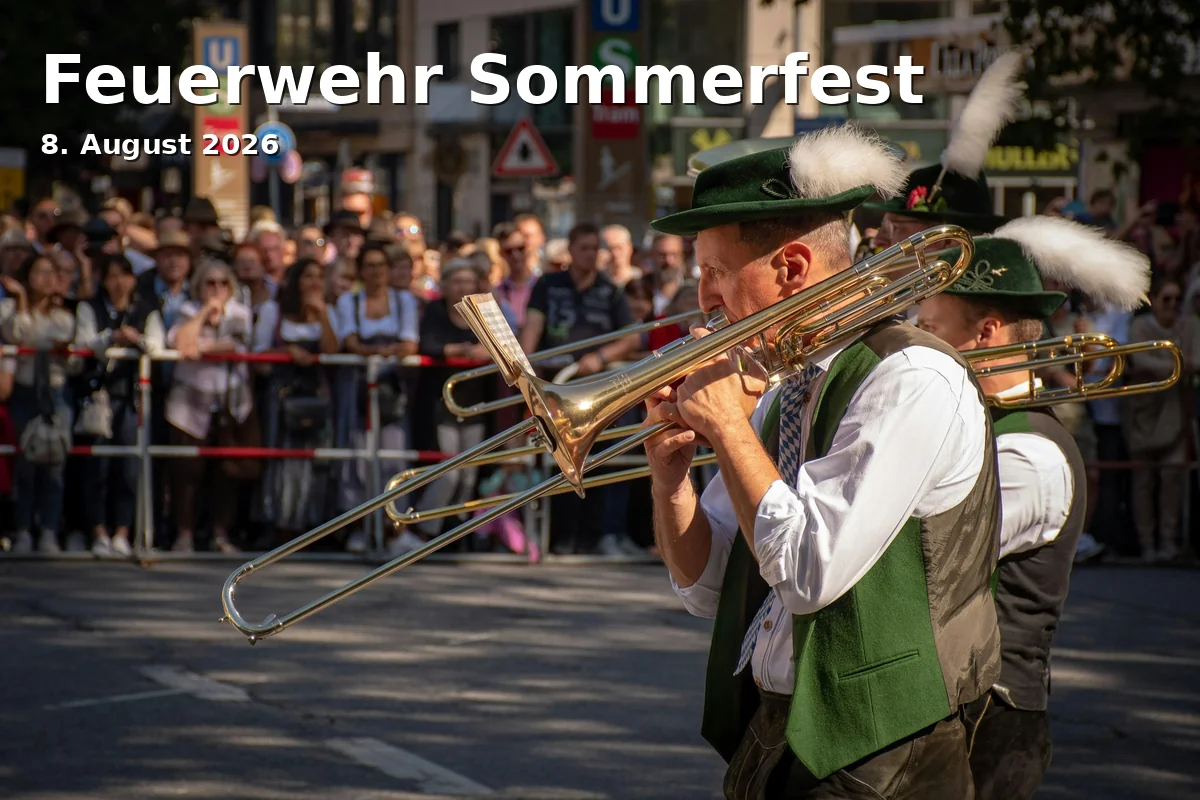
At the same time, the fire department's history at Helmplatz has by no means disappeared. The volunteer fire department Fürth-Stadt still maintains its postal address at Helmplatz 2, and the official event calendar of the city explicitly announces the traditional summer festival of the volunteer fire department Fürth-Stadt at Helmplatz. For visitors, this is a strong signal: the place is not just a monument but also an active meeting point related to local safety and club history. Such recurring uses keep historical buildings alive in the consciousness of the city. Helmplatz 2 is therefore not just a sought-after address point but a place with a strong identity and long public presence. ([ff-fuerth.de](https://www.ff-fuerth.de/index.php/impressum))
Helmplatz 4 and 6: School, Gymnasium, and Urban Spaces
Helmplatz 4 is one of the most important historical neighboring buildings of the square and continues to shape its use to this day. The monument list of the Bavarian State Office for Monument Preservation lists the building as a school building from 1881 in strict neo-Renaissance forms with sandstone construction, hipped roof, and pilaster division. This is crucial for the character of Helmplatz because the place thus becomes readable not only as a fire station but also as an educational address. The proximity to Heinrich-Schliemann-Gymnasium further enhances this impression. Urban planning documents make it clear that the surroundings of Helmplatz, the old fire station, and the school area are to be newly organized in the future so that additional open spaces can be used as a playground and open square. Helmplatz is thus also a place where school and public space are spatially intertwined. ([geodaten.bayern.de](https://www.geodaten.bayern.de/denkmal_static_data/externe_denkmalliste/pdf/denkmalliste_merge_563000.pdf))
Those searching for Helmplatz 6 Fürth will today find the Helm gymnasium. The city describes it as an urban sports hall of the simple hall type. At the same time, the monument list classifies the building as the former weights and measures office with gymnasium, a listed sandstone building from 1907. This dual classification is remarkable because it shows how a historical building can be used in a modern way. Instead of being a pure museum building, Helmplatz 6 continues to fulfill a sporting and urban function. This is a practical example for clubs, school groups, and other users of how monument protection and everyday use can come together. The place thus remains literally in motion. ([fuerth.de](https://www.fuerth.de/kultur-freizeit/sport-und-bewegung/sportstaetten/sportstaetten-mieten/helm-turnhalle/))
For the long-term development of the area, it is particularly important that the city sees Helmplatz as part of a cohesive school and open space ensemble. In the documents for the four-stream gymnasium and the adjacent areas, it is stated that the newly designed open spaces next to Helmplatz are to be opened up and used for the playground. This changes the perception of the place again: from a rather closed courtyard and functional space to a more open square with higher quality of stay. This also explains why inquiries about Helmplatz 4 or Helmplatz 6 not only target historical facts but often focus on current use, accessibility, and future development. Helmplatz is thus an educational and movement point in the midst of a historical urban landscape. ([ratsinfo.fuerth.de](https://ratsinfo.fuerth.de/bi/vo0050.asp?__kvonr=62171))
Helmplatz 1, 3, and 9: Listed Buildings at the Square
Helmplatz is shaped not only by large public buildings but also by historical residential houses that give the place its architectural depth. Helmplatz 1 is described in the Bavarian monument list as a three-sided freestanding, three-story sandstone block with a hipped roof, arch frieze at the eaves, and twisted round bars as wall supports. The house was built in 1851 by Friedrich Schmidt and Johann Weithaas. This building form represents a classicist-romantic phase of urban development and makes it visible that the square did not only become important with the fire station history of the 20th century. Helmplatz 1 connects bourgeois living with urban presence and is therefore a strong anchor point for all those specifically searching for Helmplatz 1 Fürth. ([geodaten.bayern.de](https://www.geodaten.bayern.de/denkmal_static_data/externe_denkmalliste/pdf/denkmalliste_merge_563000.pdf))
Helmplatz 3 and Helmplatz 9 complement this picture with even older layers. Helmplatz 3 is described as a two-story gable-roof building with sandstone ground floor and half-timbered upper floor; its origin is dated to the end of the 17th or the first half of the 18th century. Helmplatz 9 is a two-story, gable-end residential house from the late 17th or 18th century with sandstone block construction and gable roof. Together with Helmplatz 1 and the public buildings, a square emerges that makes several centuries of architectural history readable in a small space. Precisely for this reason, Helmplatz is not a homogeneous place but an urban mosaic of residential, school, and administrative use. ([geodaten.bayern.de](https://www.geodaten.bayern.de/denkmal_static_data/externe_denkmalliste/pdf/denkmalliste_merge_563000.pdf))
For visitors and interested parties, the view of this mixture is particularly worthwhile. Because Helmplatz is precisely appealing because it cannot be reduced to a single image. The monument list shows buildings from the 17th and 18th centuries, from the mid-19th century, and from the early modern period. The square thus tells a story of grown urban space, of densification, and of municipal self-organization. Those walking through the area today are not just passing by an address but moving through a small textbook of Fürth's urban development. This is also one reason why search terms like Helmplatz 3 Fürth, Helmplatz 9 Fürth, or Helmplatz 1 Fürth are so closely related in content: they belong to a common historical square landscape. ([geodaten.bayern.de](https://www.geodaten.bayern.de/denkmal_static_data/externe_denkmalliste/pdf/denkmalliste_merge_563000.pdf))
Directions, Parking, and Carsharing around Helmplatz
For practical orientation, the central location of Helmplatz in the city center is the most important point. The city of Fürth provides an overview of parking garage occupancy and available parking spaces in the city area for drivers. This is especially helpful when visiting Helmplatz, Königstraße, or the surrounding facilities. Particularly relevant is the Stadthalle parking garage, which is available 24/7 with 250 parking spaces. According to the operator, designated accessible parking spaces are also available, and passage within 15 minutes is free of charge. For visitors to Helmplatz, this is a reliable and easily accessible parking option within walking distance of the city center. ([fuerth.de](https://www.fuerth.de/bauen-mobilitaet/mobilitaet/kfz-und-parken/))
Additionally, the city actively considers mobility in the area around the square. In connection with the redesign of Königsplatz, parking spaces were moved to Helmplatz. This shows that the place is not only historically significant but also plays a role in urban traffic organization. The city also points to designated accessible parking spaces in the city center as well as the carsharing offer from Scouter. Especially for people who are only briefly in the city center or want to combine Helmplatz with other appointments, this is a sensible alternative to traditional long-term parking. Helmplatz is thus embedded in a modern mobility network that connects city center visits, short distances, and flexible use. ([fuerth.de](https://www.fuerth.de/service-fuerther-rathaus/aktuelles/detail/scouter-ist-neuer-carsharing-anbieter/))
Events and the Future of Helmplatz in the Pegnitz Quarter
Helmplatz is also a venue for events. The official calendar of the city names the traditional summer festival of the volunteer fire department Fürth-Stadt at Helmplatz, and in the competition documents for the Fürth highlights, Helmplatz 6 is explicitly listed as a playable area. The tenders even mention that the areas at Helmplatz should be suitable for festivals, carousels, and stalls. This underscores that the place is not only historically interesting but also functionally versatile. Those searching for Helmplatz events in Fürth will thus find not just an abstract square but a real urban space with recurring uses and public impact. ([fuerth.de](https://www.fuerth.de/kultur-freizeit/veranstaltungen-termine/veranstaltungskalender/veranstaltungsdetails/feuerwehr-sommerfest-1100-08-08-2026-438071/))
Even more important for the future is the role of Helmplatz in the Pegnitz quarter. The city describes the area around the square as a space in structural change and places great importance in the planning documents on the connection between the historical Helmplatz, the rear courtyards of the fire station, and old school areas. The competition documents also outline that Helmplatz, along with the neighboring areas, is to develop into an openly usable square area in the future. This includes seating, a clearer spatial edge, new pathways, and a stronger opening towards the Pegnitz. The place thus remains historically readable but also acquires a more contemporary spatial function. ([fuerth.de](https://www.fuerth.de/bauen-mobilitaet/aktuelle-bauprojekte/strassen-wege-bruecken-plaetze/pegnitzquartier/))
For visitors, this is particularly interesting because Helmplatz thus offers several levels simultaneously: it can be read as a monument space, understood as a fire station, used as an educational and sports address, or viewed as part of a larger inner-city development area. This ambiguity makes the place relevant for search engines and enriches the real perception of the city. Those interested in Helmplatz Fürth do not get a simple sight here, but a place where Fürth brings together its history, present, and future spatial ideas in a compact area. ([fuerth.de](https://www.fuerth.de/bauen-mobilitaet/stadtplanung-und-stadterneuerung/staedtebaufoerderung/sanierungsgebiete/altstadt/))
Sources:
Mehr anzeigenWeniger anzeigen
Helmplatz Fürth | Directions & Parking
The Helmplatz in Fürth is a place where city history, everyday use, and ongoing change overlap directly. Those searching for Helmplatz Fürth, Helmplatz 1 Fürth, Helmplatz 2 Fürth, or Helmplatz 6 Fürth are usually not looking for an abstract sight, but a concrete address with strong urban significance. That is exactly what this square is: a historical reference point in the city center, embedded in the oldest city quarter of the town and also part of an area that the city of Fürth is currently developing further. Between Königstraße, Rednitz, Kapellenstraße, and Helmplatz lies an urban space characterized by monuments, schools, fire stations, sports use, and new open space ideas. This makes it equally exciting for visitors, residents, club members, and anyone interested in Fürth's urban development. ([fuerth.de](https://www.fuerth.de/bauen-mobilitaet/stadtplanung-und-stadterneuerung/staedtebaufoerderung/sanierungsgebiete/altstadt/))
The special charm of Helmplatz lies in the fact that no single use dominates everything here. Instead, several historical and current layers meet: the old fire station site, the former weights and measures office, the school building Helmplatz 4, the Helm gymnasium at Helmplatz 6, and listed residential and commercial buildings such as Helmplatz 1, Helmplatz 3, and Helmplatz 9. At the same time, city planning shows that this space is not museum-like and frozen. In the Pegnitz quarter, Helmplatz is part of a public space that is being rethought while the historical substance remains visible. This mixture of preservation and development explains why Helmplatz today is both a destination for people with historical interest and a relevant address for practical inquiries about directions and parking. ([geodaten.bayern.de](https://www.geodaten.bayern.de/denkmal_static_data/externe_denkmalliste/pdf/denkmalliste_merge_563000.pdf))
Location and History of Helmplatz in Fürth
The history of Helmplatz does not begin with a single event, but with a long urban development. The FürthWiki describes the square as a place in the center of Fürth, bordering Königstraße, and whose land belonged to the Gebhardt family until around 1800, extending to the present Heinrich-Schliemann-Gymnasium. There was a garden and a house from 1806. After the death of Conrad Gebhardt's widow, the city acquired the property around 1906 to establish a new fire station. This makes it clear that Helmplatz was already a strategic location in the city center early on, where private, representative, and municipal interests intersected. From a property with a garden, it became a site for public infrastructure and later a place with several listed buildings. ([fuerthwiki.de](https://www.fuerthwiki.de/wiki/index.php/Helmplatz))
The name of the square also tells of its long history. According to FürthWiki, the origin of the name is not clearly defined; earlier designations such as Helmplatte, Höllenplatte, Botengäßlein, and Anger bey der Mühl have been documented. These changing names show that the space has had different functions and perceptions over centuries. Additionally, it is important that the present Helmplatz is no longer just the historical core area: the front part towards Königstraße was renamed Dr.-Henry-Kissinger-Platz in 2013, and another part next to the Jewish Museum received the name Jean-Mandel-Platz in 2018. Thus, Helmplatz today is also an example of how a city renames historical spatial sequences without losing their origin. This makes it particularly relevant for inquiries about Helmplatz 1, Helmplatz 2, or Helmplatz 6, as these addresses are part of a larger urban context. ([fuerthwiki.de](https://www.fuerthwiki.de/wiki/index.php/Helmplatz))
The official urban development confirms this significance in a very modern way. The city of Fürth describes the area between the old Heinrich-Schliemann-Gymnasium, Dr.-Henry-Kissinger-Platz, the old fire station, the old weights and measures office, Helmplatz, Wolfsgrubermühle, Mühlstraße, and Königsplatz as a space in structural change. In the Pegnitz quarter project, Helmplatz is thus not only a historical detail but a building block in a larger urban planning concept. The city has also already indicated that newly designed open spaces next to Helmplatz are to be used as an open square in the future. This creates an urban location that keeps its past visible while also being prepared for new uses. ([fuerth.de](https://www.fuerth.de/bauen-mobilitaet/aktuelle-bauprojekte/strassen-wege-bruecken-plaetze/pegnitzquartier/))
Helmplatz 2: Fire Station, Tradition, and Current Use
At Helmplatz 2, there is a building that strongly shapes the perception of the square to this day: the former municipal fire station at Königstraße 103. The Bavarian State Office for Monument Preservation describes the building as a picturesque group building in a corner location, two-winged, with two- and three-story structure, mansard roof, corner pavilions, sandstone facade, and rich architectural plastic. Its origin is dated to 1908, and the architectural style is classified as baroque-style Art Nouveau. This is important because the building was not only designed functionally but fulfilled a representative urban task from the beginning. Combined with its location directly at the square, it creates a building that makes the history of municipal infrastructure visible. ([geodaten.bayern.de](https://www.geodaten.bayern.de/denkmal_static_data/externe_denkmalliste/pdf/denkmalliste_merge_563000.pdf))
The city of Fürth also emphasizes that the old fire station was still designed for horse-drawn carriages. For this reason, the conditions in the old building became outdated over time, and on October 22, 2023, the professional fire department Fürth moved to its new quarter in Kapellenstraße. This information is particularly valuable for the classification of Helmplatz: the location is not simply a historical building but a former main base of the professional fire department, whose original planning logic dates back to the early 20th century. Today, the ensemble remains as an urban and monument preservation testimony, while operational fire department work takes place at a modern location. This also explains why many people continue to search for Helmplatz 2 Fürth, even though the main use of the professional fire department has shifted. ([fuerth.de](https://www.fuerth.de/bauen-mobilitaet/aktuelle-bauprojekte/technische-infrastruktur/neue-feuerwache/))
At the same time, the fire department's history at Helmplatz has by no means disappeared. The volunteer fire department Fürth-Stadt still maintains its postal address at Helmplatz 2, and the official event calendar of the city explicitly announces the traditional summer festival of the volunteer fire department Fürth-Stadt at Helmplatz. For visitors, this is a strong signal: the place is not just a monument but also an active meeting point related to local safety and club history. Such recurring uses keep historical buildings alive in the consciousness of the city. Helmplatz 2 is therefore not just a sought-after address point but a place with a strong identity and long public presence. ([ff-fuerth.de](https://www.ff-fuerth.de/index.php/impressum))
Helmplatz 4 and 6: School, Gymnasium, and Urban Spaces
Helmplatz 4 is one of the most important historical neighboring buildings of the square and continues to shape its use to this day. The monument list of the Bavarian State Office for Monument Preservation lists the building as a school building from 1881 in strict neo-Renaissance forms with sandstone construction, hipped roof, and pilaster division. This is crucial for the character of Helmplatz because the place thus becomes readable not only as a fire station but also as an educational address. The proximity to Heinrich-Schliemann-Gymnasium further enhances this impression. Urban planning documents make it clear that the surroundings of Helmplatz, the old fire station, and the school area are to be newly organized in the future so that additional open spaces can be used as a playground and open square. Helmplatz is thus also a place where school and public space are spatially intertwined. ([geodaten.bayern.de](https://www.geodaten.bayern.de/denkmal_static_data/externe_denkmalliste/pdf/denkmalliste_merge_563000.pdf))
Those searching for Helmplatz 6 Fürth will today find the Helm gymnasium. The city describes it as an urban sports hall of the simple hall type. At the same time, the monument list classifies the building as the former weights and measures office with gymnasium, a listed sandstone building from 1907. This dual classification is remarkable because it shows how a historical building can be used in a modern way. Instead of being a pure museum building, Helmplatz 6 continues to fulfill a sporting and urban function. This is a practical example for clubs, school groups, and other users of how monument protection and everyday use can come together. The place thus remains literally in motion. ([fuerth.de](https://www.fuerth.de/kultur-freizeit/sport-und-bewegung/sportstaetten/sportstaetten-mieten/helm-turnhalle/))
For the long-term development of the area, it is particularly important that the city sees Helmplatz as part of a cohesive school and open space ensemble. In the documents for the four-stream gymnasium and the adjacent areas, it is stated that the newly designed open spaces next to Helmplatz are to be opened up and used for the playground. This changes the perception of the place again: from a rather closed courtyard and functional space to a more open square with higher quality of stay. This also explains why inquiries about Helmplatz 4 or Helmplatz 6 not only target historical facts but often focus on current use, accessibility, and future development. Helmplatz is thus an educational and movement point in the midst of a historical urban landscape. ([ratsinfo.fuerth.de](https://ratsinfo.fuerth.de/bi/vo0050.asp?__kvonr=62171))
Helmplatz 1, 3, and 9: Listed Buildings at the Square
Helmplatz is shaped not only by large public buildings but also by historical residential houses that give the place its architectural depth. Helmplatz 1 is described in the Bavarian monument list as a three-sided freestanding, three-story sandstone block with a hipped roof, arch frieze at the eaves, and twisted round bars as wall supports. The house was built in 1851 by Friedrich Schmidt and Johann Weithaas. This building form represents a classicist-romantic phase of urban development and makes it visible that the square did not only become important with the fire station history of the 20th century. Helmplatz 1 connects bourgeois living with urban presence and is therefore a strong anchor point for all those specifically searching for Helmplatz 1 Fürth. ([geodaten.bayern.de](https://www.geodaten.bayern.de/denkmal_static_data/externe_denkmalliste/pdf/denkmalliste_merge_563000.pdf))
Helmplatz 3 and Helmplatz 9 complement this picture with even older layers. Helmplatz 3 is described as a two-story gable-roof building with sandstone ground floor and half-timbered upper floor; its origin is dated to the end of the 17th or the first half of the 18th century. Helmplatz 9 is a two-story, gable-end residential house from the late 17th or 18th century with sandstone block construction and gable roof. Together with Helmplatz 1 and the public buildings, a square emerges that makes several centuries of architectural history readable in a small space. Precisely for this reason, Helmplatz is not a homogeneous place but an urban mosaic of residential, school, and administrative use. ([geodaten.bayern.de](https://www.geodaten.bayern.de/denkmal_static_data/externe_denkmalliste/pdf/denkmalliste_merge_563000.pdf))
For visitors and interested parties, the view of this mixture is particularly worthwhile. Because Helmplatz is precisely appealing because it cannot be reduced to a single image. The monument list shows buildings from the 17th and 18th centuries, from the mid-19th century, and from the early modern period. The square thus tells a story of grown urban space, of densification, and of municipal self-organization. Those walking through the area today are not just passing by an address but moving through a small textbook of Fürth's urban development. This is also one reason why search terms like Helmplatz 3 Fürth, Helmplatz 9 Fürth, or Helmplatz 1 Fürth are so closely related in content: they belong to a common historical square landscape. ([geodaten.bayern.de](https://www.geodaten.bayern.de/denkmal_static_data/externe_denkmalliste/pdf/denkmalliste_merge_563000.pdf))
Directions, Parking, and Carsharing around Helmplatz
For practical orientation, the central location of Helmplatz in the city center is the most important point. The city of Fürth provides an overview of parking garage occupancy and available parking spaces in the city area for drivers. This is especially helpful when visiting Helmplatz, Königstraße, or the surrounding facilities. Particularly relevant is the Stadthalle parking garage, which is available 24/7 with 250 parking spaces. According to the operator, designated accessible parking spaces are also available, and passage within 15 minutes is free of charge. For visitors to Helmplatz, this is a reliable and easily accessible parking option within walking distance of the city center. ([fuerth.de](https://www.fuerth.de/bauen-mobilitaet/mobilitaet/kfz-und-parken/))
Additionally, the city actively considers mobility in the area around the square. In connection with the redesign of Königsplatz, parking spaces were moved to Helmplatz. This shows that the place is not only historically significant but also plays a role in urban traffic organization. The city also points to designated accessible parking spaces in the city center as well as the carsharing offer from Scouter. Especially for people who are only briefly in the city center or want to combine Helmplatz with other appointments, this is a sensible alternative to traditional long-term parking. Helmplatz is thus embedded in a modern mobility network that connects city center visits, short distances, and flexible use. ([fuerth.de](https://www.fuerth.de/service-fuerther-rathaus/aktuelles/detail/scouter-ist-neuer-carsharing-anbieter/))
Events and the Future of Helmplatz in the Pegnitz Quarter
Helmplatz is also a venue for events. The official calendar of the city names the traditional summer festival of the volunteer fire department Fürth-Stadt at Helmplatz, and in the competition documents for the Fürth highlights, Helmplatz 6 is explicitly listed as a playable area. The tenders even mention that the areas at Helmplatz should be suitable for festivals, carousels, and stalls. This underscores that the place is not only historically interesting but also functionally versatile. Those searching for Helmplatz events in Fürth will thus find not just an abstract square but a real urban space with recurring uses and public impact. ([fuerth.de](https://www.fuerth.de/kultur-freizeit/veranstaltungen-termine/veranstaltungskalender/veranstaltungsdetails/feuerwehr-sommerfest-1100-08-08-2026-438071/))
Even more important for the future is the role of Helmplatz in the Pegnitz quarter. The city describes the area around the square as a space in structural change and places great importance in the planning documents on the connection between the historical Helmplatz, the rear courtyards of the fire station, and old school areas. The competition documents also outline that Helmplatz, along with the neighboring areas, is to develop into an openly usable square area in the future. This includes seating, a clearer spatial edge, new pathways, and a stronger opening towards the Pegnitz. The place thus remains historically readable but also acquires a more contemporary spatial function. ([fuerth.de](https://www.fuerth.de/bauen-mobilitaet/aktuelle-bauprojekte/strassen-wege-bruecken-plaetze/pegnitzquartier/))
For visitors, this is particularly interesting because Helmplatz thus offers several levels simultaneously: it can be read as a monument space, understood as a fire station, used as an educational and sports address, or viewed as part of a larger inner-city development area. This ambiguity makes the place relevant for search engines and enriches the real perception of the city. Those interested in Helmplatz Fürth do not get a simple sight here, but a place where Fürth brings together its history, present, and future spatial ideas in a compact area. ([fuerth.de](https://www.fuerth.de/bauen-mobilitaet/stadtplanung-und-stadterneuerung/staedtebaufoerderung/sanierungsgebiete/altstadt/))
Sources:
Helmplatz Fürth | Directions & Parking
The Helmplatz in Fürth is a place where city history, everyday use, and ongoing change overlap directly. Those searching for Helmplatz Fürth, Helmplatz 1 Fürth, Helmplatz 2 Fürth, or Helmplatz 6 Fürth are usually not looking for an abstract sight, but a concrete address with strong urban significance. That is exactly what this square is: a historical reference point in the city center, embedded in the oldest city quarter of the town and also part of an area that the city of Fürth is currently developing further. Between Königstraße, Rednitz, Kapellenstraße, and Helmplatz lies an urban space characterized by monuments, schools, fire stations, sports use, and new open space ideas. This makes it equally exciting for visitors, residents, club members, and anyone interested in Fürth's urban development. ([fuerth.de](https://www.fuerth.de/bauen-mobilitaet/stadtplanung-und-stadterneuerung/staedtebaufoerderung/sanierungsgebiete/altstadt/))
The special charm of Helmplatz lies in the fact that no single use dominates everything here. Instead, several historical and current layers meet: the old fire station site, the former weights and measures office, the school building Helmplatz 4, the Helm gymnasium at Helmplatz 6, and listed residential and commercial buildings such as Helmplatz 1, Helmplatz 3, and Helmplatz 9. At the same time, city planning shows that this space is not museum-like and frozen. In the Pegnitz quarter, Helmplatz is part of a public space that is being rethought while the historical substance remains visible. This mixture of preservation and development explains why Helmplatz today is both a destination for people with historical interest and a relevant address for practical inquiries about directions and parking. ([geodaten.bayern.de](https://www.geodaten.bayern.de/denkmal_static_data/externe_denkmalliste/pdf/denkmalliste_merge_563000.pdf))
Location and History of Helmplatz in Fürth
The history of Helmplatz does not begin with a single event, but with a long urban development. The FürthWiki describes the square as a place in the center of Fürth, bordering Königstraße, and whose land belonged to the Gebhardt family until around 1800, extending to the present Heinrich-Schliemann-Gymnasium. There was a garden and a house from 1806. After the death of Conrad Gebhardt's widow, the city acquired the property around 1906 to establish a new fire station. This makes it clear that Helmplatz was already a strategic location in the city center early on, where private, representative, and municipal interests intersected. From a property with a garden, it became a site for public infrastructure and later a place with several listed buildings. ([fuerthwiki.de](https://www.fuerthwiki.de/wiki/index.php/Helmplatz))
The name of the square also tells of its long history. According to FürthWiki, the origin of the name is not clearly defined; earlier designations such as Helmplatte, Höllenplatte, Botengäßlein, and Anger bey der Mühl have been documented. These changing names show that the space has had different functions and perceptions over centuries. Additionally, it is important that the present Helmplatz is no longer just the historical core area: the front part towards Königstraße was renamed Dr.-Henry-Kissinger-Platz in 2013, and another part next to the Jewish Museum received the name Jean-Mandel-Platz in 2018. Thus, Helmplatz today is also an example of how a city renames historical spatial sequences without losing their origin. This makes it particularly relevant for inquiries about Helmplatz 1, Helmplatz 2, or Helmplatz 6, as these addresses are part of a larger urban context. ([fuerthwiki.de](https://www.fuerthwiki.de/wiki/index.php/Helmplatz))
The official urban development confirms this significance in a very modern way. The city of Fürth describes the area between the old Heinrich-Schliemann-Gymnasium, Dr.-Henry-Kissinger-Platz, the old fire station, the old weights and measures office, Helmplatz, Wolfsgrubermühle, Mühlstraße, and Königsplatz as a space in structural change. In the Pegnitz quarter project, Helmplatz is thus not only a historical detail but a building block in a larger urban planning concept. The city has also already indicated that newly designed open spaces next to Helmplatz are to be used as an open square in the future. This creates an urban location that keeps its past visible while also being prepared for new uses. ([fuerth.de](https://www.fuerth.de/bauen-mobilitaet/aktuelle-bauprojekte/strassen-wege-bruecken-plaetze/pegnitzquartier/))
Helmplatz 2: Fire Station, Tradition, and Current Use
At Helmplatz 2, there is a building that strongly shapes the perception of the square to this day: the former municipal fire station at Königstraße 103. The Bavarian State Office for Monument Preservation describes the building as a picturesque group building in a corner location, two-winged, with two- and three-story structure, mansard roof, corner pavilions, sandstone facade, and rich architectural plastic. Its origin is dated to 1908, and the architectural style is classified as baroque-style Art Nouveau. This is important because the building was not only designed functionally but fulfilled a representative urban task from the beginning. Combined with its location directly at the square, it creates a building that makes the history of municipal infrastructure visible. ([geodaten.bayern.de](https://www.geodaten.bayern.de/denkmal_static_data/externe_denkmalliste/pdf/denkmalliste_merge_563000.pdf))
The city of Fürth also emphasizes that the old fire station was still designed for horse-drawn carriages. For this reason, the conditions in the old building became outdated over time, and on October 22, 2023, the professional fire department Fürth moved to its new quarter in Kapellenstraße. This information is particularly valuable for the classification of Helmplatz: the location is not simply a historical building but a former main base of the professional fire department, whose original planning logic dates back to the early 20th century. Today, the ensemble remains as an urban and monument preservation testimony, while operational fire department work takes place at a modern location. This also explains why many people continue to search for Helmplatz 2 Fürth, even though the main use of the professional fire department has shifted. ([fuerth.de](https://www.fuerth.de/bauen-mobilitaet/aktuelle-bauprojekte/technische-infrastruktur/neue-feuerwache/))
At the same time, the fire department's history at Helmplatz has by no means disappeared. The volunteer fire department Fürth-Stadt still maintains its postal address at Helmplatz 2, and the official event calendar of the city explicitly announces the traditional summer festival of the volunteer fire department Fürth-Stadt at Helmplatz. For visitors, this is a strong signal: the place is not just a monument but also an active meeting point related to local safety and club history. Such recurring uses keep historical buildings alive in the consciousness of the city. Helmplatz 2 is therefore not just a sought-after address point but a place with a strong identity and long public presence. ([ff-fuerth.de](https://www.ff-fuerth.de/index.php/impressum))
Helmplatz 4 and 6: School, Gymnasium, and Urban Spaces
Helmplatz 4 is one of the most important historical neighboring buildings of the square and continues to shape its use to this day. The monument list of the Bavarian State Office for Monument Preservation lists the building as a school building from 1881 in strict neo-Renaissance forms with sandstone construction, hipped roof, and pilaster division. This is crucial for the character of Helmplatz because the place thus becomes readable not only as a fire station but also as an educational address. The proximity to Heinrich-Schliemann-Gymnasium further enhances this impression. Urban planning documents make it clear that the surroundings of Helmplatz, the old fire station, and the school area are to be newly organized in the future so that additional open spaces can be used as a playground and open square. Helmplatz is thus also a place where school and public space are spatially intertwined. ([geodaten.bayern.de](https://www.geodaten.bayern.de/denkmal_static_data/externe_denkmalliste/pdf/denkmalliste_merge_563000.pdf))
Those searching for Helmplatz 6 Fürth will today find the Helm gymnasium. The city describes it as an urban sports hall of the simple hall type. At the same time, the monument list classifies the building as the former weights and measures office with gymnasium, a listed sandstone building from 1907. This dual classification is remarkable because it shows how a historical building can be used in a modern way. Instead of being a pure museum building, Helmplatz 6 continues to fulfill a sporting and urban function. This is a practical example for clubs, school groups, and other users of how monument protection and everyday use can come together. The place thus remains literally in motion. ([fuerth.de](https://www.fuerth.de/kultur-freizeit/sport-und-bewegung/sportstaetten/sportstaetten-mieten/helm-turnhalle/))
For the long-term development of the area, it is particularly important that the city sees Helmplatz as part of a cohesive school and open space ensemble. In the documents for the four-stream gymnasium and the adjacent areas, it is stated that the newly designed open spaces next to Helmplatz are to be opened up and used for the playground. This changes the perception of the place again: from a rather closed courtyard and functional space to a more open square with higher quality of stay. This also explains why inquiries about Helmplatz 4 or Helmplatz 6 not only target historical facts but often focus on current use, accessibility, and future development. Helmplatz is thus an educational and movement point in the midst of a historical urban landscape. ([ratsinfo.fuerth.de](https://ratsinfo.fuerth.de/bi/vo0050.asp?__kvonr=62171))
Helmplatz 1, 3, and 9: Listed Buildings at the Square
Helmplatz is shaped not only by large public buildings but also by historical residential houses that give the place its architectural depth. Helmplatz 1 is described in the Bavarian monument list as a three-sided freestanding, three-story sandstone block with a hipped roof, arch frieze at the eaves, and twisted round bars as wall supports. The house was built in 1851 by Friedrich Schmidt and Johann Weithaas. This building form represents a classicist-romantic phase of urban development and makes it visible that the square did not only become important with the fire station history of the 20th century. Helmplatz 1 connects bourgeois living with urban presence and is therefore a strong anchor point for all those specifically searching for Helmplatz 1 Fürth. ([geodaten.bayern.de](https://www.geodaten.bayern.de/denkmal_static_data/externe_denkmalliste/pdf/denkmalliste_merge_563000.pdf))
Helmplatz 3 and Helmplatz 9 complement this picture with even older layers. Helmplatz 3 is described as a two-story gable-roof building with sandstone ground floor and half-timbered upper floor; its origin is dated to the end of the 17th or the first half of the 18th century. Helmplatz 9 is a two-story, gable-end residential house from the late 17th or 18th century with sandstone block construction and gable roof. Together with Helmplatz 1 and the public buildings, a square emerges that makes several centuries of architectural history readable in a small space. Precisely for this reason, Helmplatz is not a homogeneous place but an urban mosaic of residential, school, and administrative use. ([geodaten.bayern.de](https://www.geodaten.bayern.de/denkmal_static_data/externe_denkmalliste/pdf/denkmalliste_merge_563000.pdf))
For visitors and interested parties, the view of this mixture is particularly worthwhile. Because Helmplatz is precisely appealing because it cannot be reduced to a single image. The monument list shows buildings from the 17th and 18th centuries, from the mid-19th century, and from the early modern period. The square thus tells a story of grown urban space, of densification, and of municipal self-organization. Those walking through the area today are not just passing by an address but moving through a small textbook of Fürth's urban development. This is also one reason why search terms like Helmplatz 3 Fürth, Helmplatz 9 Fürth, or Helmplatz 1 Fürth are so closely related in content: they belong to a common historical square landscape. ([geodaten.bayern.de](https://www.geodaten.bayern.de/denkmal_static_data/externe_denkmalliste/pdf/denkmalliste_merge_563000.pdf))
Directions, Parking, and Carsharing around Helmplatz
For practical orientation, the central location of Helmplatz in the city center is the most important point. The city of Fürth provides an overview of parking garage occupancy and available parking spaces in the city area for drivers. This is especially helpful when visiting Helmplatz, Königstraße, or the surrounding facilities. Particularly relevant is the Stadthalle parking garage, which is available 24/7 with 250 parking spaces. According to the operator, designated accessible parking spaces are also available, and passage within 15 minutes is free of charge. For visitors to Helmplatz, this is a reliable and easily accessible parking option within walking distance of the city center. ([fuerth.de](https://www.fuerth.de/bauen-mobilitaet/mobilitaet/kfz-und-parken/))
Additionally, the city actively considers mobility in the area around the square. In connection with the redesign of Königsplatz, parking spaces were moved to Helmplatz. This shows that the place is not only historically significant but also plays a role in urban traffic organization. The city also points to designated accessible parking spaces in the city center as well as the carsharing offer from Scouter. Especially for people who are only briefly in the city center or want to combine Helmplatz with other appointments, this is a sensible alternative to traditional long-term parking. Helmplatz is thus embedded in a modern mobility network that connects city center visits, short distances, and flexible use. ([fuerth.de](https://www.fuerth.de/service-fuerther-rathaus/aktuelles/detail/scouter-ist-neuer-carsharing-anbieter/))
Events and the Future of Helmplatz in the Pegnitz Quarter
Helmplatz is also a venue for events. The official calendar of the city names the traditional summer festival of the volunteer fire department Fürth-Stadt at Helmplatz, and in the competition documents for the Fürth highlights, Helmplatz 6 is explicitly listed as a playable area. The tenders even mention that the areas at Helmplatz should be suitable for festivals, carousels, and stalls. This underscores that the place is not only historically interesting but also functionally versatile. Those searching for Helmplatz events in Fürth will thus find not just an abstract square but a real urban space with recurring uses and public impact. ([fuerth.de](https://www.fuerth.de/kultur-freizeit/veranstaltungen-termine/veranstaltungskalender/veranstaltungsdetails/feuerwehr-sommerfest-1100-08-08-2026-438071/))
Even more important for the future is the role of Helmplatz in the Pegnitz quarter. The city describes the area around the square as a space in structural change and places great importance in the planning documents on the connection between the historical Helmplatz, the rear courtyards of the fire station, and old school areas. The competition documents also outline that Helmplatz, along with the neighboring areas, is to develop into an openly usable square area in the future. This includes seating, a clearer spatial edge, new pathways, and a stronger opening towards the Pegnitz. The place thus remains historically readable but also acquires a more contemporary spatial function. ([fuerth.de](https://www.fuerth.de/bauen-mobilitaet/aktuelle-bauprojekte/strassen-wege-bruecken-plaetze/pegnitzquartier/))
For visitors, this is particularly interesting because Helmplatz thus offers several levels simultaneously: it can be read as a monument space, understood as a fire station, used as an educational and sports address, or viewed as part of a larger inner-city development area. This ambiguity makes the place relevant for search engines and enriches the real perception of the city. Those interested in Helmplatz Fürth do not get a simple sight here, but a place where Fürth brings together its history, present, and future spatial ideas in a compact area. ([fuerth.de](https://www.fuerth.de/bauen-mobilitaet/stadtplanung-und-stadterneuerung/staedtebaufoerderung/sanierungsgebiete/altstadt/))
Sources:
Frequently Asked Questions
Reviews
No reviews found