
Fürth
Helmpl. 6, 90762 Fürth, Deutschland
Helmhalle/Historical Weighing Office | Events & Tickets
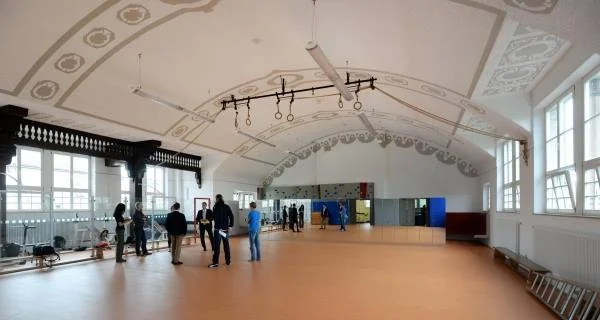
The Helmhalle at Helmplatz 6 in Fürth is a place where school history, movement, and culture lie closely together. Those searching for events, tickets, or historical background will find a special address: The hall is part of the Heinrich Schliemann Gymnasium, which is located as a public school in the center of Fürth, and it is used in the school day as well as for external offerings. The official school website refers to the movement space in the old Fürth weighing office on the school grounds, while the school history documents that the HSG took over the first floor of the former weighing office building at Helmplatz 6 in 1970. Additionally, there is vibrant use by clubs and organizers who fill the historical building with training, dance, and workshops. This mixture makes the Helmhalle particularly interesting for inquiries about events, tickets, directions, parking, and history. ([schliemann-gym.de](https://www.schliemann-gym.de/sport/unsere-sportstaetten))
Events and Tickets in the Helmhalle
The Helmhalle is not a classic large hall with a constant mainstream program, but a place with clear, practical use and yet surprisingly diverse occasions. The sources found show primarily two lines: On the one hand, the hall is used as a training and movement space, and on the other hand, it appears as a host for historical dance formats, workshops, and school cultural work. A current example is the Regency Workshop by earlydance.org on October 17 and 18, 2026, which will explicitly take place in the Helmhalle in Fürth and is aimed at experienced dancers and advanced participants. At the same time, the KampfKunstKreis e.V. lists its training times for the Helmhalle, thus describing a continuous use by a sports club. For interested parties, this means: Those looking for tickets or bookings should always check the respective organizer, as the information is published directly by the provider in the sources and not through a central hall shop. ([earlydance.org](https://earlydance.org/node/17588))
This structure of organizers is typical for the Helmhalle. The hall itself does not act as a large ticket brand, but as a characterful space that different groups use for their own formats. This can be a dance weekend where historical character catalogs and a communal dinner in the style of the time play a role, or a regular training session with clearly defined times and contacts. School music projects also belong in this context: The music ensembles of the Heinrich Schliemann Gymnasium partially rehearse in the Eichamt gym and present themselves according to the school website twice a year at large school concerts in the city theater or in the town hall, as well as at star hours and regional festivities. This creates an environment around the Helmhalle that relies less on mass operation but rather on authenticity, recognizability, and reliable processes. ([schliemann-gym.de](https://www.schliemann-gym.de/musik/ensembles))
For SEO searches for tickets, this is important because many users do not only mean admission tickets but any form of participation, registration, or seat reservation. In the Helmhalle, the answer is therefore usually: first check the organizer, then the format, then the participation conditions. For workshops, participation notes are mentioned directly on the event page, for clubs, training times and contact methods are provided on the club page, and for school uses, the hall is part of the school operation. This ambiguity of the search reflects the actual use of the location. So, those searching for events in the Helmhalle are often looking for a place with manageability, personality, and direct organization rather than an anonymous ticket complex. This makes the location equally attractive for culture-interested visitors, clubs, and school-related offerings. ([earlydance.org](https://earlydance.org/node/17588))
History of the Old Weighing Office and the Helmplatz 6 Address
The historical depth of the Helmhalle does not begin with individual events but with the long school and construction history in Fürth. The official HSG history describes the roots of the school back to the Latin and secondary school of 1863 and the founding of the humanistic gymnasium in 1896. The name Heinrich Schliemann was chosen for the current gymnasium in 1966. Particularly important for the Helmhalle is the development from the late 1960s: In the school history published by the city of Fürth, it is noted that the Heinrich Schliemann Gymnasium took over the building at Helmplatz 4 with ten classrooms in 1969 and additionally received the first floor of the former weighing office building at Helmplatz 6, built in 1907, in 1970. These facts connect the hall with a specific historical site and not just with any sports area. ([schliemann-gym.de](https://www.schliemann-gym.de/das-schliemann/historisches/geschichte-der-schule))
The address Helmplatz 6 is therefore more than a dry location indication. It stands for a building that is part of the educational and urban memory of Fürth. The official school website refers to the space as a movement space in the old Fürth weighing office on the school grounds, and the specialist texts on school history emphasize that the rooms at Helmplatz grew during a phase when the HSG needed more space and the city repurposed existing buildings. Helmplatz itself is centrally located in Fürth and borders Königstraße; this makes the location historically and urbanistically prominent. Those interested in school construction, urban development, or the use of older administrative buildings will find in the Helmhalle a vivid example of how historical building substance continues to live on rather than becoming museum-like. ([schliemann-gym.de](https://www.schliemann-gym.de/das-schliemann/historisches/geschichte-der-schule))
The history of the building is also exciting because it does not end with a one-time repurposing. The school history further describes that the HSG integrated additional buildings and rooms from a phase of growth and space shortages. The Helmhalle is thus part of a longer line of expansions that have gradually made the school grounds functional. For today's visitors, this means: The hall is not just a space with a past but a space whose past is still visible. Historical use, school life, and today's event use overlap at this very location. This is a strong motive for SEO content because search queries for history, weighing office, gym, and Helmplatz in this case actually concern the same building environment. ([schliemann-gym.de](https://www.schliemann-gym.de/das-schliemann/historisches/geschichte-der-schule))
Gym, Movement Space, and School Use at HSG
The Helmhalle is closely linked to the Heinrich Schliemann Gymnasium and continues to fulfill a clear function in school operations. The official sports page of the gymnasium explains that since the 2017/2018 school year, most of the physical education classes take place in the new Julius-Hirsch-Halle on Kapellenstraße. At the same time, it explicitly states that physical education also takes place in the movement space in the old Fürth weighing office on the school grounds. Thus, the Helmhalle is not only a historical relic but an active part of school life. Additionally, the pages of the music ensembles show that rehearsals of the lower school choir take place in the Eichamt gym. The hall is therefore relevant not only for sports but also for cultural education, ensemble work, and internal school events. ([schliemann-gym.de](https://www.schliemann-gym.de/sport/unsere-sportstaetten))
The connection of movement and culture defines the character of the place. According to the school website, a wide range is covered in the HSG ensembles: lower school choir, youth orchestra, big band, large choir, and large orchestra, with the ensembles presenting themselves twice a year in large school concerts in the city theater or town hall. That individual rehearsals take place in the Eichamt shows the close connection between school space and public cultural life. School dates and parent letters also refer to the gym in the Eichamt as a place for school gatherings, which confirms the impression that the space plays a significant role in school life. So, those looking for a location that does not seem interchangeable but lives from established use will find in the Helmhalle a space with a functional core and historical identity. ([schliemann-gym.de](https://www.schliemann-gym.de/musik/ensembles))
The diversity of hall use is also due to the structure of the HSG itself. The gymnasium is a public school with various educational directions and open all-day care; the official page of the Bavarian Ministry of Education states that there are 721 students for the 2024/25 school year. In such an environment, a space like the Helmhalle is particularly valuable because it remains flexible and can accommodate multiple types of use. The historical substance is thus not blocked by a single function but supports the educational everyday life. This makes the Helmhalle interesting from an SEO perspective: it is simultaneously a school gym, movement space, rehearsal location, and event area. This multiple use also explains why search queries often combine terms like events, tickets, gym, weighing office, and Heinrich Schliemann Gymnasium. ([km.bayern.de](https://www.km.bayern.de/schule/0091))
Directions and Parking at Helmplatz 6
Those wishing to visit the Helmhalle almost always first ask about directions. The available sources provide a clear practical statement: The KampfKunstKreis e.V., which trains in the Helmhalle, states in its frequently asked questions that there are usually free parking spaces available in the immediate vicinity of the hall, unless the Fürth Kärwa is taking place. For these exceptional days, the association explicitly recommends arriving by public transport. This is very helpful information for visitors as it shows that the location is easily accessible in everyday life, but more traffic is to be expected during large city festivals. For content planning, this means that the search intentions for parking and directions are particularly relevant and should be clearly answered in the description. ([k3ev.de](https://www.k3ev.de/Joomla/index.php/mobile-haeufige-fragen))
The address itself is also important: Helmplatz 6, 90762 Fürth. It appears in the club details of the KampfKunstKreis e.V., in the training times, and in the event page of the historical dance workshop. The location is centrally located in Fürth, directly in the vicinity of Helmplatz and near Königstraße. Although the sources do not mention a separate underground garage or visitor parking, the specific indication of free parking spaces in the vicinity provides a useful picture for travel planning. For visitors, this means in practice: Those coming to a workshop, training, or school event should keep an eye on not only the start time but also possible downtown situations. Especially for evening appointments or weekends, an earlier arrival is advisable to ensure a relaxed visit. ([k3ev.de](https://www.k3ev.de/Joomla/index.php/mobile-haeufige-fragen))
Because the Helmhalle is not an isolated event new building but is embedded in a school and city quarter, the arrival works differently than at a trade fair center or arena. This is actually an advantage for many users: The paths are short, the place is manageable, and the routes within the Helmplatz and Königstraße area are clear. Those relying on public transport benefit from the fact that the hall is located in the inner-city area; those arriving by car usually find parking in the vicinity according to K3. This mix of central location and pragmatic accessibility is well suited for search terms like Helmhalle parking or Helmhalle directions, as the answer does not remain abstract but can be described from a concrete user experience. ([k3ev.de](https://www.k3ev.de/Joomla/index.php/mobile-haeufige-fragen))
The Role of the Helmhalle in the Cultural Everyday Life of Fürth
The Helmhalle is more than a school gym for Fürth because it lies at the intersection of education, club life, and culture. On one side stands the Heinrich Schliemann Gymnasium with its long history, its language, music, and nature profiles, and an active school life. On the other side are organizers like earlydance.org or the KampfKunstKreis e.V., who use the space for their own formats. Between these poles, a form of use emerges that is typical for the city center of Fürth: historical buildings remain alive because they are integrated into everyday life. The term historical weighing office fits well because it refers not only to construction history but also to the ongoing significance of the place. ([schliemann-gym.de](https://www.schliemann-gym.de/das-schliemann/historisches/geschichte-der-schule))
The cultural role of the Helmhalle is particularly evident in the school ensembles. The school website documents that lower school choir, orchestra, and other groups rehearse there and present themselves in large concerts in the city theater or town hall. This means: The space itself is small and functional, but it indirectly contributes to public cultural events in Fürth. Additionally, external events like the Regency Workshop in autumn 2026, where historical dance, communal eating, and a consciously stylized framework come together, add to this. Such formats make the Helmhalle a place where not only practice takes place but also experiences are made. For SEO text, this is important because seekers of events often mean exactly such a place: not over-staged, but characterful, concrete, and with a real connection to the city. ([schliemann-gym.de](https://www.schliemann-gym.de/musik/ensembles))
The historical narrative also reinforces this impression. The gymnasium emerged from a school tradition that began in 1863, led to the humanistic gymnasium in 1896, and received the name Heinrich Schliemann in 1966. The additional rooms at Helmplatz were integrated during a phase of school development in which the city repurposed existing buildings instead of abandoning them. Therefore, the Helmhalle is today a good example of how Fürth deals with its architectural history: not as mere remembrance but as a used urban space. Thus, those visiting this place experience not only a training session or workshop but also a piece of lived Fürth city history. This makes the location equally interesting for visitors, parents, students, clubs, and culture-interested guests. ([schliemann-gym.de](https://www.schliemann-gym.de/das-schliemann/historisches/geschichte-der-schule))
On-Site Practice: What Visitors Can Expect in the Helmhalle
Visitors should understand the Helmhalle as a place with clear but flexible use. Those attending an event encounter a historical school building with sporting and cultural functions, not a standardized event hall. This means in practice: Organizational information such as start time, registration, room access, and possible lists of items to bring usually come directly from the respective organizer. The Regency Workshop by earlydance.org, for example, specifies concrete dates, thematic focuses, and notes on the process. The KampfKunstKreis e.V. provides its training times and contact details online and explains the parking situation in the FAQs. This is helpful for planning because the specific use of the building is very transparent through the organizers' pages. ([earlydance.org](https://earlydance.org/node/17588))
For families and school-related visitors, orientation is also simple: The Helmhalle is located in the vicinity of the Heinrich Schliemann Gymnasium, which is situated at Königstraße 105, and the school's sports page explicitly refers to the movement space in the old Fürth weighing office on the school grounds. Therefore, those connecting a visit with the school context can understand the hall as part of a larger campus. The space is not an alien body but part of a grown infrastructure that connects teaching, rehearsals, and events. This is particularly relevant for anyone looking for a location with history but also expecting a functioning everyday use. ([km.bayern.de](https://www.km.bayern.de/schule/0091))
The strength of the Helmhalle lies precisely in this balance: It is historically significant enough to arouse curiosity and practical enough to be used regularly. It is large enough for movement, rehearsal, and workshop formats, but not so anonymous that it loses its identity. The sources show a credible mix of school operations, club life, and cultural work, and that is why the location is suitable for people who, in their search, are not only looking for tickets but for atmosphere, history, and genuine integration into the city. For Fürth, the Helmhalle is thus a compact, characterful event and movement space whose name can be well linked with terms like events, tickets, history, directions, parking, and weighing office. ([schliemann-gym.de](https://www.schliemann-gym.de/sport/unsere-sportstaetten))
Sources:
- Heinrich Schliemann Gymnasium Fürth - Official Website ([schliemann-gym.de](https://www.schliemann-gym.de/?utm_source=openai))
- Heinrich Schliemann Gymnasium Fürth - Our Sports Facilities ([schliemann-gym.de](https://www.schliemann-gym.de/sport/unsere-sportstaetten))
- Heinrich Schliemann Gymnasium Fürth - History of the School ([schliemann-gym.de](https://www.schliemann-gym.de/das-schliemann/historisches/geschichte-der-schule))
- City of Fürth - The History of Fürth's Education System ([fuerth.de](https://www.fuerth.de/fileadmin/redaktion/04-Bildung-Soziales/02-Dokumente-Allgemein/Die-Geschichte-des-Fuerther-Schulwesens.pdf))
- KampfKunstKreis e.V. - Frequently Asked Questions ([k3ev.de](https://www.k3ev.de/Joomla/index.php/mobile-haeufige-fragen))
- KampfKunstKreis e.V. - Training Times ([k3ev.de](https://www.k3ev.de/Joomla/index.php/mobile-trainingszeiten))
- earlydance.org - The Little Jane Austen Weekend ([earlydance.org](https://earlydance.org/node/17588))
- Bavarian State Ministry for Education and Culture - Heinrich Schliemann Gymnasium Fürth ([km.bayern.de](https://www.km.bayern.de/schule/0091))
Mehr anzeigenWeniger anzeigen
Helmhalle/Historical Weighing Office | Events & Tickets
The Helmhalle at Helmplatz 6 in Fürth is a place where school history, movement, and culture lie closely together. Those searching for events, tickets, or historical background will find a special address: The hall is part of the Heinrich Schliemann Gymnasium, which is located as a public school in the center of Fürth, and it is used in the school day as well as for external offerings. The official school website refers to the movement space in the old Fürth weighing office on the school grounds, while the school history documents that the HSG took over the first floor of the former weighing office building at Helmplatz 6 in 1970. Additionally, there is vibrant use by clubs and organizers who fill the historical building with training, dance, and workshops. This mixture makes the Helmhalle particularly interesting for inquiries about events, tickets, directions, parking, and history. ([schliemann-gym.de](https://www.schliemann-gym.de/sport/unsere-sportstaetten))
Events and Tickets in the Helmhalle
The Helmhalle is not a classic large hall with a constant mainstream program, but a place with clear, practical use and yet surprisingly diverse occasions. The sources found show primarily two lines: On the one hand, the hall is used as a training and movement space, and on the other hand, it appears as a host for historical dance formats, workshops, and school cultural work. A current example is the Regency Workshop by earlydance.org on October 17 and 18, 2026, which will explicitly take place in the Helmhalle in Fürth and is aimed at experienced dancers and advanced participants. At the same time, the KampfKunstKreis e.V. lists its training times for the Helmhalle, thus describing a continuous use by a sports club. For interested parties, this means: Those looking for tickets or bookings should always check the respective organizer, as the information is published directly by the provider in the sources and not through a central hall shop. ([earlydance.org](https://earlydance.org/node/17588))
This structure of organizers is typical for the Helmhalle. The hall itself does not act as a large ticket brand, but as a characterful space that different groups use for their own formats. This can be a dance weekend where historical character catalogs and a communal dinner in the style of the time play a role, or a regular training session with clearly defined times and contacts. School music projects also belong in this context: The music ensembles of the Heinrich Schliemann Gymnasium partially rehearse in the Eichamt gym and present themselves according to the school website twice a year at large school concerts in the city theater or in the town hall, as well as at star hours and regional festivities. This creates an environment around the Helmhalle that relies less on mass operation but rather on authenticity, recognizability, and reliable processes. ([schliemann-gym.de](https://www.schliemann-gym.de/musik/ensembles))
For SEO searches for tickets, this is important because many users do not only mean admission tickets but any form of participation, registration, or seat reservation. In the Helmhalle, the answer is therefore usually: first check the organizer, then the format, then the participation conditions. For workshops, participation notes are mentioned directly on the event page, for clubs, training times and contact methods are provided on the club page, and for school uses, the hall is part of the school operation. This ambiguity of the search reflects the actual use of the location. So, those searching for events in the Helmhalle are often looking for a place with manageability, personality, and direct organization rather than an anonymous ticket complex. This makes the location equally attractive for culture-interested visitors, clubs, and school-related offerings. ([earlydance.org](https://earlydance.org/node/17588))
History of the Old Weighing Office and the Helmplatz 6 Address
The historical depth of the Helmhalle does not begin with individual events but with the long school and construction history in Fürth. The official HSG history describes the roots of the school back to the Latin and secondary school of 1863 and the founding of the humanistic gymnasium in 1896. The name Heinrich Schliemann was chosen for the current gymnasium in 1966. Particularly important for the Helmhalle is the development from the late 1960s: In the school history published by the city of Fürth, it is noted that the Heinrich Schliemann Gymnasium took over the building at Helmplatz 4 with ten classrooms in 1969 and additionally received the first floor of the former weighing office building at Helmplatz 6, built in 1907, in 1970. These facts connect the hall with a specific historical site and not just with any sports area. ([schliemann-gym.de](https://www.schliemann-gym.de/das-schliemann/historisches/geschichte-der-schule))
The address Helmplatz 6 is therefore more than a dry location indication. It stands for a building that is part of the educational and urban memory of Fürth. The official school website refers to the space as a movement space in the old Fürth weighing office on the school grounds, and the specialist texts on school history emphasize that the rooms at Helmplatz grew during a phase when the HSG needed more space and the city repurposed existing buildings. Helmplatz itself is centrally located in Fürth and borders Königstraße; this makes the location historically and urbanistically prominent. Those interested in school construction, urban development, or the use of older administrative buildings will find in the Helmhalle a vivid example of how historical building substance continues to live on rather than becoming museum-like. ([schliemann-gym.de](https://www.schliemann-gym.de/das-schliemann/historisches/geschichte-der-schule))
The history of the building is also exciting because it does not end with a one-time repurposing. The school history further describes that the HSG integrated additional buildings and rooms from a phase of growth and space shortages. The Helmhalle is thus part of a longer line of expansions that have gradually made the school grounds functional. For today's visitors, this means: The hall is not just a space with a past but a space whose past is still visible. Historical use, school life, and today's event use overlap at this very location. This is a strong motive for SEO content because search queries for history, weighing office, gym, and Helmplatz in this case actually concern the same building environment. ([schliemann-gym.de](https://www.schliemann-gym.de/das-schliemann/historisches/geschichte-der-schule))
Gym, Movement Space, and School Use at HSG
The Helmhalle is closely linked to the Heinrich Schliemann Gymnasium and continues to fulfill a clear function in school operations. The official sports page of the gymnasium explains that since the 2017/2018 school year, most of the physical education classes take place in the new Julius-Hirsch-Halle on Kapellenstraße. At the same time, it explicitly states that physical education also takes place in the movement space in the old Fürth weighing office on the school grounds. Thus, the Helmhalle is not only a historical relic but an active part of school life. Additionally, the pages of the music ensembles show that rehearsals of the lower school choir take place in the Eichamt gym. The hall is therefore relevant not only for sports but also for cultural education, ensemble work, and internal school events. ([schliemann-gym.de](https://www.schliemann-gym.de/sport/unsere-sportstaetten))
The connection of movement and culture defines the character of the place. According to the school website, a wide range is covered in the HSG ensembles: lower school choir, youth orchestra, big band, large choir, and large orchestra, with the ensembles presenting themselves twice a year in large school concerts in the city theater or town hall. That individual rehearsals take place in the Eichamt shows the close connection between school space and public cultural life. School dates and parent letters also refer to the gym in the Eichamt as a place for school gatherings, which confirms the impression that the space plays a significant role in school life. So, those looking for a location that does not seem interchangeable but lives from established use will find in the Helmhalle a space with a functional core and historical identity. ([schliemann-gym.de](https://www.schliemann-gym.de/musik/ensembles))
The diversity of hall use is also due to the structure of the HSG itself. The gymnasium is a public school with various educational directions and open all-day care; the official page of the Bavarian Ministry of Education states that there are 721 students for the 2024/25 school year. In such an environment, a space like the Helmhalle is particularly valuable because it remains flexible and can accommodate multiple types of use. The historical substance is thus not blocked by a single function but supports the educational everyday life. This makes the Helmhalle interesting from an SEO perspective: it is simultaneously a school gym, movement space, rehearsal location, and event area. This multiple use also explains why search queries often combine terms like events, tickets, gym, weighing office, and Heinrich Schliemann Gymnasium. ([km.bayern.de](https://www.km.bayern.de/schule/0091))
Directions and Parking at Helmplatz 6
Those wishing to visit the Helmhalle almost always first ask about directions. The available sources provide a clear practical statement: The KampfKunstKreis e.V., which trains in the Helmhalle, states in its frequently asked questions that there are usually free parking spaces available in the immediate vicinity of the hall, unless the Fürth Kärwa is taking place. For these exceptional days, the association explicitly recommends arriving by public transport. This is very helpful information for visitors as it shows that the location is easily accessible in everyday life, but more traffic is to be expected during large city festivals. For content planning, this means that the search intentions for parking and directions are particularly relevant and should be clearly answered in the description. ([k3ev.de](https://www.k3ev.de/Joomla/index.php/mobile-haeufige-fragen))
The address itself is also important: Helmplatz 6, 90762 Fürth. It appears in the club details of the KampfKunstKreis e.V., in the training times, and in the event page of the historical dance workshop. The location is centrally located in Fürth, directly in the vicinity of Helmplatz and near Königstraße. Although the sources do not mention a separate underground garage or visitor parking, the specific indication of free parking spaces in the vicinity provides a useful picture for travel planning. For visitors, this means in practice: Those coming to a workshop, training, or school event should keep an eye on not only the start time but also possible downtown situations. Especially for evening appointments or weekends, an earlier arrival is advisable to ensure a relaxed visit. ([k3ev.de](https://www.k3ev.de/Joomla/index.php/mobile-haeufige-fragen))
Because the Helmhalle is not an isolated event new building but is embedded in a school and city quarter, the arrival works differently than at a trade fair center or arena. This is actually an advantage for many users: The paths are short, the place is manageable, and the routes within the Helmplatz and Königstraße area are clear. Those relying on public transport benefit from the fact that the hall is located in the inner-city area; those arriving by car usually find parking in the vicinity according to K3. This mix of central location and pragmatic accessibility is well suited for search terms like Helmhalle parking or Helmhalle directions, as the answer does not remain abstract but can be described from a concrete user experience. ([k3ev.de](https://www.k3ev.de/Joomla/index.php/mobile-haeufige-fragen))
The Role of the Helmhalle in the Cultural Everyday Life of Fürth
The Helmhalle is more than a school gym for Fürth because it lies at the intersection of education, club life, and culture. On one side stands the Heinrich Schliemann Gymnasium with its long history, its language, music, and nature profiles, and an active school life. On the other side are organizers like earlydance.org or the KampfKunstKreis e.V., who use the space for their own formats. Between these poles, a form of use emerges that is typical for the city center of Fürth: historical buildings remain alive because they are integrated into everyday life. The term historical weighing office fits well because it refers not only to construction history but also to the ongoing significance of the place. ([schliemann-gym.de](https://www.schliemann-gym.de/das-schliemann/historisches/geschichte-der-schule))
The cultural role of the Helmhalle is particularly evident in the school ensembles. The school website documents that lower school choir, orchestra, and other groups rehearse there and present themselves in large concerts in the city theater or town hall. This means: The space itself is small and functional, but it indirectly contributes to public cultural events in Fürth. Additionally, external events like the Regency Workshop in autumn 2026, where historical dance, communal eating, and a consciously stylized framework come together, add to this. Such formats make the Helmhalle a place where not only practice takes place but also experiences are made. For SEO text, this is important because seekers of events often mean exactly such a place: not over-staged, but characterful, concrete, and with a real connection to the city. ([schliemann-gym.de](https://www.schliemann-gym.de/musik/ensembles))
The historical narrative also reinforces this impression. The gymnasium emerged from a school tradition that began in 1863, led to the humanistic gymnasium in 1896, and received the name Heinrich Schliemann in 1966. The additional rooms at Helmplatz were integrated during a phase of school development in which the city repurposed existing buildings instead of abandoning them. Therefore, the Helmhalle is today a good example of how Fürth deals with its architectural history: not as mere remembrance but as a used urban space. Thus, those visiting this place experience not only a training session or workshop but also a piece of lived Fürth city history. This makes the location equally interesting for visitors, parents, students, clubs, and culture-interested guests. ([schliemann-gym.de](https://www.schliemann-gym.de/das-schliemann/historisches/geschichte-der-schule))
On-Site Practice: What Visitors Can Expect in the Helmhalle
Visitors should understand the Helmhalle as a place with clear but flexible use. Those attending an event encounter a historical school building with sporting and cultural functions, not a standardized event hall. This means in practice: Organizational information such as start time, registration, room access, and possible lists of items to bring usually come directly from the respective organizer. The Regency Workshop by earlydance.org, for example, specifies concrete dates, thematic focuses, and notes on the process. The KampfKunstKreis e.V. provides its training times and contact details online and explains the parking situation in the FAQs. This is helpful for planning because the specific use of the building is very transparent through the organizers' pages. ([earlydance.org](https://earlydance.org/node/17588))
For families and school-related visitors, orientation is also simple: The Helmhalle is located in the vicinity of the Heinrich Schliemann Gymnasium, which is situated at Königstraße 105, and the school's sports page explicitly refers to the movement space in the old Fürth weighing office on the school grounds. Therefore, those connecting a visit with the school context can understand the hall as part of a larger campus. The space is not an alien body but part of a grown infrastructure that connects teaching, rehearsals, and events. This is particularly relevant for anyone looking for a location with history but also expecting a functioning everyday use. ([km.bayern.de](https://www.km.bayern.de/schule/0091))
The strength of the Helmhalle lies precisely in this balance: It is historically significant enough to arouse curiosity and practical enough to be used regularly. It is large enough for movement, rehearsal, and workshop formats, but not so anonymous that it loses its identity. The sources show a credible mix of school operations, club life, and cultural work, and that is why the location is suitable for people who, in their search, are not only looking for tickets but for atmosphere, history, and genuine integration into the city. For Fürth, the Helmhalle is thus a compact, characterful event and movement space whose name can be well linked with terms like events, tickets, history, directions, parking, and weighing office. ([schliemann-gym.de](https://www.schliemann-gym.de/sport/unsere-sportstaetten))
Sources:
- Heinrich Schliemann Gymnasium Fürth - Official Website ([schliemann-gym.de](https://www.schliemann-gym.de/?utm_source=openai))
- Heinrich Schliemann Gymnasium Fürth - Our Sports Facilities ([schliemann-gym.de](https://www.schliemann-gym.de/sport/unsere-sportstaetten))
- Heinrich Schliemann Gymnasium Fürth - History of the School ([schliemann-gym.de](https://www.schliemann-gym.de/das-schliemann/historisches/geschichte-der-schule))
- City of Fürth - The History of Fürth's Education System ([fuerth.de](https://www.fuerth.de/fileadmin/redaktion/04-Bildung-Soziales/02-Dokumente-Allgemein/Die-Geschichte-des-Fuerther-Schulwesens.pdf))
- KampfKunstKreis e.V. - Frequently Asked Questions ([k3ev.de](https://www.k3ev.de/Joomla/index.php/mobile-haeufige-fragen))
- KampfKunstKreis e.V. - Training Times ([k3ev.de](https://www.k3ev.de/Joomla/index.php/mobile-trainingszeiten))
- earlydance.org - The Little Jane Austen Weekend ([earlydance.org](https://earlydance.org/node/17588))
- Bavarian State Ministry for Education and Culture - Heinrich Schliemann Gymnasium Fürth ([km.bayern.de](https://www.km.bayern.de/schule/0091))
Helmhalle/Historical Weighing Office | Events & Tickets
The Helmhalle at Helmplatz 6 in Fürth is a place where school history, movement, and culture lie closely together. Those searching for events, tickets, or historical background will find a special address: The hall is part of the Heinrich Schliemann Gymnasium, which is located as a public school in the center of Fürth, and it is used in the school day as well as for external offerings. The official school website refers to the movement space in the old Fürth weighing office on the school grounds, while the school history documents that the HSG took over the first floor of the former weighing office building at Helmplatz 6 in 1970. Additionally, there is vibrant use by clubs and organizers who fill the historical building with training, dance, and workshops. This mixture makes the Helmhalle particularly interesting for inquiries about events, tickets, directions, parking, and history. ([schliemann-gym.de](https://www.schliemann-gym.de/sport/unsere-sportstaetten))
Events and Tickets in the Helmhalle
The Helmhalle is not a classic large hall with a constant mainstream program, but a place with clear, practical use and yet surprisingly diverse occasions. The sources found show primarily two lines: On the one hand, the hall is used as a training and movement space, and on the other hand, it appears as a host for historical dance formats, workshops, and school cultural work. A current example is the Regency Workshop by earlydance.org on October 17 and 18, 2026, which will explicitly take place in the Helmhalle in Fürth and is aimed at experienced dancers and advanced participants. At the same time, the KampfKunstKreis e.V. lists its training times for the Helmhalle, thus describing a continuous use by a sports club. For interested parties, this means: Those looking for tickets or bookings should always check the respective organizer, as the information is published directly by the provider in the sources and not through a central hall shop. ([earlydance.org](https://earlydance.org/node/17588))
This structure of organizers is typical for the Helmhalle. The hall itself does not act as a large ticket brand, but as a characterful space that different groups use for their own formats. This can be a dance weekend where historical character catalogs and a communal dinner in the style of the time play a role, or a regular training session with clearly defined times and contacts. School music projects also belong in this context: The music ensembles of the Heinrich Schliemann Gymnasium partially rehearse in the Eichamt gym and present themselves according to the school website twice a year at large school concerts in the city theater or in the town hall, as well as at star hours and regional festivities. This creates an environment around the Helmhalle that relies less on mass operation but rather on authenticity, recognizability, and reliable processes. ([schliemann-gym.de](https://www.schliemann-gym.de/musik/ensembles))
For SEO searches for tickets, this is important because many users do not only mean admission tickets but any form of participation, registration, or seat reservation. In the Helmhalle, the answer is therefore usually: first check the organizer, then the format, then the participation conditions. For workshops, participation notes are mentioned directly on the event page, for clubs, training times and contact methods are provided on the club page, and for school uses, the hall is part of the school operation. This ambiguity of the search reflects the actual use of the location. So, those searching for events in the Helmhalle are often looking for a place with manageability, personality, and direct organization rather than an anonymous ticket complex. This makes the location equally attractive for culture-interested visitors, clubs, and school-related offerings. ([earlydance.org](https://earlydance.org/node/17588))
History of the Old Weighing Office and the Helmplatz 6 Address
The historical depth of the Helmhalle does not begin with individual events but with the long school and construction history in Fürth. The official HSG history describes the roots of the school back to the Latin and secondary school of 1863 and the founding of the humanistic gymnasium in 1896. The name Heinrich Schliemann was chosen for the current gymnasium in 1966. Particularly important for the Helmhalle is the development from the late 1960s: In the school history published by the city of Fürth, it is noted that the Heinrich Schliemann Gymnasium took over the building at Helmplatz 4 with ten classrooms in 1969 and additionally received the first floor of the former weighing office building at Helmplatz 6, built in 1907, in 1970. These facts connect the hall with a specific historical site and not just with any sports area. ([schliemann-gym.de](https://www.schliemann-gym.de/das-schliemann/historisches/geschichte-der-schule))
The address Helmplatz 6 is therefore more than a dry location indication. It stands for a building that is part of the educational and urban memory of Fürth. The official school website refers to the space as a movement space in the old Fürth weighing office on the school grounds, and the specialist texts on school history emphasize that the rooms at Helmplatz grew during a phase when the HSG needed more space and the city repurposed existing buildings. Helmplatz itself is centrally located in Fürth and borders Königstraße; this makes the location historically and urbanistically prominent. Those interested in school construction, urban development, or the use of older administrative buildings will find in the Helmhalle a vivid example of how historical building substance continues to live on rather than becoming museum-like. ([schliemann-gym.de](https://www.schliemann-gym.de/das-schliemann/historisches/geschichte-der-schule))
The history of the building is also exciting because it does not end with a one-time repurposing. The school history further describes that the HSG integrated additional buildings and rooms from a phase of growth and space shortages. The Helmhalle is thus part of a longer line of expansions that have gradually made the school grounds functional. For today's visitors, this means: The hall is not just a space with a past but a space whose past is still visible. Historical use, school life, and today's event use overlap at this very location. This is a strong motive for SEO content because search queries for history, weighing office, gym, and Helmplatz in this case actually concern the same building environment. ([schliemann-gym.de](https://www.schliemann-gym.de/das-schliemann/historisches/geschichte-der-schule))
Gym, Movement Space, and School Use at HSG
The Helmhalle is closely linked to the Heinrich Schliemann Gymnasium and continues to fulfill a clear function in school operations. The official sports page of the gymnasium explains that since the 2017/2018 school year, most of the physical education classes take place in the new Julius-Hirsch-Halle on Kapellenstraße. At the same time, it explicitly states that physical education also takes place in the movement space in the old Fürth weighing office on the school grounds. Thus, the Helmhalle is not only a historical relic but an active part of school life. Additionally, the pages of the music ensembles show that rehearsals of the lower school choir take place in the Eichamt gym. The hall is therefore relevant not only for sports but also for cultural education, ensemble work, and internal school events. ([schliemann-gym.de](https://www.schliemann-gym.de/sport/unsere-sportstaetten))
The connection of movement and culture defines the character of the place. According to the school website, a wide range is covered in the HSG ensembles: lower school choir, youth orchestra, big band, large choir, and large orchestra, with the ensembles presenting themselves twice a year in large school concerts in the city theater or town hall. That individual rehearsals take place in the Eichamt shows the close connection between school space and public cultural life. School dates and parent letters also refer to the gym in the Eichamt as a place for school gatherings, which confirms the impression that the space plays a significant role in school life. So, those looking for a location that does not seem interchangeable but lives from established use will find in the Helmhalle a space with a functional core and historical identity. ([schliemann-gym.de](https://www.schliemann-gym.de/musik/ensembles))
The diversity of hall use is also due to the structure of the HSG itself. The gymnasium is a public school with various educational directions and open all-day care; the official page of the Bavarian Ministry of Education states that there are 721 students for the 2024/25 school year. In such an environment, a space like the Helmhalle is particularly valuable because it remains flexible and can accommodate multiple types of use. The historical substance is thus not blocked by a single function but supports the educational everyday life. This makes the Helmhalle interesting from an SEO perspective: it is simultaneously a school gym, movement space, rehearsal location, and event area. This multiple use also explains why search queries often combine terms like events, tickets, gym, weighing office, and Heinrich Schliemann Gymnasium. ([km.bayern.de](https://www.km.bayern.de/schule/0091))
Directions and Parking at Helmplatz 6
Those wishing to visit the Helmhalle almost always first ask about directions. The available sources provide a clear practical statement: The KampfKunstKreis e.V., which trains in the Helmhalle, states in its frequently asked questions that there are usually free parking spaces available in the immediate vicinity of the hall, unless the Fürth Kärwa is taking place. For these exceptional days, the association explicitly recommends arriving by public transport. This is very helpful information for visitors as it shows that the location is easily accessible in everyday life, but more traffic is to be expected during large city festivals. For content planning, this means that the search intentions for parking and directions are particularly relevant and should be clearly answered in the description. ([k3ev.de](https://www.k3ev.de/Joomla/index.php/mobile-haeufige-fragen))
The address itself is also important: Helmplatz 6, 90762 Fürth. It appears in the club details of the KampfKunstKreis e.V., in the training times, and in the event page of the historical dance workshop. The location is centrally located in Fürth, directly in the vicinity of Helmplatz and near Königstraße. Although the sources do not mention a separate underground garage or visitor parking, the specific indication of free parking spaces in the vicinity provides a useful picture for travel planning. For visitors, this means in practice: Those coming to a workshop, training, or school event should keep an eye on not only the start time but also possible downtown situations. Especially for evening appointments or weekends, an earlier arrival is advisable to ensure a relaxed visit. ([k3ev.de](https://www.k3ev.de/Joomla/index.php/mobile-haeufige-fragen))
Because the Helmhalle is not an isolated event new building but is embedded in a school and city quarter, the arrival works differently than at a trade fair center or arena. This is actually an advantage for many users: The paths are short, the place is manageable, and the routes within the Helmplatz and Königstraße area are clear. Those relying on public transport benefit from the fact that the hall is located in the inner-city area; those arriving by car usually find parking in the vicinity according to K3. This mix of central location and pragmatic accessibility is well suited for search terms like Helmhalle parking or Helmhalle directions, as the answer does not remain abstract but can be described from a concrete user experience. ([k3ev.de](https://www.k3ev.de/Joomla/index.php/mobile-haeufige-fragen))
The Role of the Helmhalle in the Cultural Everyday Life of Fürth
The Helmhalle is more than a school gym for Fürth because it lies at the intersection of education, club life, and culture. On one side stands the Heinrich Schliemann Gymnasium with its long history, its language, music, and nature profiles, and an active school life. On the other side are organizers like earlydance.org or the KampfKunstKreis e.V., who use the space for their own formats. Between these poles, a form of use emerges that is typical for the city center of Fürth: historical buildings remain alive because they are integrated into everyday life. The term historical weighing office fits well because it refers not only to construction history but also to the ongoing significance of the place. ([schliemann-gym.de](https://www.schliemann-gym.de/das-schliemann/historisches/geschichte-der-schule))
The cultural role of the Helmhalle is particularly evident in the school ensembles. The school website documents that lower school choir, orchestra, and other groups rehearse there and present themselves in large concerts in the city theater or town hall. This means: The space itself is small and functional, but it indirectly contributes to public cultural events in Fürth. Additionally, external events like the Regency Workshop in autumn 2026, where historical dance, communal eating, and a consciously stylized framework come together, add to this. Such formats make the Helmhalle a place where not only practice takes place but also experiences are made. For SEO text, this is important because seekers of events often mean exactly such a place: not over-staged, but characterful, concrete, and with a real connection to the city. ([schliemann-gym.de](https://www.schliemann-gym.de/musik/ensembles))
The historical narrative also reinforces this impression. The gymnasium emerged from a school tradition that began in 1863, led to the humanistic gymnasium in 1896, and received the name Heinrich Schliemann in 1966. The additional rooms at Helmplatz were integrated during a phase of school development in which the city repurposed existing buildings instead of abandoning them. Therefore, the Helmhalle is today a good example of how Fürth deals with its architectural history: not as mere remembrance but as a used urban space. Thus, those visiting this place experience not only a training session or workshop but also a piece of lived Fürth city history. This makes the location equally interesting for visitors, parents, students, clubs, and culture-interested guests. ([schliemann-gym.de](https://www.schliemann-gym.de/das-schliemann/historisches/geschichte-der-schule))
On-Site Practice: What Visitors Can Expect in the Helmhalle
Visitors should understand the Helmhalle as a place with clear but flexible use. Those attending an event encounter a historical school building with sporting and cultural functions, not a standardized event hall. This means in practice: Organizational information such as start time, registration, room access, and possible lists of items to bring usually come directly from the respective organizer. The Regency Workshop by earlydance.org, for example, specifies concrete dates, thematic focuses, and notes on the process. The KampfKunstKreis e.V. provides its training times and contact details online and explains the parking situation in the FAQs. This is helpful for planning because the specific use of the building is very transparent through the organizers' pages. ([earlydance.org](https://earlydance.org/node/17588))
For families and school-related visitors, orientation is also simple: The Helmhalle is located in the vicinity of the Heinrich Schliemann Gymnasium, which is situated at Königstraße 105, and the school's sports page explicitly refers to the movement space in the old Fürth weighing office on the school grounds. Therefore, those connecting a visit with the school context can understand the hall as part of a larger campus. The space is not an alien body but part of a grown infrastructure that connects teaching, rehearsals, and events. This is particularly relevant for anyone looking for a location with history but also expecting a functioning everyday use. ([km.bayern.de](https://www.km.bayern.de/schule/0091))
The strength of the Helmhalle lies precisely in this balance: It is historically significant enough to arouse curiosity and practical enough to be used regularly. It is large enough for movement, rehearsal, and workshop formats, but not so anonymous that it loses its identity. The sources show a credible mix of school operations, club life, and cultural work, and that is why the location is suitable for people who, in their search, are not only looking for tickets but for atmosphere, history, and genuine integration into the city. For Fürth, the Helmhalle is thus a compact, characterful event and movement space whose name can be well linked with terms like events, tickets, history, directions, parking, and weighing office. ([schliemann-gym.de](https://www.schliemann-gym.de/sport/unsere-sportstaetten))
Sources:
- Heinrich Schliemann Gymnasium Fürth - Official Website ([schliemann-gym.de](https://www.schliemann-gym.de/?utm_source=openai))
- Heinrich Schliemann Gymnasium Fürth - Our Sports Facilities ([schliemann-gym.de](https://www.schliemann-gym.de/sport/unsere-sportstaetten))
- Heinrich Schliemann Gymnasium Fürth - History of the School ([schliemann-gym.de](https://www.schliemann-gym.de/das-schliemann/historisches/geschichte-der-schule))
- City of Fürth - The History of Fürth's Education System ([fuerth.de](https://www.fuerth.de/fileadmin/redaktion/04-Bildung-Soziales/02-Dokumente-Allgemein/Die-Geschichte-des-Fuerther-Schulwesens.pdf))
- KampfKunstKreis e.V. - Frequently Asked Questions ([k3ev.de](https://www.k3ev.de/Joomla/index.php/mobile-haeufige-fragen))
- KampfKunstKreis e.V. - Training Times ([k3ev.de](https://www.k3ev.de/Joomla/index.php/mobile-trainingszeiten))
- earlydance.org - The Little Jane Austen Weekend ([earlydance.org](https://earlydance.org/node/17588))
- Bavarian State Ministry for Education and Culture - Heinrich Schliemann Gymnasium Fürth ([km.bayern.de](https://www.km.bayern.de/schule/0091))
Frequently Asked Questions
Reviews
No reviews found