
Fürth
90768 Fürth, Germany
Fürth-Unterfürberg | Timetable & Access
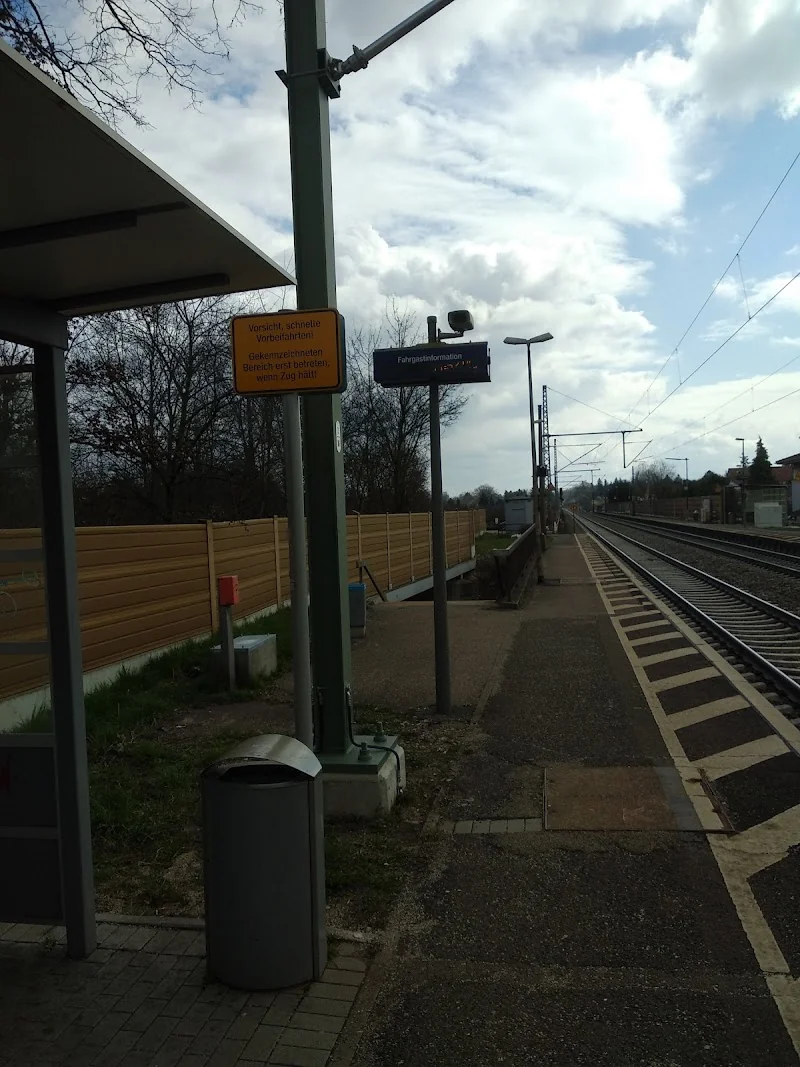
Fürth-Unterfürberg is a small but useful train stop in the Fürth district of Unterfürberg. The DB lists the address as Lycker Str. 19, 90768 Fürth, and consolidates live departures, PDF timetables, a replacement service map, and an orientation map for the station, platform, and surroundings on the official station page. The currently published timetable information shows that regional train and S-Bahn-like connections such as RB 12 and e 6 play a role here. This is why Fürth-Unterfürberg is particularly interesting for commuters, transfer passengers, and travelers looking for a clear, compact stop with direct orientation. ([bahnhof.de](https://www.bahnhof.de/en/fuerth-unterfuerberg))
Timetable, Departures, and Platforms at Fürth-Unterfürberg Station
Those looking for the timetable for Fürth-Unterfürberg can find the live departure overview and a PDF timetable valid from December 14, 2025, on bahnhof.de. These documents are particularly helpful because they not only show the direction of the trains but also the platform or track information. Official departures include, among others, Track 1 and Track 2. This is important for anyone who has little time to transfer or wants to be correctly positioned at the platform as directly as possible. ([bahnhof.de](https://www.bahnhof.de/en/fuerth-unterfuerberg))
A look at the current tables shows the typical logic of the stop: directions to Fürth (Bay) Hbf, Nürnberg Hbf, Fürth-Burgfarrnbach, Siegelsdorf, and Markt Erlbach are displayed depending on the train. For example, an RB-12 train towards Fürth (Bay) Hbf is scheduled early in the morning, while e-6 connections towards Fürth (Bay) Hbf and Nürnberg Hbf are also listed. Late in the evening, an RE-10 train, which continues to Würzburg Hbf via Siegelsdorf, also appears. This makes the station not only a local stop but also a component of the regional network with connections to more distant destinations. ([bahnhof.de](https://www.bahnhof.de/downloads/schedule/Regeltafel_1991.pdf))
In practice, this means: Those who use the station in everyday life should read the timetable logic carefully and not just look at the train's destination display. For Fürth-Unterfürberg, it makes sense to check the combination of departure time, train number, and destination together, as the official tables show several connections with partly different destination chains. Especially at a station with a regional focus, such details are valuable when one wants to reliably reach Fürth, Nürnberg, or further into the western outskirts. The DB deliberately provides both the live display and the static PDF timetable so that travelers can plan in advance and react quickly on-site. ([bahnhof.de](https://www.bahnhof.de/en/fuerth-unterfuerberg))
Access and Parking on Lycker Street
The official address is Lycker Str. 19, 90768 Fürth. For access, this means mainly one thing: Those arriving by car can specifically navigate to the station and have the station address directly as a navigation destination. In the DB's facility notes, car parking is explicitly listed for Fürth-Unterfürberg. The station page does not provide a specific number of parking spaces, but the information confirms that parking facilities are available on-site. For many travelers, this is the most important practical information, as the stop can be well categorized as a park-and-ride or kiss-and-ride location. ([bahnhof.de](https://www.bahnhof.de/en/fuerth-unterfuerberg))
The regional environment also helps with the classification. The DB lists Fürth (Bay) Hbf as the nearest staffed station about 2 kilometers away, Nürnberg Hbf at 10 kilometers, Erlangen at 14 kilometers, and Ansbach at 34 kilometers. These distance indications show that Fürth-Unterfürberg functions more as a compact stop in front of larger traffic hubs and not as a major long-distance station. This is useful in practice because it allows one to better decide whether to board directly here or to switch to a larger station for service, transfers, or longer travel routes. ([bahnhof.de](https://www.bahnhof.de/en/fuerth-unterfuerberg))
Those planning their access should also consider that the station appears designed for quick and easy use. There is no complex service infrastructure like at a main station, but a clear structure with address, parking information, timetable, and map. This reduction to the essentials makes the location interesting for regional everyday life. Instead of long walks through a large station area, the focus here is primarily on finding clean access, checking the correct track, and keeping an eye on the departure time. For passengers looking for a practical station instead of a large transportation structure, this is an advantage. ([bahnhof.de](https://www.bahnhof.de/en/fuerth-unterfuerberg))
Accessibility, Service, and Assistance On-Site
Regarding accessibility, the DB provides a dedicated information page. It states that the features are intended to make access to the platforms barrier-free, and that one should select the respective platform for specific details. This is an important distinction: The official page confirms the barrier-free claim of the platforms but simultaneously refers to platform-specific information instead of making blanket promises. Those who inform themselves in advance thus receive a realistic and current basis instead of relying on vague statements. ([bahnhof.de](https://www.bahnhof.de/en/fuerth-unterfuerberg/accessibility-equipment))
However, the station itself is not staffed for personal assistance. The station page explicitly states that there are no staff members and no mobility service available on-site. The nearest staffed station is Fürth (Bay) Hbf. When it comes to questions about mobility assistance, the DB mentions the Mobility Service Centre hotline 030 65212888, with availability from Monday to Friday 06:00 to 22:00 and on Saturdays, Sundays, and holidays from 08:00 to 20:00. Therefore, those who need assistance should plan this in advance and not rely on spontaneous service at the platform. ([bahnhof.de](https://www.bahnhof.de/en/fuerth-unterfuerberg))
It is also practical that the DB consciously separates general station information from specific assistance at this station. This helps travelers who just want to quickly know if they can find a contact person on-site, as well as those who want to prepare for a barrier-free journey in advance. In digital planning, this allows for a better assessment of whether a journey with a transfer at Fürth-Unterfürberg makes sense or if a larger station with staff is better suited for more demanding situations. Especially at smaller stations, this clarity is often more important than a long list of vague comfort promises. ([bahnhof.de](https://www.bahnhof.de/en/fuerth-unterfuerberg))
Maps, Orientation, and the Location in the VGN Network
The keyword maps is particularly useful for Fürth-Unterfürberg because the official station page consolidates several orientation aids. There, travelers can find a map, a site plan for the station, the platform, and the surroundings, as well as a PDF site plan for the replacement service. For quick orientation, this is invaluable: Upon arrival, one can see in advance where the stop is located in relation to the surroundings and how to plan the route sensibly. Especially at small stations, the map is often more helpful than a long text description because it makes the paths directly visible. ([bahnhof.de](https://www.bahnhof.de/en/fuerth-unterfuerberg))
Additionally, it is worth taking a look at the network plans of the VGN. The official line network pages show the rail network in Nürnberg and Fürth, as well as the U-Bahn network and the entire line network of the association area in stylized representation. This is important for Fürth-Unterfürberg because the stop should not be viewed in isolation but as part of the regional transport area around Nürnberg, Fürth, and the Fürth outskirts. By combining the network maps with the station plan, one can more quickly understand which lines towards the city center, main station, or further into the outskirts are sensible. ([vgn.de](https://www.vgn.de/netz-fahrplaene/liniennetze/))
For travel planning, this results in a very practical process: First, find the station on the map, then check the platform or the replacement service scheme, and finally read the connection in the network context. This sequence saves time when the journey is not only punctual but planned as part of a longer connection. Because the DB offers both orientation maps and live departures, and the VGN complements the regional line image, Fürth-Unterfürberg can be quickly integrated into the larger transport area. This is particularly useful for people using the station for the first time or wanting to quickly understand the location of a stop in a small district. ([bahnhof.de](https://www.bahnhof.de/en/fuerth-unterfuerberg))
Connections to Fürth, Nürnberg, Siegelsdorf, and Markt Erlbach
The greatest strength of Fürth-Unterfürberg is its clear regional connection. In the current departures, trips towards Fürth-Burgfarrnbach, Siegelsdorf, Markt Erlbach, Fürth (Bay) Hbf, and Nürnberg Hbf appear. For travelers, this means: Those heading to Fürth or Nürnberg should look at the connections towards Hbf; those traveling west and into the outskirts should pay attention to RB-12 trips to Burgfarrnbach, Siegelsdorf, and Markt Erlbach. Particularly practical is that the destinations are directly mentioned in the official timetable, and one does not have to guess which train goes where. ([bahnhof.de](https://www.bahnhof.de/downloads/schedule/Regeltafel_1991.pdf))
In everyday life, this readability makes the station useful. Commuters can use the stop for shorter routes towards Fürth and Nürnberg, while excursionists or passengers with destinations in the district should pay attention to the RB-12 connections. Late travelers benefit from the fact that the timetable also documents late departures, including the RE 10 towards Würzburg Hbf on selected days. However, those traveling with connections should always check the live departures on the station page, as the DB provides the current departure and arrival overview for exactly that purpose. ([bahnhof.de](https://www.bahnhof.de/downloads/schedule/Regeltafel_1991.pdf))
Particularly valuable is that the station serves not only a single destination corridor but covers several everyday-relevant directions. This makes Fürth-Unterfürberg a functional stop between the city and the outskirts. Those starting towards Fürth or Nürnberg in the morning can adjust to the regional timetable patterns; those returning home in the evening will also find later connections in the published timetable. For SEO searches for terms like timetable, departure, track, and access, this mix of location, connection, and practical use is crucial. The station is thus less of an excursion destination and more of a reliable traffic point for the daily commute. ([bahnhof.de](https://www.bahnhof.de/en/fuerth-unterfuerberg))
Finally, those using the station should not forget that the timetable always remains the best basis for the specific journey. The official information is structured so that quick paths, site plans, and connection tables complement each other. This allows one to prepare both a spontaneous trip and a planned connection cleanly at Fürth-Unterfürberg. This is especially helpful when one does not want to search long at a small stop but wants to know with just a few clicks when the next train arrives, which track it departs from, and in which direction it is heading. ([bahnhof.de](https://www.bahnhof.de/en/fuerth-unterfuerberg))
Sources:
Mehr anzeigenWeniger anzeigen
Fürth-Unterfürberg | Timetable & Access
Fürth-Unterfürberg is a small but useful train stop in the Fürth district of Unterfürberg. The DB lists the address as Lycker Str. 19, 90768 Fürth, and consolidates live departures, PDF timetables, a replacement service map, and an orientation map for the station, platform, and surroundings on the official station page. The currently published timetable information shows that regional train and S-Bahn-like connections such as RB 12 and e 6 play a role here. This is why Fürth-Unterfürberg is particularly interesting for commuters, transfer passengers, and travelers looking for a clear, compact stop with direct orientation. ([bahnhof.de](https://www.bahnhof.de/en/fuerth-unterfuerberg))
Timetable, Departures, and Platforms at Fürth-Unterfürberg Station
Those looking for the timetable for Fürth-Unterfürberg can find the live departure overview and a PDF timetable valid from December 14, 2025, on bahnhof.de. These documents are particularly helpful because they not only show the direction of the trains but also the platform or track information. Official departures include, among others, Track 1 and Track 2. This is important for anyone who has little time to transfer or wants to be correctly positioned at the platform as directly as possible. ([bahnhof.de](https://www.bahnhof.de/en/fuerth-unterfuerberg))
A look at the current tables shows the typical logic of the stop: directions to Fürth (Bay) Hbf, Nürnberg Hbf, Fürth-Burgfarrnbach, Siegelsdorf, and Markt Erlbach are displayed depending on the train. For example, an RB-12 train towards Fürth (Bay) Hbf is scheduled early in the morning, while e-6 connections towards Fürth (Bay) Hbf and Nürnberg Hbf are also listed. Late in the evening, an RE-10 train, which continues to Würzburg Hbf via Siegelsdorf, also appears. This makes the station not only a local stop but also a component of the regional network with connections to more distant destinations. ([bahnhof.de](https://www.bahnhof.de/downloads/schedule/Regeltafel_1991.pdf))
In practice, this means: Those who use the station in everyday life should read the timetable logic carefully and not just look at the train's destination display. For Fürth-Unterfürberg, it makes sense to check the combination of departure time, train number, and destination together, as the official tables show several connections with partly different destination chains. Especially at a station with a regional focus, such details are valuable when one wants to reliably reach Fürth, Nürnberg, or further into the western outskirts. The DB deliberately provides both the live display and the static PDF timetable so that travelers can plan in advance and react quickly on-site. ([bahnhof.de](https://www.bahnhof.de/en/fuerth-unterfuerberg))
Access and Parking on Lycker Street
The official address is Lycker Str. 19, 90768 Fürth. For access, this means mainly one thing: Those arriving by car can specifically navigate to the station and have the station address directly as a navigation destination. In the DB's facility notes, car parking is explicitly listed for Fürth-Unterfürberg. The station page does not provide a specific number of parking spaces, but the information confirms that parking facilities are available on-site. For many travelers, this is the most important practical information, as the stop can be well categorized as a park-and-ride or kiss-and-ride location. ([bahnhof.de](https://www.bahnhof.de/en/fuerth-unterfuerberg))
The regional environment also helps with the classification. The DB lists Fürth (Bay) Hbf as the nearest staffed station about 2 kilometers away, Nürnberg Hbf at 10 kilometers, Erlangen at 14 kilometers, and Ansbach at 34 kilometers. These distance indications show that Fürth-Unterfürberg functions more as a compact stop in front of larger traffic hubs and not as a major long-distance station. This is useful in practice because it allows one to better decide whether to board directly here or to switch to a larger station for service, transfers, or longer travel routes. ([bahnhof.de](https://www.bahnhof.de/en/fuerth-unterfuerberg))
Those planning their access should also consider that the station appears designed for quick and easy use. There is no complex service infrastructure like at a main station, but a clear structure with address, parking information, timetable, and map. This reduction to the essentials makes the location interesting for regional everyday life. Instead of long walks through a large station area, the focus here is primarily on finding clean access, checking the correct track, and keeping an eye on the departure time. For passengers looking for a practical station instead of a large transportation structure, this is an advantage. ([bahnhof.de](https://www.bahnhof.de/en/fuerth-unterfuerberg))
Accessibility, Service, and Assistance On-Site
Regarding accessibility, the DB provides a dedicated information page. It states that the features are intended to make access to the platforms barrier-free, and that one should select the respective platform for specific details. This is an important distinction: The official page confirms the barrier-free claim of the platforms but simultaneously refers to platform-specific information instead of making blanket promises. Those who inform themselves in advance thus receive a realistic and current basis instead of relying on vague statements. ([bahnhof.de](https://www.bahnhof.de/en/fuerth-unterfuerberg/accessibility-equipment))
However, the station itself is not staffed for personal assistance. The station page explicitly states that there are no staff members and no mobility service available on-site. The nearest staffed station is Fürth (Bay) Hbf. When it comes to questions about mobility assistance, the DB mentions the Mobility Service Centre hotline 030 65212888, with availability from Monday to Friday 06:00 to 22:00 and on Saturdays, Sundays, and holidays from 08:00 to 20:00. Therefore, those who need assistance should plan this in advance and not rely on spontaneous service at the platform. ([bahnhof.de](https://www.bahnhof.de/en/fuerth-unterfuerberg))
It is also practical that the DB consciously separates general station information from specific assistance at this station. This helps travelers who just want to quickly know if they can find a contact person on-site, as well as those who want to prepare for a barrier-free journey in advance. In digital planning, this allows for a better assessment of whether a journey with a transfer at Fürth-Unterfürberg makes sense or if a larger station with staff is better suited for more demanding situations. Especially at smaller stations, this clarity is often more important than a long list of vague comfort promises. ([bahnhof.de](https://www.bahnhof.de/en/fuerth-unterfuerberg))
Maps, Orientation, and the Location in the VGN Network
The keyword maps is particularly useful for Fürth-Unterfürberg because the official station page consolidates several orientation aids. There, travelers can find a map, a site plan for the station, the platform, and the surroundings, as well as a PDF site plan for the replacement service. For quick orientation, this is invaluable: Upon arrival, one can see in advance where the stop is located in relation to the surroundings and how to plan the route sensibly. Especially at small stations, the map is often more helpful than a long text description because it makes the paths directly visible. ([bahnhof.de](https://www.bahnhof.de/en/fuerth-unterfuerberg))
Additionally, it is worth taking a look at the network plans of the VGN. The official line network pages show the rail network in Nürnberg and Fürth, as well as the U-Bahn network and the entire line network of the association area in stylized representation. This is important for Fürth-Unterfürberg because the stop should not be viewed in isolation but as part of the regional transport area around Nürnberg, Fürth, and the Fürth outskirts. By combining the network maps with the station plan, one can more quickly understand which lines towards the city center, main station, or further into the outskirts are sensible. ([vgn.de](https://www.vgn.de/netz-fahrplaene/liniennetze/))
For travel planning, this results in a very practical process: First, find the station on the map, then check the platform or the replacement service scheme, and finally read the connection in the network context. This sequence saves time when the journey is not only punctual but planned as part of a longer connection. Because the DB offers both orientation maps and live departures, and the VGN complements the regional line image, Fürth-Unterfürberg can be quickly integrated into the larger transport area. This is particularly useful for people using the station for the first time or wanting to quickly understand the location of a stop in a small district. ([bahnhof.de](https://www.bahnhof.de/en/fuerth-unterfuerberg))
Connections to Fürth, Nürnberg, Siegelsdorf, and Markt Erlbach
The greatest strength of Fürth-Unterfürberg is its clear regional connection. In the current departures, trips towards Fürth-Burgfarrnbach, Siegelsdorf, Markt Erlbach, Fürth (Bay) Hbf, and Nürnberg Hbf appear. For travelers, this means: Those heading to Fürth or Nürnberg should look at the connections towards Hbf; those traveling west and into the outskirts should pay attention to RB-12 trips to Burgfarrnbach, Siegelsdorf, and Markt Erlbach. Particularly practical is that the destinations are directly mentioned in the official timetable, and one does not have to guess which train goes where. ([bahnhof.de](https://www.bahnhof.de/downloads/schedule/Regeltafel_1991.pdf))
In everyday life, this readability makes the station useful. Commuters can use the stop for shorter routes towards Fürth and Nürnberg, while excursionists or passengers with destinations in the district should pay attention to the RB-12 connections. Late travelers benefit from the fact that the timetable also documents late departures, including the RE 10 towards Würzburg Hbf on selected days. However, those traveling with connections should always check the live departures on the station page, as the DB provides the current departure and arrival overview for exactly that purpose. ([bahnhof.de](https://www.bahnhof.de/downloads/schedule/Regeltafel_1991.pdf))
Particularly valuable is that the station serves not only a single destination corridor but covers several everyday-relevant directions. This makes Fürth-Unterfürberg a functional stop between the city and the outskirts. Those starting towards Fürth or Nürnberg in the morning can adjust to the regional timetable patterns; those returning home in the evening will also find later connections in the published timetable. For SEO searches for terms like timetable, departure, track, and access, this mix of location, connection, and practical use is crucial. The station is thus less of an excursion destination and more of a reliable traffic point for the daily commute. ([bahnhof.de](https://www.bahnhof.de/en/fuerth-unterfuerberg))
Finally, those using the station should not forget that the timetable always remains the best basis for the specific journey. The official information is structured so that quick paths, site plans, and connection tables complement each other. This allows one to prepare both a spontaneous trip and a planned connection cleanly at Fürth-Unterfürberg. This is especially helpful when one does not want to search long at a small stop but wants to know with just a few clicks when the next train arrives, which track it departs from, and in which direction it is heading. ([bahnhof.de](https://www.bahnhof.de/en/fuerth-unterfuerberg))
Sources:
Fürth-Unterfürberg | Timetable & Access
Fürth-Unterfürberg is a small but useful train stop in the Fürth district of Unterfürberg. The DB lists the address as Lycker Str. 19, 90768 Fürth, and consolidates live departures, PDF timetables, a replacement service map, and an orientation map for the station, platform, and surroundings on the official station page. The currently published timetable information shows that regional train and S-Bahn-like connections such as RB 12 and e 6 play a role here. This is why Fürth-Unterfürberg is particularly interesting for commuters, transfer passengers, and travelers looking for a clear, compact stop with direct orientation. ([bahnhof.de](https://www.bahnhof.de/en/fuerth-unterfuerberg))
Timetable, Departures, and Platforms at Fürth-Unterfürberg Station
Those looking for the timetable for Fürth-Unterfürberg can find the live departure overview and a PDF timetable valid from December 14, 2025, on bahnhof.de. These documents are particularly helpful because they not only show the direction of the trains but also the platform or track information. Official departures include, among others, Track 1 and Track 2. This is important for anyone who has little time to transfer or wants to be correctly positioned at the platform as directly as possible. ([bahnhof.de](https://www.bahnhof.de/en/fuerth-unterfuerberg))
A look at the current tables shows the typical logic of the stop: directions to Fürth (Bay) Hbf, Nürnberg Hbf, Fürth-Burgfarrnbach, Siegelsdorf, and Markt Erlbach are displayed depending on the train. For example, an RB-12 train towards Fürth (Bay) Hbf is scheduled early in the morning, while e-6 connections towards Fürth (Bay) Hbf and Nürnberg Hbf are also listed. Late in the evening, an RE-10 train, which continues to Würzburg Hbf via Siegelsdorf, also appears. This makes the station not only a local stop but also a component of the regional network with connections to more distant destinations. ([bahnhof.de](https://www.bahnhof.de/downloads/schedule/Regeltafel_1991.pdf))
In practice, this means: Those who use the station in everyday life should read the timetable logic carefully and not just look at the train's destination display. For Fürth-Unterfürberg, it makes sense to check the combination of departure time, train number, and destination together, as the official tables show several connections with partly different destination chains. Especially at a station with a regional focus, such details are valuable when one wants to reliably reach Fürth, Nürnberg, or further into the western outskirts. The DB deliberately provides both the live display and the static PDF timetable so that travelers can plan in advance and react quickly on-site. ([bahnhof.de](https://www.bahnhof.de/en/fuerth-unterfuerberg))
Access and Parking on Lycker Street
The official address is Lycker Str. 19, 90768 Fürth. For access, this means mainly one thing: Those arriving by car can specifically navigate to the station and have the station address directly as a navigation destination. In the DB's facility notes, car parking is explicitly listed for Fürth-Unterfürberg. The station page does not provide a specific number of parking spaces, but the information confirms that parking facilities are available on-site. For many travelers, this is the most important practical information, as the stop can be well categorized as a park-and-ride or kiss-and-ride location. ([bahnhof.de](https://www.bahnhof.de/en/fuerth-unterfuerberg))
The regional environment also helps with the classification. The DB lists Fürth (Bay) Hbf as the nearest staffed station about 2 kilometers away, Nürnberg Hbf at 10 kilometers, Erlangen at 14 kilometers, and Ansbach at 34 kilometers. These distance indications show that Fürth-Unterfürberg functions more as a compact stop in front of larger traffic hubs and not as a major long-distance station. This is useful in practice because it allows one to better decide whether to board directly here or to switch to a larger station for service, transfers, or longer travel routes. ([bahnhof.de](https://www.bahnhof.de/en/fuerth-unterfuerberg))
Those planning their access should also consider that the station appears designed for quick and easy use. There is no complex service infrastructure like at a main station, but a clear structure with address, parking information, timetable, and map. This reduction to the essentials makes the location interesting for regional everyday life. Instead of long walks through a large station area, the focus here is primarily on finding clean access, checking the correct track, and keeping an eye on the departure time. For passengers looking for a practical station instead of a large transportation structure, this is an advantage. ([bahnhof.de](https://www.bahnhof.de/en/fuerth-unterfuerberg))
Accessibility, Service, and Assistance On-Site
Regarding accessibility, the DB provides a dedicated information page. It states that the features are intended to make access to the platforms barrier-free, and that one should select the respective platform for specific details. This is an important distinction: The official page confirms the barrier-free claim of the platforms but simultaneously refers to platform-specific information instead of making blanket promises. Those who inform themselves in advance thus receive a realistic and current basis instead of relying on vague statements. ([bahnhof.de](https://www.bahnhof.de/en/fuerth-unterfuerberg/accessibility-equipment))
However, the station itself is not staffed for personal assistance. The station page explicitly states that there are no staff members and no mobility service available on-site. The nearest staffed station is Fürth (Bay) Hbf. When it comes to questions about mobility assistance, the DB mentions the Mobility Service Centre hotline 030 65212888, with availability from Monday to Friday 06:00 to 22:00 and on Saturdays, Sundays, and holidays from 08:00 to 20:00. Therefore, those who need assistance should plan this in advance and not rely on spontaneous service at the platform. ([bahnhof.de](https://www.bahnhof.de/en/fuerth-unterfuerberg))
It is also practical that the DB consciously separates general station information from specific assistance at this station. This helps travelers who just want to quickly know if they can find a contact person on-site, as well as those who want to prepare for a barrier-free journey in advance. In digital planning, this allows for a better assessment of whether a journey with a transfer at Fürth-Unterfürberg makes sense or if a larger station with staff is better suited for more demanding situations. Especially at smaller stations, this clarity is often more important than a long list of vague comfort promises. ([bahnhof.de](https://www.bahnhof.de/en/fuerth-unterfuerberg))
Maps, Orientation, and the Location in the VGN Network
The keyword maps is particularly useful for Fürth-Unterfürberg because the official station page consolidates several orientation aids. There, travelers can find a map, a site plan for the station, the platform, and the surroundings, as well as a PDF site plan for the replacement service. For quick orientation, this is invaluable: Upon arrival, one can see in advance where the stop is located in relation to the surroundings and how to plan the route sensibly. Especially at small stations, the map is often more helpful than a long text description because it makes the paths directly visible. ([bahnhof.de](https://www.bahnhof.de/en/fuerth-unterfuerberg))
Additionally, it is worth taking a look at the network plans of the VGN. The official line network pages show the rail network in Nürnberg and Fürth, as well as the U-Bahn network and the entire line network of the association area in stylized representation. This is important for Fürth-Unterfürberg because the stop should not be viewed in isolation but as part of the regional transport area around Nürnberg, Fürth, and the Fürth outskirts. By combining the network maps with the station plan, one can more quickly understand which lines towards the city center, main station, or further into the outskirts are sensible. ([vgn.de](https://www.vgn.de/netz-fahrplaene/liniennetze/))
For travel planning, this results in a very practical process: First, find the station on the map, then check the platform or the replacement service scheme, and finally read the connection in the network context. This sequence saves time when the journey is not only punctual but planned as part of a longer connection. Because the DB offers both orientation maps and live departures, and the VGN complements the regional line image, Fürth-Unterfürberg can be quickly integrated into the larger transport area. This is particularly useful for people using the station for the first time or wanting to quickly understand the location of a stop in a small district. ([bahnhof.de](https://www.bahnhof.de/en/fuerth-unterfuerberg))
Connections to Fürth, Nürnberg, Siegelsdorf, and Markt Erlbach
The greatest strength of Fürth-Unterfürberg is its clear regional connection. In the current departures, trips towards Fürth-Burgfarrnbach, Siegelsdorf, Markt Erlbach, Fürth (Bay) Hbf, and Nürnberg Hbf appear. For travelers, this means: Those heading to Fürth or Nürnberg should look at the connections towards Hbf; those traveling west and into the outskirts should pay attention to RB-12 trips to Burgfarrnbach, Siegelsdorf, and Markt Erlbach. Particularly practical is that the destinations are directly mentioned in the official timetable, and one does not have to guess which train goes where. ([bahnhof.de](https://www.bahnhof.de/downloads/schedule/Regeltafel_1991.pdf))
In everyday life, this readability makes the station useful. Commuters can use the stop for shorter routes towards Fürth and Nürnberg, while excursionists or passengers with destinations in the district should pay attention to the RB-12 connections. Late travelers benefit from the fact that the timetable also documents late departures, including the RE 10 towards Würzburg Hbf on selected days. However, those traveling with connections should always check the live departures on the station page, as the DB provides the current departure and arrival overview for exactly that purpose. ([bahnhof.de](https://www.bahnhof.de/downloads/schedule/Regeltafel_1991.pdf))
Particularly valuable is that the station serves not only a single destination corridor but covers several everyday-relevant directions. This makes Fürth-Unterfürberg a functional stop between the city and the outskirts. Those starting towards Fürth or Nürnberg in the morning can adjust to the regional timetable patterns; those returning home in the evening will also find later connections in the published timetable. For SEO searches for terms like timetable, departure, track, and access, this mix of location, connection, and practical use is crucial. The station is thus less of an excursion destination and more of a reliable traffic point for the daily commute. ([bahnhof.de](https://www.bahnhof.de/en/fuerth-unterfuerberg))
Finally, those using the station should not forget that the timetable always remains the best basis for the specific journey. The official information is structured so that quick paths, site plans, and connection tables complement each other. This allows one to prepare both a spontaneous trip and a planned connection cleanly at Fürth-Unterfürberg. This is especially helpful when one does not want to search long at a small stop but wants to know with just a few clicks when the next train arrives, which track it departs from, and in which direction it is heading. ([bahnhof.de](https://www.bahnhof.de/en/fuerth-unterfuerberg))
Sources:
Frequently Asked Questions
Reviews
Human Isomer (Human Isomer)
25. October 2023
As Jonathan mentioned, the bus stop is not at the train station but 300 m south at the roundabout. Consider another 3 minutes walking when coming or leaving by bus. Also, there is only one ticket machine, and it's on the southern platform (to Fürth city direction).
Jonathan Meakin
23. August 2022
The bus stop is not located here, it is at the roundabout at the bottom of the road. It takes an extra 3 mins to walk to the station compared to the directions given on Google, causing you to miss your train if there is a short transfer duration. The bus stop locations need to be adjusted.
Andreas B
1. April 2018
Covered on both sides, plenty of parking, quiet location. However, there's no longer a ticket machine in the direction of Siegelsdorf/Burgfarnbach, so it's best to allow an extra 2 minutes.
Herbert Sailer
14. August 2025
Quiet residential area, train station and bus stop, 3 excellent restaurants serving German, Italian, and Greek cuisine, good road connections, SW tangent, green surroundings, nearby the Fürther Mare outdoor and indoor swimming pools. Very good location.
Alex Barti
23. June 2021
I arrived 5 minutes before the train was due to arrive. There was no ticket machine on this side, so I went through the underpass to the other side, where the machine was at the far end of the platform (2 minutes). The machine only accepted coins and bills every 5th time. So I spent another 2 minutes there, and bam, I missed the train because I couldn't get to the other side in time. Then I stood on the platform with my ticket and watched the train pull away. On the plus side, it's reasonably tidy and clean here most of the time.