
Nürnberger Str. 15, Fürth
Nürnberger Str. 15, 90762 Fürth, Germany
Resurrection Church Fürth | Service & City Park
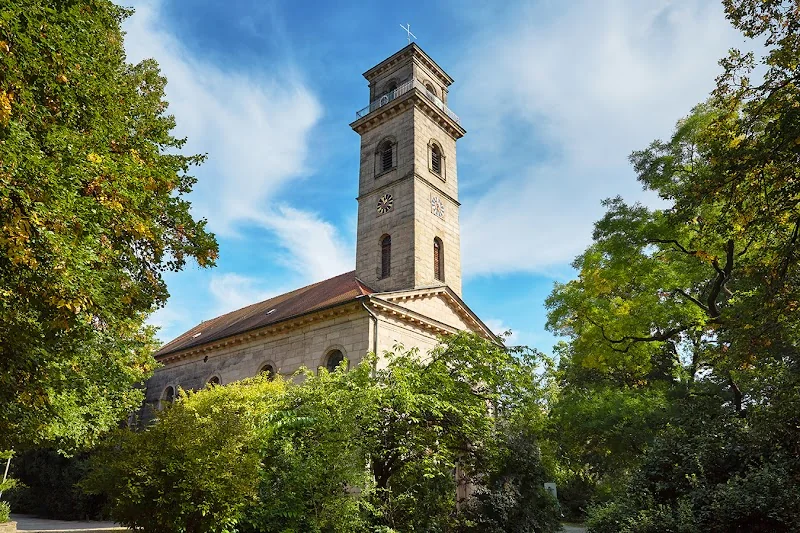
The Resurrection Church Fürth is a place where city history, faith, art, and community are very close together. Those searching for the Resurrection Church will not find just any church, but a classicist parish church in the Fürth city park, which has shaped the development of the district since the early 19th century. The church is located at Nürnberger Straße 15 and is still closely connected to the park, the rose garden, the reception garden, and the paths around it. This location makes it interesting for visitors, congregation members, culture enthusiasts, and photographers alike. The official congregation describes itself as an open church in the city park, where services are regularly held and special formats such as exhibitions, theater services, and thematic celebrations take place. At the same time, it is a vibrant community location with groups, pastoral care, life stations, and meeting offers. ([auferstehungskirche-fuerth.de](https://www.auferstehungskirche-fuerth.de/orte/auferstehungskirche))
Services, Devotions, and Special Celebrations at the Resurrection Church Fürth
The spiritual center of the Resurrection Church is the regular services. According to the official congregation, they take place on Sundays and holidays at 9:30 AM, once a month also with communion, alternating between wine and grape juice. Children are explicitly invited to communion. In addition, during Advent and Lent, Taizé prayers and Wednesday devotions at 7:30 PM are held in the church. This structure shows that the Resurrection Church is not just a place for individual holidays, but a reliably rhythmic space for the congregation and for people seeking an open, calm approach to liturgy and prayer. The everyday life of the church is also shaped by these recurring times, as the bells ring at the beginning of services and for the daily prayers in the morning, noon, and evening. ([auferstehungskirche-fuerth.de](https://www.auferstehungskirche-fuerth.de/treffpunkte/gottesdienste))
Particularly interesting for seeking visitors is that the Resurrection Church not only offers classic Sunday services but also liturgical and cultural special forms. As part of art and church, special services are celebrated for exhibitions, theater services, and themed services. This makes the church attractive to people who are looking for a connection between faith, culture, and conversation beyond the pure congregational service. Those who wish to prepare for their visit from home will also find information on the service order and alternative design options on the page. This makes it clear: The Resurrection Church does not see itself as a closed space only for insiders, but as an open spiritual place that takes both Sunday visits and personal devotion and cultural access seriously. ([auferstehungskirche-fuerth.de](https://www.auferstehungskirche-fuerth.de/treffpunkte/gottesdienste))
The church's life stations are also firmly part of the house's profile. The congregation usually offers baptisms on Sundays, often during the service at 9:30 AM or afterwards at 11 AM. Weddings are prepared in conversations where wishes, procedures, songs, and Bible verses are discussed. For confirmations, the church congregation now works together with St. Michael, and the jubilee confirmation is celebrated as a separate festival of remembrance. Thus, the Resurrection Church Fürth is not only visible as a service church but also as a house for families, personal milestones, and transitions in life. So, anyone searching for terms like baptism, confirmation, or wedding will find a congregation here that accompanies these stations liturgically and humanly with experience. ([auferstehungskirche-fuerth.de](https://www.auferstehungskirche-fuerth.de/feiern/taufe?utm_source=openai))
History and Construction History: From Cemetery Church to City Church
The history of the Resurrection Church begins with a special urban and religious development. The church was originally intended as a cemetery church, as a new cemetery was established east of the then city limits in 1802. The official historical text explains that the name Resurrection Church was also a program: The place was meant to express Christian proclamation and hope. This is particularly significant for the city of Fürth because the church is the third church in Fürth after St. Martin and St. Michael and can be considered the first city church of the young city in a certain way. For the church building itself, the magistrate made the decision on April 1, 1824, and on November 27, 1824, the Bavarian government approved the plans of the Royal Bavarian Building Inspector Brüger. The construction history lists further milestones such as the laying of the foundation stone on April 14, 1825, and the consecration of the church on October 15, 1826. The construction costs amounted to 23,611 guilders and 28 kreuzers, of which 11,573 guilders came from donations and voluntary contributions, including from the Catholic and Jewish communities. This broad support shows the significance the building already had for the city at that time. ([auferstehungskirche-fuerth.de](https://www.auferstehungskirche-fuerth.de/orte/auferstehungskirche))
The official representation of the construction history also makes it clear how early the church was structurally developed. As early as 1881, initial renovation and remodeling measures began, including the installation of a hot water heating system and the relocation of the accesses to the galleries to the outside. In 1884, the staircase on the east side was built, in 1888 a sacristy was added, and in 1892 gas lighting was installed. The first major renovation took place in 1913; during this time, the congregation moved to the daughter church of St. Paul for its services. As part of this renovation, among other things, an air heating system, new flooring, renewed seating, and electric light were installed. The altar painting was replaced, and a coffered ceiling replaced the flat vault. These interventions show how the church has adapted to new technical and liturgical requirements over the decades. At the same time, it was shaped by the war years in the 20th century: The bells had to be surrendered for armaments purposes during World War I and II, with replacement and new castings following in 1926 and 1953. The oldest and most valuable artwork is an ivory crucifix from the 17th century, which is now kept in the sacristy. ([auferstehungskirche-fuerth.de](https://www.auferstehungskirche-fuerth.de/orte/auferstehungskirche/baugeschichte))
Classicist Architecture, Interior, and Art at the Resurrection Church
Architecturally, the Resurrection Church belongs to the clear and representative classicist church buildings of the early 19th century. The congregation describes the style as classicist with clear divisions, simple forms, geometric gable fields, and columns at the entrance. The main portal is designed as a rectangular portal with two Doric columns and a paneled door, above which sits a semicircular window with a gable-like attachment. The historical side also mentions the typical size of the church as 14 by 12 by 30 meters, meaning width, height, and length. This gives the building a simultaneously simple and solemn appearance. This form language makes the church in the city park very distinctive to this day, as it stands out clearly from the surrounding park landscape while still harmonizing with it. Those searching for a classicist church in Fürth will find here a teaching example of the architecture of the early 19th century, which remains well readable both externally and in the historical interpretation of its construction. ([auferstehungskirche-fuerth.de](https://www.auferstehungskirche-fuerth.de/orte/auferstehungskirche/baugeschichte))
The interior and the artistic environment are not understood by the congregation as a mere backdrop, but as part of community life. On the official page, the church building is repeatedly linked to art projects, exhibitions, and image motifs. In the exhibitions around the church, the city park with its strong atmospheric light moods depending on the time of day is explicitly described as a place of inspiration. The church is thus not only a place of prayer but also a space for perception, memory work, and cultural encounters. Additionally, the congregation offers an audio guide via QR code and the Digiwalk app, allowing visitors to select stations, view photos, and listen to audios. This is particularly helpful for people who want to explore the church independently. The historical interior is thus not museum-like frozen but kept alive through digital and artistic access. This combination is important for SEO search terms like photos, architecture, history, or special features because it explains why the Resurrection Church is interesting as both a monument and an experiential community space. ([auferstehungskirche-fuerth.de](https://www.auferstehungskirche-fuerth.de/treffpunkte/ausstellungen))
Location in the City Park, Access, and Orientation around Nürnberger Straße
The location is one of the greatest advantages of the Resurrection Church Fürth. It stands in the middle of the city park and is surrounded by green spaces, paths, and historical park areas. The city of Fürth describes the city park in an event text as a place that the people of Fürth love for strolling, jogging, and relaxing. It is also explained that the former cemetery next to the Resurrection Church was converted into a park in 1951 as part of a garden show and received its current form. This is important for visitors because the church does not appear isolated but is embedded in a spacious, pleasant environment. The reception garden and the rose garden, which frame the area and give it an open, friendly atmosphere, are particularly frequently mentioned. The address Nürnberger Straße 15 is also listed as an event location on the city website and on the congregation's website. ([fuerth.de](https://www.fuerth.de/kultur-freizeit/veranstaltungen-termine/veranstaltungskalender/veranstaltungsdetails/stadtfuehrung-der-stadtpark-die-heimliche-liebe-der-fuerther-1400-10-05-2026-393363/))
For orientation on site, there are a few practical details that visitors should know. The church is located in an inner-city area, and the official congregation provides its own page on the topic of access. At the same time, no dedicated parking is indicated on the verified pages, which is why it is advisable to plan the arrival in good time and to take the local parking situation around the city park into account. For tower climbs, it is also important to know that the meeting point is on the east side of the church at the gallery staircase near the Hiroshima Memorial. This precise direction is useful as it avoids uncertainties for first-time visitors. Those arriving by public transport or walking in the vicinity benefit even more from the park location, as the church is thus well suited as a destination for excursions, a starting point for walks, or a quiet stopover. The location on Nürnberger Straße combines urban accessibility with a surprisingly quiet, green environment, and this mix is a central reason why the Resurrection Church is so often sought after. ([auferstehungskirche-fuerth.de](https://www.auferstehungskirche-fuerth.de/orte/lageplan))
Community Life, Welcome Café, and Life Stations at the Resurrection Church Fürth
The Resurrection Church is not only a historical building but an active community location with many meeting formats. This is particularly visible in the welcome café in the community house, which takes place every Tuesday afternoon from 4 to 6 PM. There, new and old neighbors, people with and without a refugee background, and international families meet. There is coffee, tea, snacks, conversations, play and craft activities for children, an open German course, and creative formats in the creative corner. The café is organized by volunteers and explicitly sees itself as a place for arriving, exchanging, and togetherness. For those searching for terms like community, encounter, or community house, this is a strong signal: The Resurrection Church is not a silent monument without life but a social meeting point with an open door and practical offerings for the neighborhood. ([auferstehungskirche-fuerth.de](https://www.auferstehungskirche-fuerth.de/treffpunkte/gruppen/willkommenscafe))
The classic church life stations are also firmly anchored. For baptisms, there are usually Sunday services or baptisms after the service, and the congregation points out that godparents should be Protestant or belong to a church of the Community of Protestant Churches. For weddings, wishes and ideas, procedures, songs, and Bible verses are discussed in conversation. Confirmation is prepared together with St. Michael, and for jubilee confirmations, the congregation invites classes that were confirmed 25, 50, 60, 65, or 70 years ago. Often, communion services take place, and remembrance photos are also taken. This variety of life stations makes the Resurrection Church equally important for families, couples, and long-standing congregation members. So, anyone searching for baptism, confirmation, wedding, or jubilee confirmation will find a congregation here that not only administers but accompanies. ([auferstehungskirche-fuerth.de](https://www.auferstehungskirche-fuerth.de/feiern/taufe?utm_source=openai))
Photos, Tower Climbing, and Special Impressions around the Resurrection Church
For photos and special impressions, the Resurrection Church is a very rewarding place. Even the façade with its Doric columns, temple character, and clear classicist form language offers strong image motifs. In addition, the location in the city park with the rose garden, reception garden, and walking paths makes the building appear differently depending on the season and daylight. The congregation itself refers in its exhibitions to the atmospheric light moods around the church. This is an important hint for all those searching for Resurrection Church photos, as the most exciting motifs arise not only directly in front of the façade but also in the connection between architecture and park landscape. Therefore, those wanting to capture the place photographically should consider not only the building itself but also the surroundings. ([auferstehungskirche-fuerth.de](https://www.auferstehungskirche-fuerth.de/orte/auferstehungskirche/baugeschichte))
A second highlight is the tower climb. On several days a year, the tower can be climbed between Easter and the Fürth Church Fair as part of a guided tour. The view is explicitly described by the congregation as a wonderful panoramic view over Fürth, and the group is limited to a maximum of 12 people for safety reasons. The meeting point is at the gallery staircase on the east side of the church, that is, on the side facing the Hiroshima Memorial. So, anyone looking for a special outing, a small tour, or a photo spot with a view will get more than just a church visit here. The combination of city view, history, quiet park location, and classic architecture makes the Resurrection Church a place well suited for short visits, conscious photo moments, and cultural discoveries. This is where its special charm lies: it is both a monument, a parish church, a cultural site, and a viewpoint. ([auferstehungskirche-fuerth.de](https://www.auferstehungskirche-fuerth.de/orte/auferstehungskirche/turmbesteigungen))
Sources:
- Evangelical-Lutheran Congregation Resurrection Church Fürth - Homepage
- Evangelical-Lutheran Congregation Resurrection Church Fürth - Resurrection Church
- Evangelical-Lutheran Congregation Resurrection Church Fürth - Construction History
- Evangelical-Lutheran Congregation Resurrection Church Fürth - Services
- Evangelical-Lutheran Congregation Resurrection Church Fürth - Tower Climbs
- Evangelical-Lutheran Congregation Resurrection Church Fürth - Welcome Café
- City of Fürth - The City Park, the Secret Love of the Fürth People
Mehr anzeigenWeniger anzeigen
Resurrection Church Fürth | Service & City Park
The Resurrection Church Fürth is a place where city history, faith, art, and community are very close together. Those searching for the Resurrection Church will not find just any church, but a classicist parish church in the Fürth city park, which has shaped the development of the district since the early 19th century. The church is located at Nürnberger Straße 15 and is still closely connected to the park, the rose garden, the reception garden, and the paths around it. This location makes it interesting for visitors, congregation members, culture enthusiasts, and photographers alike. The official congregation describes itself as an open church in the city park, where services are regularly held and special formats such as exhibitions, theater services, and thematic celebrations take place. At the same time, it is a vibrant community location with groups, pastoral care, life stations, and meeting offers. ([auferstehungskirche-fuerth.de](https://www.auferstehungskirche-fuerth.de/orte/auferstehungskirche))
Services, Devotions, and Special Celebrations at the Resurrection Church Fürth
The spiritual center of the Resurrection Church is the regular services. According to the official congregation, they take place on Sundays and holidays at 9:30 AM, once a month also with communion, alternating between wine and grape juice. Children are explicitly invited to communion. In addition, during Advent and Lent, Taizé prayers and Wednesday devotions at 7:30 PM are held in the church. This structure shows that the Resurrection Church is not just a place for individual holidays, but a reliably rhythmic space for the congregation and for people seeking an open, calm approach to liturgy and prayer. The everyday life of the church is also shaped by these recurring times, as the bells ring at the beginning of services and for the daily prayers in the morning, noon, and evening. ([auferstehungskirche-fuerth.de](https://www.auferstehungskirche-fuerth.de/treffpunkte/gottesdienste))
Particularly interesting for seeking visitors is that the Resurrection Church not only offers classic Sunday services but also liturgical and cultural special forms. As part of art and church, special services are celebrated for exhibitions, theater services, and themed services. This makes the church attractive to people who are looking for a connection between faith, culture, and conversation beyond the pure congregational service. Those who wish to prepare for their visit from home will also find information on the service order and alternative design options on the page. This makes it clear: The Resurrection Church does not see itself as a closed space only for insiders, but as an open spiritual place that takes both Sunday visits and personal devotion and cultural access seriously. ([auferstehungskirche-fuerth.de](https://www.auferstehungskirche-fuerth.de/treffpunkte/gottesdienste))
The church's life stations are also firmly part of the house's profile. The congregation usually offers baptisms on Sundays, often during the service at 9:30 AM or afterwards at 11 AM. Weddings are prepared in conversations where wishes, procedures, songs, and Bible verses are discussed. For confirmations, the church congregation now works together with St. Michael, and the jubilee confirmation is celebrated as a separate festival of remembrance. Thus, the Resurrection Church Fürth is not only visible as a service church but also as a house for families, personal milestones, and transitions in life. So, anyone searching for terms like baptism, confirmation, or wedding will find a congregation here that accompanies these stations liturgically and humanly with experience. ([auferstehungskirche-fuerth.de](https://www.auferstehungskirche-fuerth.de/feiern/taufe?utm_source=openai))
History and Construction History: From Cemetery Church to City Church
The history of the Resurrection Church begins with a special urban and religious development. The church was originally intended as a cemetery church, as a new cemetery was established east of the then city limits in 1802. The official historical text explains that the name Resurrection Church was also a program: The place was meant to express Christian proclamation and hope. This is particularly significant for the city of Fürth because the church is the third church in Fürth after St. Martin and St. Michael and can be considered the first city church of the young city in a certain way. For the church building itself, the magistrate made the decision on April 1, 1824, and on November 27, 1824, the Bavarian government approved the plans of the Royal Bavarian Building Inspector Brüger. The construction history lists further milestones such as the laying of the foundation stone on April 14, 1825, and the consecration of the church on October 15, 1826. The construction costs amounted to 23,611 guilders and 28 kreuzers, of which 11,573 guilders came from donations and voluntary contributions, including from the Catholic and Jewish communities. This broad support shows the significance the building already had for the city at that time. ([auferstehungskirche-fuerth.de](https://www.auferstehungskirche-fuerth.de/orte/auferstehungskirche))
The official representation of the construction history also makes it clear how early the church was structurally developed. As early as 1881, initial renovation and remodeling measures began, including the installation of a hot water heating system and the relocation of the accesses to the galleries to the outside. In 1884, the staircase on the east side was built, in 1888 a sacristy was added, and in 1892 gas lighting was installed. The first major renovation took place in 1913; during this time, the congregation moved to the daughter church of St. Paul for its services. As part of this renovation, among other things, an air heating system, new flooring, renewed seating, and electric light were installed. The altar painting was replaced, and a coffered ceiling replaced the flat vault. These interventions show how the church has adapted to new technical and liturgical requirements over the decades. At the same time, it was shaped by the war years in the 20th century: The bells had to be surrendered for armaments purposes during World War I and II, with replacement and new castings following in 1926 and 1953. The oldest and most valuable artwork is an ivory crucifix from the 17th century, which is now kept in the sacristy. ([auferstehungskirche-fuerth.de](https://www.auferstehungskirche-fuerth.de/orte/auferstehungskirche/baugeschichte))
Classicist Architecture, Interior, and Art at the Resurrection Church
Architecturally, the Resurrection Church belongs to the clear and representative classicist church buildings of the early 19th century. The congregation describes the style as classicist with clear divisions, simple forms, geometric gable fields, and columns at the entrance. The main portal is designed as a rectangular portal with two Doric columns and a paneled door, above which sits a semicircular window with a gable-like attachment. The historical side also mentions the typical size of the church as 14 by 12 by 30 meters, meaning width, height, and length. This gives the building a simultaneously simple and solemn appearance. This form language makes the church in the city park very distinctive to this day, as it stands out clearly from the surrounding park landscape while still harmonizing with it. Those searching for a classicist church in Fürth will find here a teaching example of the architecture of the early 19th century, which remains well readable both externally and in the historical interpretation of its construction. ([auferstehungskirche-fuerth.de](https://www.auferstehungskirche-fuerth.de/orte/auferstehungskirche/baugeschichte))
The interior and the artistic environment are not understood by the congregation as a mere backdrop, but as part of community life. On the official page, the church building is repeatedly linked to art projects, exhibitions, and image motifs. In the exhibitions around the church, the city park with its strong atmospheric light moods depending on the time of day is explicitly described as a place of inspiration. The church is thus not only a place of prayer but also a space for perception, memory work, and cultural encounters. Additionally, the congregation offers an audio guide via QR code and the Digiwalk app, allowing visitors to select stations, view photos, and listen to audios. This is particularly helpful for people who want to explore the church independently. The historical interior is thus not museum-like frozen but kept alive through digital and artistic access. This combination is important for SEO search terms like photos, architecture, history, or special features because it explains why the Resurrection Church is interesting as both a monument and an experiential community space. ([auferstehungskirche-fuerth.de](https://www.auferstehungskirche-fuerth.de/treffpunkte/ausstellungen))
Location in the City Park, Access, and Orientation around Nürnberger Straße
The location is one of the greatest advantages of the Resurrection Church Fürth. It stands in the middle of the city park and is surrounded by green spaces, paths, and historical park areas. The city of Fürth describes the city park in an event text as a place that the people of Fürth love for strolling, jogging, and relaxing. It is also explained that the former cemetery next to the Resurrection Church was converted into a park in 1951 as part of a garden show and received its current form. This is important for visitors because the church does not appear isolated but is embedded in a spacious, pleasant environment. The reception garden and the rose garden, which frame the area and give it an open, friendly atmosphere, are particularly frequently mentioned. The address Nürnberger Straße 15 is also listed as an event location on the city website and on the congregation's website. ([fuerth.de](https://www.fuerth.de/kultur-freizeit/veranstaltungen-termine/veranstaltungskalender/veranstaltungsdetails/stadtfuehrung-der-stadtpark-die-heimliche-liebe-der-fuerther-1400-10-05-2026-393363/))
For orientation on site, there are a few practical details that visitors should know. The church is located in an inner-city area, and the official congregation provides its own page on the topic of access. At the same time, no dedicated parking is indicated on the verified pages, which is why it is advisable to plan the arrival in good time and to take the local parking situation around the city park into account. For tower climbs, it is also important to know that the meeting point is on the east side of the church at the gallery staircase near the Hiroshima Memorial. This precise direction is useful as it avoids uncertainties for first-time visitors. Those arriving by public transport or walking in the vicinity benefit even more from the park location, as the church is thus well suited as a destination for excursions, a starting point for walks, or a quiet stopover. The location on Nürnberger Straße combines urban accessibility with a surprisingly quiet, green environment, and this mix is a central reason why the Resurrection Church is so often sought after. ([auferstehungskirche-fuerth.de](https://www.auferstehungskirche-fuerth.de/orte/lageplan))
Community Life, Welcome Café, and Life Stations at the Resurrection Church Fürth
The Resurrection Church is not only a historical building but an active community location with many meeting formats. This is particularly visible in the welcome café in the community house, which takes place every Tuesday afternoon from 4 to 6 PM. There, new and old neighbors, people with and without a refugee background, and international families meet. There is coffee, tea, snacks, conversations, play and craft activities for children, an open German course, and creative formats in the creative corner. The café is organized by volunteers and explicitly sees itself as a place for arriving, exchanging, and togetherness. For those searching for terms like community, encounter, or community house, this is a strong signal: The Resurrection Church is not a silent monument without life but a social meeting point with an open door and practical offerings for the neighborhood. ([auferstehungskirche-fuerth.de](https://www.auferstehungskirche-fuerth.de/treffpunkte/gruppen/willkommenscafe))
The classic church life stations are also firmly anchored. For baptisms, there are usually Sunday services or baptisms after the service, and the congregation points out that godparents should be Protestant or belong to a church of the Community of Protestant Churches. For weddings, wishes and ideas, procedures, songs, and Bible verses are discussed in conversation. Confirmation is prepared together with St. Michael, and for jubilee confirmations, the congregation invites classes that were confirmed 25, 50, 60, 65, or 70 years ago. Often, communion services take place, and remembrance photos are also taken. This variety of life stations makes the Resurrection Church equally important for families, couples, and long-standing congregation members. So, anyone searching for baptism, confirmation, wedding, or jubilee confirmation will find a congregation here that not only administers but accompanies. ([auferstehungskirche-fuerth.de](https://www.auferstehungskirche-fuerth.de/feiern/taufe?utm_source=openai))
Photos, Tower Climbing, and Special Impressions around the Resurrection Church
For photos and special impressions, the Resurrection Church is a very rewarding place. Even the façade with its Doric columns, temple character, and clear classicist form language offers strong image motifs. In addition, the location in the city park with the rose garden, reception garden, and walking paths makes the building appear differently depending on the season and daylight. The congregation itself refers in its exhibitions to the atmospheric light moods around the church. This is an important hint for all those searching for Resurrection Church photos, as the most exciting motifs arise not only directly in front of the façade but also in the connection between architecture and park landscape. Therefore, those wanting to capture the place photographically should consider not only the building itself but also the surroundings. ([auferstehungskirche-fuerth.de](https://www.auferstehungskirche-fuerth.de/orte/auferstehungskirche/baugeschichte))
A second highlight is the tower climb. On several days a year, the tower can be climbed between Easter and the Fürth Church Fair as part of a guided tour. The view is explicitly described by the congregation as a wonderful panoramic view over Fürth, and the group is limited to a maximum of 12 people for safety reasons. The meeting point is at the gallery staircase on the east side of the church, that is, on the side facing the Hiroshima Memorial. So, anyone looking for a special outing, a small tour, or a photo spot with a view will get more than just a church visit here. The combination of city view, history, quiet park location, and classic architecture makes the Resurrection Church a place well suited for short visits, conscious photo moments, and cultural discoveries. This is where its special charm lies: it is both a monument, a parish church, a cultural site, and a viewpoint. ([auferstehungskirche-fuerth.de](https://www.auferstehungskirche-fuerth.de/orte/auferstehungskirche/turmbesteigungen))
Sources:
- Evangelical-Lutheran Congregation Resurrection Church Fürth - Homepage
- Evangelical-Lutheran Congregation Resurrection Church Fürth - Resurrection Church
- Evangelical-Lutheran Congregation Resurrection Church Fürth - Construction History
- Evangelical-Lutheran Congregation Resurrection Church Fürth - Services
- Evangelical-Lutheran Congregation Resurrection Church Fürth - Tower Climbs
- Evangelical-Lutheran Congregation Resurrection Church Fürth - Welcome Café
- City of Fürth - The City Park, the Secret Love of the Fürth People
Resurrection Church Fürth | Service & City Park
The Resurrection Church Fürth is a place where city history, faith, art, and community are very close together. Those searching for the Resurrection Church will not find just any church, but a classicist parish church in the Fürth city park, which has shaped the development of the district since the early 19th century. The church is located at Nürnberger Straße 15 and is still closely connected to the park, the rose garden, the reception garden, and the paths around it. This location makes it interesting for visitors, congregation members, culture enthusiasts, and photographers alike. The official congregation describes itself as an open church in the city park, where services are regularly held and special formats such as exhibitions, theater services, and thematic celebrations take place. At the same time, it is a vibrant community location with groups, pastoral care, life stations, and meeting offers. ([auferstehungskirche-fuerth.de](https://www.auferstehungskirche-fuerth.de/orte/auferstehungskirche))
Services, Devotions, and Special Celebrations at the Resurrection Church Fürth
The spiritual center of the Resurrection Church is the regular services. According to the official congregation, they take place on Sundays and holidays at 9:30 AM, once a month also with communion, alternating between wine and grape juice. Children are explicitly invited to communion. In addition, during Advent and Lent, Taizé prayers and Wednesday devotions at 7:30 PM are held in the church. This structure shows that the Resurrection Church is not just a place for individual holidays, but a reliably rhythmic space for the congregation and for people seeking an open, calm approach to liturgy and prayer. The everyday life of the church is also shaped by these recurring times, as the bells ring at the beginning of services and for the daily prayers in the morning, noon, and evening. ([auferstehungskirche-fuerth.de](https://www.auferstehungskirche-fuerth.de/treffpunkte/gottesdienste))
Particularly interesting for seeking visitors is that the Resurrection Church not only offers classic Sunday services but also liturgical and cultural special forms. As part of art and church, special services are celebrated for exhibitions, theater services, and themed services. This makes the church attractive to people who are looking for a connection between faith, culture, and conversation beyond the pure congregational service. Those who wish to prepare for their visit from home will also find information on the service order and alternative design options on the page. This makes it clear: The Resurrection Church does not see itself as a closed space only for insiders, but as an open spiritual place that takes both Sunday visits and personal devotion and cultural access seriously. ([auferstehungskirche-fuerth.de](https://www.auferstehungskirche-fuerth.de/treffpunkte/gottesdienste))
The church's life stations are also firmly part of the house's profile. The congregation usually offers baptisms on Sundays, often during the service at 9:30 AM or afterwards at 11 AM. Weddings are prepared in conversations where wishes, procedures, songs, and Bible verses are discussed. For confirmations, the church congregation now works together with St. Michael, and the jubilee confirmation is celebrated as a separate festival of remembrance. Thus, the Resurrection Church Fürth is not only visible as a service church but also as a house for families, personal milestones, and transitions in life. So, anyone searching for terms like baptism, confirmation, or wedding will find a congregation here that accompanies these stations liturgically and humanly with experience. ([auferstehungskirche-fuerth.de](https://www.auferstehungskirche-fuerth.de/feiern/taufe?utm_source=openai))
History and Construction History: From Cemetery Church to City Church
The history of the Resurrection Church begins with a special urban and religious development. The church was originally intended as a cemetery church, as a new cemetery was established east of the then city limits in 1802. The official historical text explains that the name Resurrection Church was also a program: The place was meant to express Christian proclamation and hope. This is particularly significant for the city of Fürth because the church is the third church in Fürth after St. Martin and St. Michael and can be considered the first city church of the young city in a certain way. For the church building itself, the magistrate made the decision on April 1, 1824, and on November 27, 1824, the Bavarian government approved the plans of the Royal Bavarian Building Inspector Brüger. The construction history lists further milestones such as the laying of the foundation stone on April 14, 1825, and the consecration of the church on October 15, 1826. The construction costs amounted to 23,611 guilders and 28 kreuzers, of which 11,573 guilders came from donations and voluntary contributions, including from the Catholic and Jewish communities. This broad support shows the significance the building already had for the city at that time. ([auferstehungskirche-fuerth.de](https://www.auferstehungskirche-fuerth.de/orte/auferstehungskirche))
The official representation of the construction history also makes it clear how early the church was structurally developed. As early as 1881, initial renovation and remodeling measures began, including the installation of a hot water heating system and the relocation of the accesses to the galleries to the outside. In 1884, the staircase on the east side was built, in 1888 a sacristy was added, and in 1892 gas lighting was installed. The first major renovation took place in 1913; during this time, the congregation moved to the daughter church of St. Paul for its services. As part of this renovation, among other things, an air heating system, new flooring, renewed seating, and electric light were installed. The altar painting was replaced, and a coffered ceiling replaced the flat vault. These interventions show how the church has adapted to new technical and liturgical requirements over the decades. At the same time, it was shaped by the war years in the 20th century: The bells had to be surrendered for armaments purposes during World War I and II, with replacement and new castings following in 1926 and 1953. The oldest and most valuable artwork is an ivory crucifix from the 17th century, which is now kept in the sacristy. ([auferstehungskirche-fuerth.de](https://www.auferstehungskirche-fuerth.de/orte/auferstehungskirche/baugeschichte))
Classicist Architecture, Interior, and Art at the Resurrection Church
Architecturally, the Resurrection Church belongs to the clear and representative classicist church buildings of the early 19th century. The congregation describes the style as classicist with clear divisions, simple forms, geometric gable fields, and columns at the entrance. The main portal is designed as a rectangular portal with two Doric columns and a paneled door, above which sits a semicircular window with a gable-like attachment. The historical side also mentions the typical size of the church as 14 by 12 by 30 meters, meaning width, height, and length. This gives the building a simultaneously simple and solemn appearance. This form language makes the church in the city park very distinctive to this day, as it stands out clearly from the surrounding park landscape while still harmonizing with it. Those searching for a classicist church in Fürth will find here a teaching example of the architecture of the early 19th century, which remains well readable both externally and in the historical interpretation of its construction. ([auferstehungskirche-fuerth.de](https://www.auferstehungskirche-fuerth.de/orte/auferstehungskirche/baugeschichte))
The interior and the artistic environment are not understood by the congregation as a mere backdrop, but as part of community life. On the official page, the church building is repeatedly linked to art projects, exhibitions, and image motifs. In the exhibitions around the church, the city park with its strong atmospheric light moods depending on the time of day is explicitly described as a place of inspiration. The church is thus not only a place of prayer but also a space for perception, memory work, and cultural encounters. Additionally, the congregation offers an audio guide via QR code and the Digiwalk app, allowing visitors to select stations, view photos, and listen to audios. This is particularly helpful for people who want to explore the church independently. The historical interior is thus not museum-like frozen but kept alive through digital and artistic access. This combination is important for SEO search terms like photos, architecture, history, or special features because it explains why the Resurrection Church is interesting as both a monument and an experiential community space. ([auferstehungskirche-fuerth.de](https://www.auferstehungskirche-fuerth.de/treffpunkte/ausstellungen))
Location in the City Park, Access, and Orientation around Nürnberger Straße
The location is one of the greatest advantages of the Resurrection Church Fürth. It stands in the middle of the city park and is surrounded by green spaces, paths, and historical park areas. The city of Fürth describes the city park in an event text as a place that the people of Fürth love for strolling, jogging, and relaxing. It is also explained that the former cemetery next to the Resurrection Church was converted into a park in 1951 as part of a garden show and received its current form. This is important for visitors because the church does not appear isolated but is embedded in a spacious, pleasant environment. The reception garden and the rose garden, which frame the area and give it an open, friendly atmosphere, are particularly frequently mentioned. The address Nürnberger Straße 15 is also listed as an event location on the city website and on the congregation's website. ([fuerth.de](https://www.fuerth.de/kultur-freizeit/veranstaltungen-termine/veranstaltungskalender/veranstaltungsdetails/stadtfuehrung-der-stadtpark-die-heimliche-liebe-der-fuerther-1400-10-05-2026-393363/))
For orientation on site, there are a few practical details that visitors should know. The church is located in an inner-city area, and the official congregation provides its own page on the topic of access. At the same time, no dedicated parking is indicated on the verified pages, which is why it is advisable to plan the arrival in good time and to take the local parking situation around the city park into account. For tower climbs, it is also important to know that the meeting point is on the east side of the church at the gallery staircase near the Hiroshima Memorial. This precise direction is useful as it avoids uncertainties for first-time visitors. Those arriving by public transport or walking in the vicinity benefit even more from the park location, as the church is thus well suited as a destination for excursions, a starting point for walks, or a quiet stopover. The location on Nürnberger Straße combines urban accessibility with a surprisingly quiet, green environment, and this mix is a central reason why the Resurrection Church is so often sought after. ([auferstehungskirche-fuerth.de](https://www.auferstehungskirche-fuerth.de/orte/lageplan))
Community Life, Welcome Café, and Life Stations at the Resurrection Church Fürth
The Resurrection Church is not only a historical building but an active community location with many meeting formats. This is particularly visible in the welcome café in the community house, which takes place every Tuesday afternoon from 4 to 6 PM. There, new and old neighbors, people with and without a refugee background, and international families meet. There is coffee, tea, snacks, conversations, play and craft activities for children, an open German course, and creative formats in the creative corner. The café is organized by volunteers and explicitly sees itself as a place for arriving, exchanging, and togetherness. For those searching for terms like community, encounter, or community house, this is a strong signal: The Resurrection Church is not a silent monument without life but a social meeting point with an open door and practical offerings for the neighborhood. ([auferstehungskirche-fuerth.de](https://www.auferstehungskirche-fuerth.de/treffpunkte/gruppen/willkommenscafe))
The classic church life stations are also firmly anchored. For baptisms, there are usually Sunday services or baptisms after the service, and the congregation points out that godparents should be Protestant or belong to a church of the Community of Protestant Churches. For weddings, wishes and ideas, procedures, songs, and Bible verses are discussed in conversation. Confirmation is prepared together with St. Michael, and for jubilee confirmations, the congregation invites classes that were confirmed 25, 50, 60, 65, or 70 years ago. Often, communion services take place, and remembrance photos are also taken. This variety of life stations makes the Resurrection Church equally important for families, couples, and long-standing congregation members. So, anyone searching for baptism, confirmation, wedding, or jubilee confirmation will find a congregation here that not only administers but accompanies. ([auferstehungskirche-fuerth.de](https://www.auferstehungskirche-fuerth.de/feiern/taufe?utm_source=openai))
Photos, Tower Climbing, and Special Impressions around the Resurrection Church
For photos and special impressions, the Resurrection Church is a very rewarding place. Even the façade with its Doric columns, temple character, and clear classicist form language offers strong image motifs. In addition, the location in the city park with the rose garden, reception garden, and walking paths makes the building appear differently depending on the season and daylight. The congregation itself refers in its exhibitions to the atmospheric light moods around the church. This is an important hint for all those searching for Resurrection Church photos, as the most exciting motifs arise not only directly in front of the façade but also in the connection between architecture and park landscape. Therefore, those wanting to capture the place photographically should consider not only the building itself but also the surroundings. ([auferstehungskirche-fuerth.de](https://www.auferstehungskirche-fuerth.de/orte/auferstehungskirche/baugeschichte))
A second highlight is the tower climb. On several days a year, the tower can be climbed between Easter and the Fürth Church Fair as part of a guided tour. The view is explicitly described by the congregation as a wonderful panoramic view over Fürth, and the group is limited to a maximum of 12 people for safety reasons. The meeting point is at the gallery staircase on the east side of the church, that is, on the side facing the Hiroshima Memorial. So, anyone looking for a special outing, a small tour, or a photo spot with a view will get more than just a church visit here. The combination of city view, history, quiet park location, and classic architecture makes the Resurrection Church a place well suited for short visits, conscious photo moments, and cultural discoveries. This is where its special charm lies: it is both a monument, a parish church, a cultural site, and a viewpoint. ([auferstehungskirche-fuerth.de](https://www.auferstehungskirche-fuerth.de/orte/auferstehungskirche/turmbesteigungen))
Sources:
- Evangelical-Lutheran Congregation Resurrection Church Fürth - Homepage
- Evangelical-Lutheran Congregation Resurrection Church Fürth - Resurrection Church
- Evangelical-Lutheran Congregation Resurrection Church Fürth - Construction History
- Evangelical-Lutheran Congregation Resurrection Church Fürth - Services
- Evangelical-Lutheran Congregation Resurrection Church Fürth - Tower Climbs
- Evangelical-Lutheran Congregation Resurrection Church Fürth - Welcome Café
- City of Fürth - The City Park, the Secret Love of the Fürth People
Upcoming Events
The City Park - the secret love of the people of Fürth
Guided tours in the City Park Fürth combine history and nature into a unique experience.
City Park Tour in Fürth
Experience a guided tour through the City Park Fürth and discover its secrets and history.
City Tour "The City Park - the Secret Love of Fürth"
Explore the history and nature of the Fürth City Park on this guided tour. Starts at the Resurrection Church.
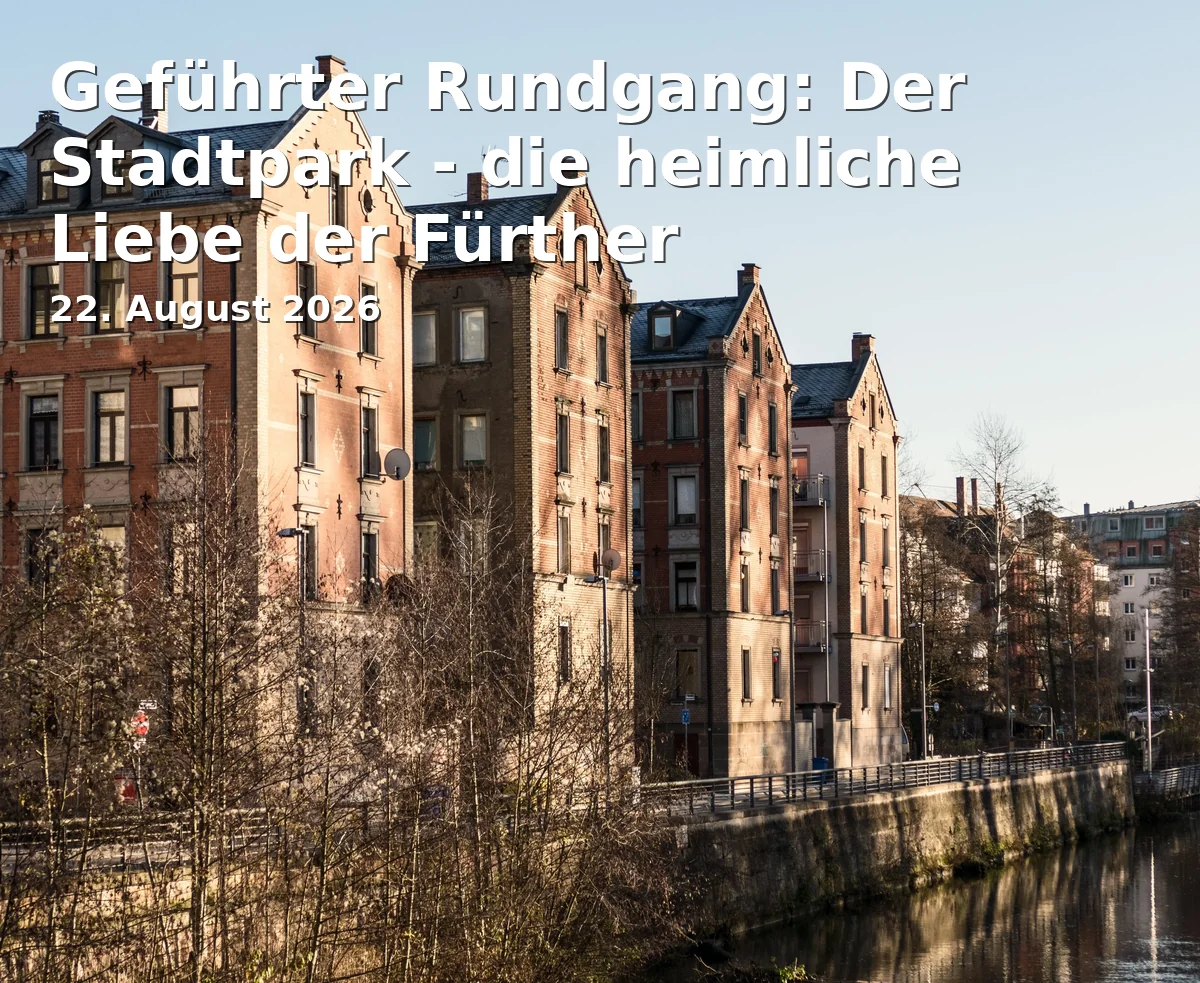
Guided Tour: The City Park - the secret love of Fürth
Discover the City Park of Fürth on August 22, 2026, during a guided tour. Meet at the Resurrection Church and experience nature and history up close.
Welcome Café in Fürth
Join us on September 1 at the Welcome Café in Fürth. An opportunity to find new friends in a relaxed atmosphere.
Frequently Asked Questions
Reviews
Jürgen Hubrich
21. February 2026
Friday, February 20, 2026, 11:30 a.m., all the church doors are locked, even though a sign states that the church should be open from 10 a.m. to 4 p.m. during the winter months. If one cannot trust the church staff, can one still trust their great Lord? Of course, something can always happen that prevents the church from being opened (the devil has stolen the key), but then, out of courtesy, a sign should be posted stating that the church remains closed that day for whatever reason.
Walter R
11. September 2025
The Protestant Church of the Resurrection stands in the wonderful setting of the city park, framed by the reception garden and the beautiful rose garden.
Ouroboros
12. April 2025
Around the church, there is a well-maintained garden area with various plants and seating available.
Dorian Gray
1. February 2026
Beautiful church, unless you have a wheelchair, then there is absolutely no way to get in.
Mausis Zapfenstreich
9. November 2025
Taizé service: carried out with dedication, open and welcoming atmosphere, special mood through candlelight, many songs.