
Sven-André Dreyer
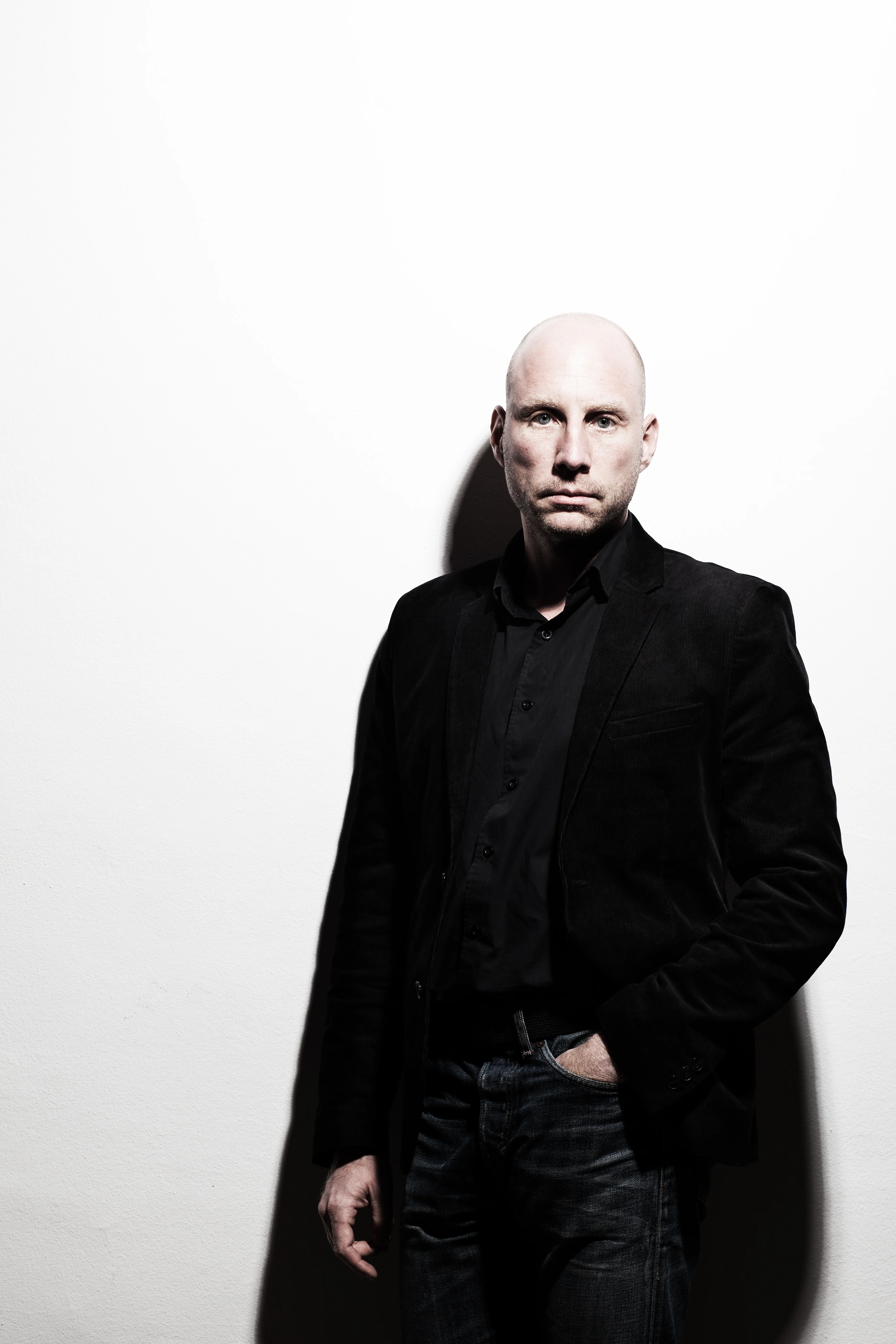
Image from Wikipedia
Image from Wikipedia
Sven-André Dreyer: Writer, Journalist, and Chronicler of Düsseldorf Culture
A versatile author bridging literature, journalism, and urban history
Sven-André Dreyer, born on September 9, 1973, in Düsseldorf, is a German writer, journalist, and editor. His profile combines literary work, cultural journalistic precision, and a deep connection to his hometown. This grounding in Düsseldorf distinctly shapes his texts, themes, and perspective on urban culture.
To understand Dreyer, one must read him as a mediator: between literature and music, between archive and present, between local knowledge and narrative form. His works revolve around the city, memory, scene, and cultural identity. Thus, he emerges as an author who not only writes but also makes cultural contexts visible.
Biography: From Düsseldorf to the literary public
After graduating from Comenius-Gymnasium Düsseldorf in 1993, Dreyer studied German studies at Heinrich Heine University. Since early 2002, he has been publishing texts in anthologies and literary journals. This early phase indicates a development focused less on loud self-presentation and more on continuous literary work.
His first solo publication appeared in 2007 under the title Sixteen Strange Hours at Edition PaperONE. In 2009, he followed with the short story collection Freizeichen, featuring a foreword by musician Joachim Witt. Even this early publication phase suggests that Dreyer consistently engages literary work in dialogue with other art forms.
In 2012, he switched to the publisher michason & may and continued to expand his work with narratives, poetry, and short prose. The list of his publications shows remarkable consistency: Langsamland, rain in the tent, Where You Are, Düsseldorf Walking, little bird death, and later the Düsseldorf Calendar 2025. These publications mark a career that has developed organically, continually opening new spaces both formally and thematically.
Literary signature: Language as a city exploration
Dreyer's literature is strongly tied to place while remaining open to atmospheric density. His texts work through observation, condensation, and attention to details that intertwine urban history and everyday reality. This becomes especially apparent in projects that not only describe Düsseldorf but also map it literarily.
In collaboration with designer and illustrator Henk Wyniger, Dreyer published the Düsseldorf Calendar 2025 in 2024. The fusion of stylized illustrations in the style of Ligne claire with Dreyer's texts resulted in a graphic-literary work that reinterprets both well-known and forgotten places in the city. This approach showcases a particular strength: literature becomes a medium of urban perception.
Building on this foundation, the city tour Anders zu Hause was created, leading to the locations discussed in the calendar and recounting their genesis. Dreyer thus operates at the intersection of text, space, and cultural memory. His work gains a performative and mediating dimension beyond the book.
Journalistic work: Düsseldorf as a cultural archive
As a journalist and editor, Dreyer contributes to daily newspapers, weekly, and monthly magazines. According to his biography, he has worked for, among others, Rheinische Post, Neue Rhein Zeitung, coolibri, jetzt!, the Düsseldorfer Anzeiger am Wochenende, and libelle. This breadth showcases both journalistic routine and strong regional engagement.
Particularly formative is his cultural-historical project No Breathing Space. Music from Düsseldorf, which he developed in 2018 together with Michael Wenzel and photographer Thomas Stelzmann. This non-fiction book traces the city's music history from early punk formations around the Ratinger Hof to newer developments in the music and club scene. Here, Dreyer combines journalistic research with a keen sense of musical narratives.
On this basis, he initiated and curated the city tour The Sound Of Düsseldorf in 2019. In 2021, he followed with the virtual exhibition Music, Makers and Machines for Google Arts & Culture, where he worked with Michael Wenzel to present the history of electronic music from Düsseldorf in several chapters. Topics such as Kraftwerk, Neu!, DAF, Propaganda, Kreidler, and Mouse on Mars firmly anchor him in the documentation of an internationally significant music location.
Musical perspective without a personal stage
Sven-André Dreyer is not a musician in the traditional sense, but his work is deeply embedded in music history and pop culture. This precisely makes his perspective interesting: he approaches music not from the viewpoint of a producer or performer, but as a precise storyteller, observer, and curator. This creates a kind of secondary music career based on analysis, mediation, and cultural positioning.
His engagement with the Ratinger Hof, Creamcheese, and Salon des Amateurs shows how closely he thinks about sound spaces, scene contexts, and urban development together. The history of Düsseldorf's electronics is not narrated as a mere chronicle but as a sequence of places, figures, and aesthetic impulses. This is precisely where his professional strength lies: he contextualizes music history across milieus, institutions, and artistic networks.
For music lovers, this provides special added value. Dreyer's texts offer not just mere lists of facts, but cultural depth. They demonstrate how a city can become an internationally effective sound space.
Discography, publications, and cultural storytelling formats
Although Dreyer does not have a discography in the musical sense, his body of work has a clear publication line. Some of his important titles include Sixteen Strange Hours (2007), Langsamland (2008), Freizeichen (2009), rain in the tent (2009), Holding Your Breath Until the Sea (2012), Where You Are (2013), Düsseldorf Walking (2014), Anything Else? (2014), little bird death (2015), No Breathing Space. Music from Düsseldorf (2018), and the Düsseldorf Calendar 2025 (2024).
These publications show a development from narrative and poetry toward cultural-historical formats. Particularly, No Breathing Space stands out as an intersection between music journalism, urban history, and non-fiction. The work documents not only scenes and actors but makes a musical identity readable that has had an impact far beyond Düsseldorf.
In recent projects, the focus has shifted more toward mediation. City tours, digital exhibitions, and graphic-literary works expand the traditional book form. Dreyer works within a modern cultural journalism that brings together literature, music history, and urban public life.
Cultural influence: The city as a stage, the archive as a resonance space
Dreyer's influence lies in his ability to translate local culture into a universally understandable form. He does not only write about Düsseldorf but reconstructs the city as an ensemble of memory places, art forms, and music movements. His work thus gains authority that emerges from thorough research and editorial experience.
This influence becomes apparent, especially in the portrayal of the Düsseldorf electronic scene. The virtual exhibition Music, Makers and Machines portrayed the city as a center of avant-garde, innovation, and global radiance. Dreyer's curatorial role makes him an important mediator of Düsseldorf's cultural DNA.
Additionally, his engagement with local literature and cultural formats stands out. Through series like Reading in the Klause, Sonny Wenzel & Friends, Read, You Pig!, TTA – Text, Sound, Applause, and Off Church – Dialogue, he has created spaces where art, exchange, and scene can thrive. This practice shows a combination of experience, expertise, and cultural responsibility that is rare.
Commitment and public role
Since 2014, Dreyer has been volunteering for the Düsseldorf Alliance Against Depression. This commitment broadens his profile beyond literature and demonstrates a clear social stance. His appointment to the expert jury of the Literature Promotion Prize of the City of Düsseldorf for the term 2020–2025 further underscores his recognition in the cultural life of the city.
Such roles are essential for understanding his work. They make it clear that Dreyer is not just an author but also a co-creator of cultural structures. His work navigates between writing, moderating, curating, and cultural mediation.
Conclusion: An author who makes Düsseldorf audible and readable
Sven-André Dreyer is compelling because he combines literature, journalism, and music history into a distinctive cultural practice. His books, city tours, and curations demonstrate how vibrant and multifaceted local culture can be when told with precision, stylistic sensitivity, and historical awareness. Those interested in Düsseldorf, German pop and music history, or literary city portraits will find in Dreyer an equally informed and inspiring author.
Especially because he articulates spaces, scenes, and memories so precisely in language, his work remains relevant for readers who want to not only consume but also understand culture. Sven-André Dreyer invites us to read urban history as sound history. His events and projects deserve attention locally—and inspire the desire to experience him live at a reading, city tour, or cultural presentation.
Official channels of Sven-André Dreyer:
- Instagram: No official profile found
- Facebook: No official profile found
- YouTube: No official profile found
- Spotify: No official profile found
- TikTok: No official profile found