
Christiane Michel-Ostertun
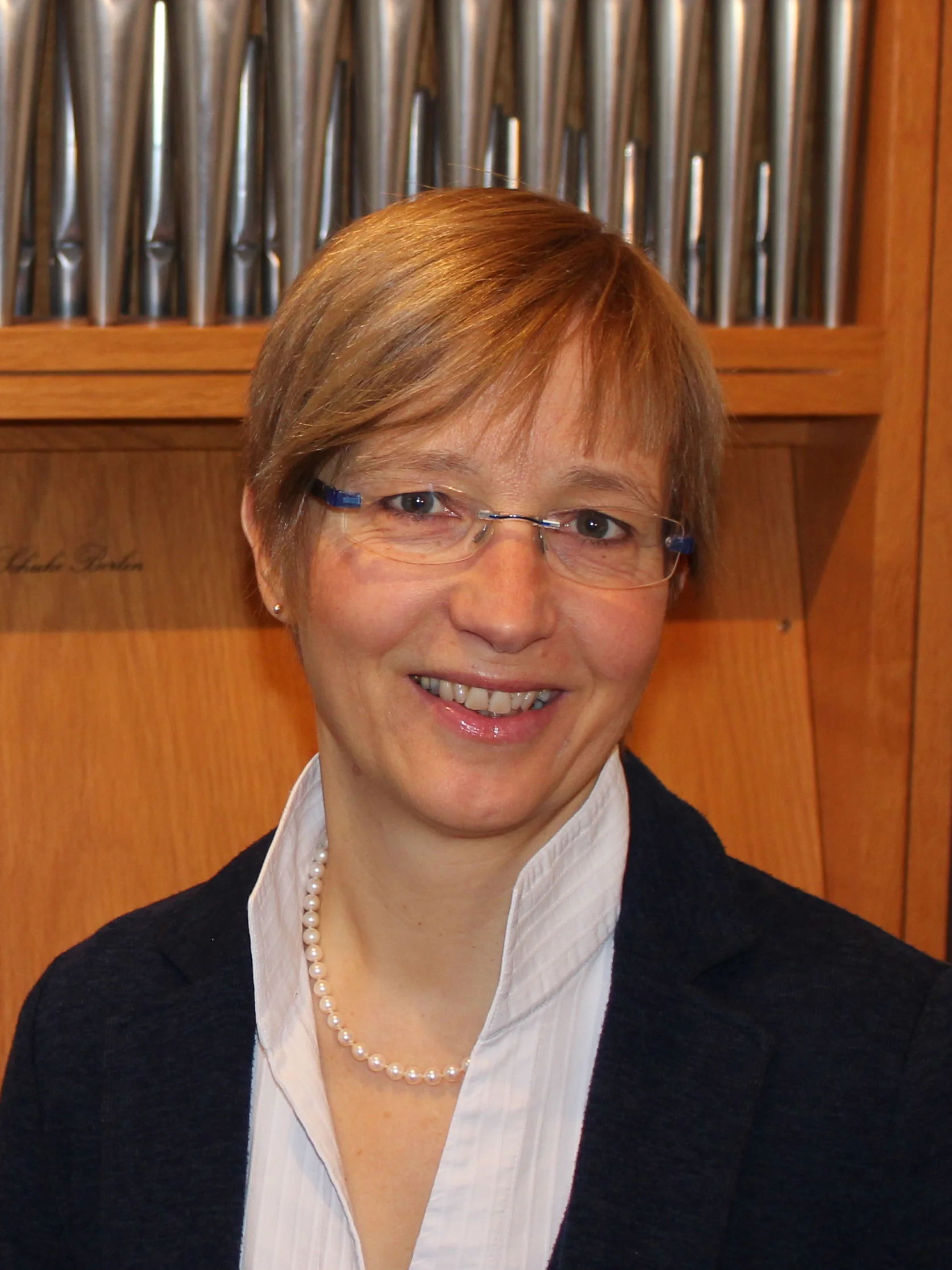
Image from Wikipedia
Image from Wikipedia
Christiane Michel-Ostertun – Organist, Composer, and Influential Voice in Church Music
An Artist Between Improvisation, Liturgy, and Compositional Independence
Christiane Michel-Ostertun, born on April 26, 1964, in Aalen, is one of the most prominent figures in German church music. As a professor of liturgical organ playing and improvisation, organist, composer, and choir director, she combines pedagogical depth with artistic presence and a distinctly recognizable musical profile. Her work navigates confidently across concert organ, liturgy, choral work, and music education. ([de.wikipedia.org](https://de.wikipedia.org/wiki/Christiane_Michel-Ostertun))
Those who observe her career quickly recognize a musician who does not merely manage tradition but actively reinterprets it. Michel-Ostertun represents a musical career where improvisation does not serve as a supplement but as the creative core. This is precisely where her charm lies: she shapes music as a living process, as a dialogue with space, text, and community. ([michel-ostertun.de](https://michel-ostertun.de/))
Early Years and Musical Influences
Growing up in Kiel, Christiane Michel-Ostertun received piano, cello, and organ lessons from an early age. This broad instrumental foundation explains the stylistic security with which she later employs timbres, melodic lines, and registration thinking in her works and improvisations. Her pathway into church music was thus early established and supported by an impressively solid education. ([de.wikipedia.org](https://de.wikipedia.org/wiki/Christiane_Michel-Ostertun))
From 1983 to 1988, she studied piano and church music at the Northwest German Music Academy Detmold. Among her influential teachers were Gerhard Weinberger, Renate Zimmermann, and Alexander Wagner; simultaneously, she completed a piano degree and passed the State Music Teacher Examination. In 1988, she graduated with the A-exam, followed by artistic training in organ in Stuttgart and Karlsruhe, and a maturity examination and concert exam. ([de.wikipedia.org](https://de.wikipedia.org/wiki/Christiane_Michel-Ostertun))
The Breakthrough in Improvisation
An important moment in her early career was winning the second prize at the Frankfurt Improvisation Competition in 1986. This success marked not only technical brilliance but also an artistic stance: improvisation as structured thinking in real time. In church music, this ability is crucial as it connects liturgical form, harmonic imagination, and formal discipline. ([de.wikipedia.org](https://de.wikipedia.org/wiki/Christiane_Michel-Ostertun))
Even during her studies, Michel-Ostertun began teaching as an assistant in choir conducting and organ improvisation. In 1988 and 1989, she received teaching assignments in liturgical organ playing and improvisation, and in 1993, she was appointed to a professorship; in 2024, she added another position at the Frankfurt University of Music and Performing Arts. This continuity showcases an artist who sets standards not only on stage but also in teaching. ([de.wikipedia.org](https://de.wikipedia.org/wiki/Christiane_Michel-Ostertun))
Professor, Educator, and Source of Inspiration
Michel-Ostertun is particularly committed to the didactics of improvisation. She has authored several textbooks, teaches methodology of organ improvisation, and shares her expertise through tutorials published on YouTube since 2020. Her influence thus extends far beyond the concert hall: she is shaping a new generation of church musicians who understand improvisation not as a minor discipline but as a core competency. ([michel-ostertun.de](https://michel-ostertun.de/))
She has also served as a juror at competitions for improvisation and composition. This role underscores her authority in a field that demands artistic judgment, stylistic knowledge, and practical experience. In the German organ landscape, her name stands for expertise with high credibility. ([de.wikipedia.org](https://de.wikipedia.org/wiki/Christiane_Michel-Ostertun))
Choral Direction and Liturgical Practice
In addition to her organ work, choral conducting is a central area of her creative output. Since 1999, she has led the Ludwigshafen Concert Choir, which until 2025 operated as the Choir for Sacred Music Ludwigshafen, and since 2011 has also directed the Chamber Choir Cantabile. Both ensembles showcase the breadth of her musical language: from large-scale sacred repertoire to challenging a cappella works. ([de.wikipedia.org](https://de.wikipedia.org/wiki/Christiane_Michel-Ostertun))
Her particular strength unfolds precisely in the combination of choir and organ. Michel-Ostertun thinks musical form not abstractly but emerges from the practice of singing and listening. Her work in the liturgical context, her training courses, and her concert activities create a closed artistic system where mediation and interpretation interlace. ([michel-ostertun.de](https://michel-ostertun.de/))
Compositional Profile and Discography of Works
Her compositional output includes choral and organ works, three oratorios for staged performances, as well as numerous organ concerts for children. Even the titles reveal a special ability for vividness: music in Michel-Ostertun’s hands is often conceived narratively, imagistically, and pedagogically wisely. The catalog of works ranges from “Three Character Pieces after Poems by Christian Morgenstern” to “444 Intonations” and “Suite Romantique” and “Preludes for the Christmas Cycle.” ([de.wikipedia.org](https://de.wikipedia.org/wiki/Christiane_Michel-Ostertun))
Her publications reflect a clear stylistic line. The organ works combine liturgical function with concert substance, while choral works such as “O du fröhliche”, “Jubilate Deo”, “Mass”, or “God’s Creation – Our Earth” load sacred space with musical imagination. Teaching materials such as “Foundations of Organ Improvisation” or “Worksheets for Organ Improvisation” demonstrate how consistently she brings practice and reflection together. ([michel-ostertun.de](https://michel-ostertun.de/))
The publisher Strube describes her tonal language as a connection of contemporary tendencies with traditional structures. This observation gets to the core of her compositional identity: Michel-Ostertun builds on formal clarity but does not shy away from colorful harmony or sonic imagination. Her music remains accessible without becoming trivial, and demanding without appearing pedagogically dry. ([strube.de](https://www.strube.de/wp-content/uploads/2023/10/Neuerscheinungen_2023_2024.pdf?utm_source=openai))
Current Projects, New Works, and Vibrant Presence in 2026
The artist's website presents a notably dense concert and course schedule for 2026. Current activities include silent film concerts such as “Safety Last” and “The Last Man,” organ concerts at the French Dome in Berlin, courses on organ improvisation in Witten and Münsingen, as well as concerts with the Ludwigshafen Concert Choir and the Chamber Choir Cantabile. This planning demonstrates that Michel-Ostertun remains artistically and pedagogically present. ([michel-ostertun.de](https://michel-ostertun.de/?utm_source=openai))
Particularly noteworthy is the world premiere of “Animal Prayers for Coloratura Soprano and Organ” in September 2026 in Mannheim. Additional projects like “The Wise Men from the East” and other recent works in the publishing landscape continue her compositional work toward storytelling, choral dramaturgy, and liturgical forms. This creates an image of an artist whose current music does not rest in the archive but continues to grow in everyday musical life. ([michel-ostertun.de](https://michel-ostertun.de/?utm_source=openai))
Style, Sound Language, and Cultural Influence
Christiane Michel-Ostertun’s style is characterized by a rare balance: historical form models, liturgical function, and creative presence do not form a field of tension but a productive unity. Her improvisations draw from Baroque, classical, romantic, and moderately modern idioms without tipping into mere style imitation. This precisely defines her authority as an organist: she masters the historical resonance space and utilizes it for contemporary musical expression. ([michel-ostertun.de](https://michel-ostertun.de/))
Her cultural influence is particularly evident in the connection between church music and education. Through textbooks, tutorials, and continuing education courses, she expands the repertoire not only for professionals but also for part-time organists. In a scene that often fluctuates between adherence to tradition and concerns for succession, her work acts as a vibrant, forward-looking impulse. ([michel-ostertun.de](https://michel-ostertun.de/))
Her collaboration with publishers such as Strube and Carus underscores her position in institutional musical life. There, her choral and organ editions appear as part of a repertoire that remains both liturgically usable and concert relevant. The dissemination of her works in these contexts is a clear sign of sustainable recognition within the professional community. ([carus-verlag.com](https://www.carus-verlag.com/fr/personnes/christiane-michel-ostertun/?utm_source=openai))
Conclusion: An Artist with Depth, Stature, and Presence
Christiane Michel-Ostertun is exciting because she does not separate musical roles but connects them: professor, improviser, composer, and choir director stand alongside each other in a creative continuum. Her artistic development shows how rich church music can sound when expertise, stage presence, and compositional imagination come together. Those who follow her work encounter a musician with a distinct profile and high relevance for the present. ([de.wikipedia.org](https://de.wikipedia.org/wiki/Christiane_Michel-Ostertun))
Especially in live performances, this quality unfolds most strongly: in improvisation, in the sound of the organ, in choral work, and in the changing forms of her concert programs. Anyone wishing to experience church music not merely as tradition but as a living art form should definitely see Christiane Michel-Ostertun on stage and at the organ. ([michel-ostertun.de](https://michel-ostertun.de/?utm_source=openai))
Official Channels of Christiane Michel-Ostertun:
- Instagram: no official profile found
- Facebook: no official profile found
- YouTube: https://www.youtube.com/michelostertun
- Spotify: no official profile found
- TikTok: no official profile found
Sources:
- Christiane Michel-Ostertun – Official Website
- Wikipedia – Christiane Michel-Ostertun
- Carus Verlag – Christiane Michel-Ostertun
- Strube Verlag – New Releases 2023/2024
- Strube Verlag – New Releases 2025/2026
- Strube Verlag – The Conference of the Animals
- Strube Verlag – Lift Up the Gates
- Carus Verlag – Esslingen Organ Book, Vol I-III
- Wikipedia: Image and Text Source