
Bernd Stelter
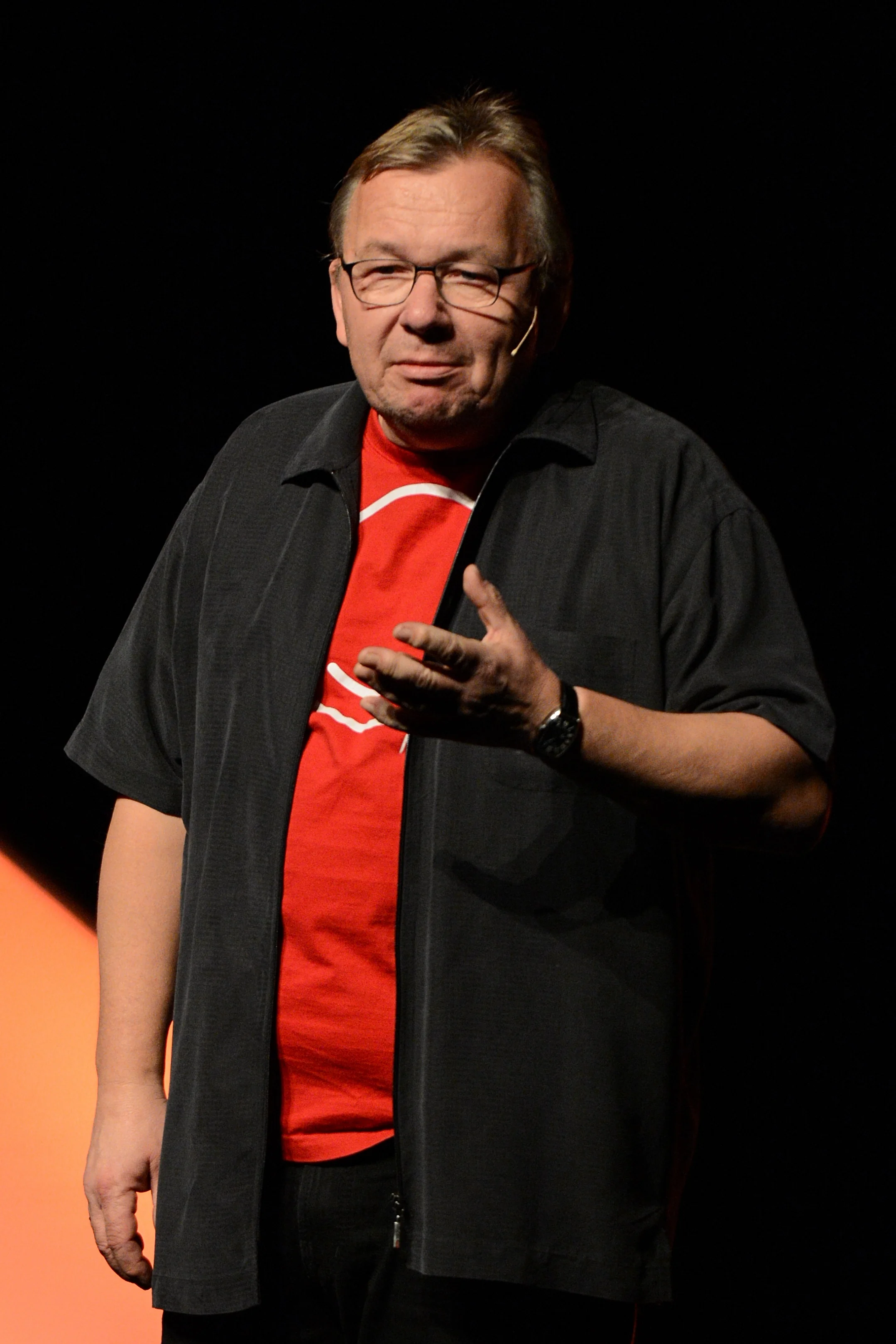
Image from Wikipedia
Image from Wikipedia
Bernd Stelter: The Musical Storyteller Between Carnival, Cabaret, and Kölsche Soul
An Artist Who Blends Humor, Song, and Stage into a Distinctive Signature
Bernd Stelter, born on April 19, 1961, in Unna, is one of the most renowned German stage artists who combines music, comedy, moderation, and narrative stage art in one person. His path has taken him from early releases featuring chansons and political songs, through television presence and carnival, to establishing himself as a singer-songwriter, author, and live performer. It is this mixture of pointed observation, musical timing, and audience-friendly storytelling that has made him a staple in German-speaking entertainment for decades. (de.wikipedia.org)
Biographical Beginnings: Studies, Voice, and First Artistic Paths
Stelter initially studied economics in Bonn before his artistic focus increasingly shifted to stage, language, and music. As early as the beginning of the 1980s, he released LPs, including Das darf uns doch nicht egal sein and Schaut Euch ins Gesicht, which, according to Wikipedia, included both humorous chansons and critical political songs. This early phase showcases an artist who never viewed entertainment divorced from meaningful expression, but rather utilized the song as a narrative and commentary format. (de.wikipedia.org)
As a radio moderator and station voice, Stelter gained valuable experience in working with voice, rhythm, and direct address. His time at WDR 4, RPR, and Antenne Bayern sharpened his sense of timing and tone, precisely those qualities that would later define his live performances. The transition from radio voice to stage figure was not abrupt but organic: the announcement role transformed into a distinctive storyteller with high recognizability. (de.wikipedia.org)
The Breakthrough on Television and the Stage as Main Arena
Stelter made his first television appearance in 1990 as a contestant on Glücksrad, but his nationwide breakthrough came primarily from the RTL show 7 Tage, 7 Köpfe, where he was a regular cast member. This presence made him known to a wide audience and established him as a humorist with a keen sense for everyday comedy, friction, and television presence. Later, he returned to the show starting in 2022, underscoring the longevity of his popularity. (de.wikipedia.org)
Alongside television, Stelter built an extensive stage career that took him nationwide with programs like Geschichten aus der Vorstadt, Papa ist ’ne Knackwurst, Pubertät ist mehr als Pickel, Mundwinkel hoch, or Wer heiratet, teilt sich die Sorgen, die er vorher nicht hatte. His website describes him as someone who “builds a bridge” to the audience through humor and music; this precisely captures the essence of his performance style. His shows combine comedy, song, storytelling, and a stage language that is simultaneously cozy, precise, and punchline-savvy. (berndstelter.de)
Carnival, Kölsche Songs, and Musical Identity
Since 1988, Bernd Stelter has been active in the Cologne Carnival, where he became popular with the character of the “advertising professional.” In this environment, his art unfolds a particularly strong regional resonance: carnival demands directness, recognizability, and the harmonious interplay of text, refrain, and atmosphere. Stelter's songs like Ober, Zack ein Helles, Ich hab drei Haare auf der Brust, ich bin ein Bär, or Im nächsten Leben werd’ ich lieber ein Kaninchen firmly anchor him in this tradition. (de.wikipedia.org)
His musical identity thrives on parody, relatability, and a lovingly ironic gaze at German habits. This is not fleeting carnival comedy but a form of songwriting where observation, rhyme, and stage character come together. Pavement Records accordingly describes him as a storyteller and songwriter who brings his guitar to every performance and works with “timing and authenticity.” (pavement.de)
Discography: From Early LPs to Fully Formulated Stage Albums
The discography shows that Stelter can never be reduced to a single role musically. Early on, LPs with political and humorous songs were released, followed by stage programs and albums that transform his texts and characters into cohesive soundscapes and thematic worlds. On the official website, under Media, several album and program releases can be found, including 1/4 Jahrhundert, Mundwinkel hoch!, and Wer Lieder singt, braucht keinen Therapeuten. (de.wikipedia.org)
Particularly revealing is the tracklist of Wer Lieder singt, braucht keinen Therapeuten, which features titles like Liebe geht bekanntlich durch den Magen, Der langsamste Jogger am Rhein, Ich schalt den Fernseher ein, and Ein Leben lang. These pieces showcase a repertoire that oscillates between humor, melancholy, and popular observations of everyday life. Even the song titles reveal a distinct handwriting: accessible in language, rhythmically vivid, and aimed at immediate impact in the hall. (berndstelter.de)
1/4 Jahrhundert also impressively reflects this mixture. Among other songs, it includes Ich hab drei Haare auf der Brust, Köln ist prima, Wahnsinn (Kölle, Kölle, Kölle), and Männer über 50 (Single-Version), all pieces with clear regional ties and high recognizability. Especially these songs have solidified Stelter's position as a popular music cabaret artist and carnival performer over the years. (de.wikipedia.org)
Current Projects and New Releases
In 2024 and 2025, Stelter remained productive as well. His official website features new books, current tour dates, and ongoing news; particularly highlighted is the crime novel Die kalte Hand des Camping-Killers, which is set to be released on August 3. Additionally, the site points to Mode, Mord und Meeresrauschen, a camping-themed crime story set in Zeeland, and other forthcoming releases related to tours, readings, and stage programs. (berndstelter.de)
Stelter is thus continuously developing his artistic profile: from singer-songwriter to cabaret artist to author who works with narrative tension. In an interview with NDR, he himself describes writing and stage presentation as his two central skills. This self-assessment explains why his current projects often switch seamlessly between concert, reading, and satirical storytelling. (berndstelter.de)
Style, Impact, and Critical Reception
The critical reception regularly highlights Stelter's density of gags, his timing, and authenticity. Pavement Records refers to him as a “veteran of comedy” and emphasizes that he reaches the audience with stories, music, and presence. At the same time, the Wikipedia description shows that his programs often contain not only laughter but also quiet, contemplative, and melancholic moments. It is precisely this dramatic balance that makes his live evenings greater than mere variety shows. (pavement.de)
Musically, Stelter moves between chanson, cabaret songs, carnival numbers, and modern entertainment art. His songs rely less on virtuosity in the narrow sense and more on form consciousness, punchlines, and recognizability—qualities that are particularly effective in live contexts. Those who listen to Stelter do not experience a distanced pop aesthetic but an immediately communicative stage figure with clear local ties and national reach. (de.wikipedia.org)
Cultural Influence, Audience Success, and Continuity
Bernd Stelter remains a lasting presence in German entertainment culture because he connects multiple milieus: carnival, television, cabaret, music, and the book market. The official website refers to eight published books, including titles that have appeared on the Spiegel bestseller list, as well as his social commitment to foundations and projects in Bornheim and Cologne. Thus, his profile extends beyond the stage and gains additional cultural credibility. (berndstelter.de)
His characters and songs are closely tied to everyday culture, regional identity, and the comical elevation of German habits. This connection makes him approachable for his audience and interesting for music and cultural history: Stelter documents how entertainment in Germany operates between song, irony, and ritual. His work shows that humor, when musically constructed precisely, can be much more than just applause breaks. (de.wikipedia.org)
Conclusion: Why Bernd Stelter Remains Exciting
Bernd Stelter remains exciting because he does not understand entertainment as a one-way street, but as a vibrant connection of language, music, and immediate encounters. His career ranges from early singer-songwriter to TV entertainer to author with a keen stage instinct, and it is precisely this versatility that gives him a remarkably clear artistic profile. Those who experience Stelter live receive not only humor but also musical precision, regional color, and a long-established stage presence. (de.wikipedia.org)
His performances thrive on pace, observation, warmth, and a precise sense for the audience. Therefore, it is worth experiencing Bernd Stelter on stage: there, his blend of song, cabaret, and storytelling unfolds most convincingly. (pavement.de)
Official Channels of Bernd Stelter:
- Instagram: No official profile found
- Facebook: No official profile found
- YouTube: No official profile found
- Spotify: No official profile found
- TikTok: No official profile found