
Arcis-Vocalisten
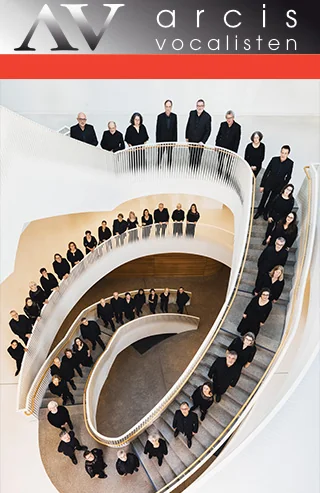
Image from Wikipedia
Image from Wikipedia
Arcis-Vocalisten Munich – Sound Culture Between Baroque, Romanticism, and Rare Discoveries
A Munich Choir with Profile, Precision, and Passion for the Rarely Heard
The Arcis-Vocalisten Munich is one of the distinctive semi-professional choirs in the Bavarian music landscape. Since its founding by Thomas Gropper in 2005, the ensemble has carved out a firm place in the Munich concert scene through its sound quality, flexible lineup, and distinctive programming. Depending on the work, the project choir comprises around 30 to 100 singers, many of whom have solo vocal training. ([arcis-vocalisten.de](https://arcis-vocalisten.de/arcis-vocalisten/))
Biographical Roots and Artistic Self-Understanding
The history of the Arcis-Vocalisten is closely tied to the name Thomas Gropper, who has led the choir since 2005. Gropper is a baritone and professor of singing, vocal science, and vocal pedagogy at the University of Music and Theatre Munich; his experience as a singer and educator significantly shapes the artistic signature of the ensemble. This connection between practice and teaching creates a choir that does not merely reproduce but consciously penetrates and stylistically shapes musical works. ([arcis-vocalisten.de](https://arcis-vocalisten.de/arcis-vocalisten/))
From an early stage, the ensemble distinguished itself with a repertoire that spans from the Early Baroque to the Modern era. Particularly noteworthy is the engagement with rarely performed works and staged forms, such as in Purcell's Dido and Aeneas, Handel's Belshazzar, or Monteverdi's L’Orfeo. In doing so, the Arcis-Vocalisten established themselves not only as a concert choir but also as an ensemble with a sense for music theatre, dramaturgy, and historical performance practice. ([arcis-vocalisten.de](https://arcis-vocalisten.de/arcis-vocalisten/))
Career Path: From Munich to Significant Concert Halls
The ensemble is based in Munich, but has long been active beyond the city limits. The choir regularly performs at the Herkulessaal of the Residenz, in the Brunnenhof of the Residenz, and at the Prinzregententheater; it has also guest performed at the European Weeks in Passau, at the Music Summer between Salzach and Inn, at the Bad Hersfeld Festival, in Rouen, Lindau, Rothenburg ob der Tauber, and at the Marienroder Abbey concerts. This continuity demonstrates a musical career grounded in reliability, repertoire depth, and a clear live presence. ([arcis-vocalisten.de](https://arcis-vocalisten.de/arcis-vocalisten/))
An additional important venue is the KKL Lucerne, where the Arcis-Vocalisten have performed multiple times, including with programs like Die schönsten Opernchöre, Christmas in Lucerne, and Verdi's Messa da Requiem. Such engagements highlight the choir's reach: it operates not merely as a local insider tip but as an ensemble with an internationally relevant profile. It is precisely in the combination of acoustically challenging venues, stylistically clean choral arrangements, and dramaturgically astute programming that the core of their stage presence lies. ([arcis-vocalisten.de](https://arcis-vocalisten.de/arcis-vocalisten/))
Musical Orientation: Historically Informed, Dramatically Considered
The artistic center of the Arcis-Vocalisten lies in historically informed performance practice. The choir focuses on concert and oratorio repertoire, not relying on museal reconstruction but rather on vibrant, expressive interpretation. The emphasis on Early Baroque, Baroque, and Romanticism is sharpened by a targeted view of rarely performed works, which secures the ensemble a distinct place between tradition and rediscovery. ([arcis-vocalisten.de](https://arcis-vocalisten.de/arcis-vocalisten/))
Particularly important is the handling of large forms such as Bach cantatas, passions, and oratorios. Among the traditional focal points are the Christmas Oratorio during the Advent season and the St. Matthew Passion on Good Friday, both at the Herkulessaal in Munich. This anchoring in the liturgically shaped concert culture gives the choir a strong identity and simultaneously demonstrates how consistently it connects musical form, theological depth, and sonic transparency. ([arcis-vocalisten.de](https://arcis-vocalisten.de/wp-content/uploads/2025/12/Pressetext-Dezember-2025.pdf))
Discography: Recordings with Documentary and Musical Weight
The discography of the Arcis-Vocalisten is closely associated with BR-KLASSIK and OehmsClassics. In 2011 and 2012, Bach cantatas were released, followed by Carl Heinrich Graun's Der Tod Jesu and the Weihnachtsoratorium. These releases exemplify the choral precision work of the ensemble: careful balance, textually clear articulation, and a historically sensitive sound image oriented towards Baroque rhetoric. ([de.wikipedia.org](https://de.wikipedia.org/wiki/Arcis-Vocalisten))
In 2019, special attention was given to the oratorio Das Sühnopfer des neuen Bundes by Carl Loewe. The recording received positive press feedback, including mentions in the Frankfurter Allgemeine Zeitung, the Süddeutsche Zeitung, and Fono Forum, and was nominated for the Opus Klassik as well as for the best list of the German Record Critics' Award. This resonance made it clear that the Arcis-Vocalisten not only interpret music but also bring musical repertoires back into cultural-historical discussion. ([de.wikipedia.org](https://de.wikipedia.org/wiki/Arcis-Vocalisten))
With Jan Hus, another Loewe oratorio followed in 2023, before Hiob was released in 2025, a recording of a work that has long been considered lost in the professional world and was only made accessible again through musicological reconstruction. This release also received international recognition and was nominated for the German Record Critics' Award as well as for the International Classical Music Awards 2026. The discography of the Arcis-Vocalisten therefore documents not only repertoire maintenance but also true pioneering work. ([de.wikipedia.org](https://de.wikipedia.org/wiki/Arcis-Vocalisten))
Critical Reception and Cultural Influence
The artistic authority of the choir stems from the connection between stylistic care and programmatic curiosity. Reviews and nominations indicate that the recordings are not only recognized in the church music environment but are also taken seriously in the music press and by expert juries. The ensemble has established a reputation as a discovery choir that lends new relevance to forgotten or rarely performed works. ([de.wikipedia.org](https://de.wikipedia.org/wiki/Arcis-Vocalisten))
Culturally, the choir acts particularly in Munich and the southern German area as a reliable institution for large oratorios, staged projects, and sacred music. At the same time, collaborations with Bayerischer Rundfunk, OehmsClassics, and organizers like Bell’Arte open up to an audience that does not just consume choral art but experiences it as part of a vibrant concert culture. It is this mix of local strength and regional radiance that makes the Arcis-Vocalisten exciting. ([arcis-vocalisten.de](https://arcis-vocalisten.de/arcis-vocalisten/))
Current Projects and Artistic Present
The present of the choir remains programmatically rich. The website announces concerts for 2026 featuring works by Schütz, Bach, the Mendelssohns, as well as a program with Orff's Carmina Burana and Ravel's Boléro. This diversity shows that the Arcis-Vocalisten combine their historical competence with an open concert dramaturgy, taking their audience along between spiritual tradition and symphonic brilliance. ([arcis-vocalisten.de](https://arcis-vocalisten.de/?utm_source=openai))
The recent Loewe series also remains an important part of their current identity. Hiob not only closes a repertoire arc but also expands the choir's profile as an ensemble for excavations with music-historical significance. Thus, the image of a choir that defines its music career not by effects but by content, concentration, and consistent maintenance of sophisticated vocal music emerges. ([de.wikipedia.org](https://de.wikipedia.org/wiki/Arcis-Vocalisten))
Conclusion: A Choir That Convincingly Combines Discovery and Tradition
The Arcis-Vocalisten Munich combine historical depth, sound discipline, and repertoire curiosity into a profile that stands out in German-speaking choral singing. Those who experience the choir hear not only precisely interpreted music but also a clear artistic stance: tradition is taken seriously, rare repertoire is illuminated, and each performance follows a strong musical idea. It is precisely in this lies the excitement of this ensemble. ([arcis-vocalisten.de](https://arcis-vocalisten.de/arcis-vocalisten/))
For music lovers who appreciate choral work as an art form, the Arcis-Vocalisten are a substantial recommendation. Their concerts demonstrate how vibrant oratorios, passions, and staged vocal works can sound today when experience, expertise, and interpretive courage come together. Anyone who wants to experience choral excellence live should hear this ensemble in concert. ([arcis-vocalisten.de](https://arcis-vocalisten.de/arcis-vocalisten/))
Official Channels of Arcis-Vocalisten:
- Instagram: No official profile found
- Facebook: No official profile found
- YouTube: No official profile found
- Spotify: No official profile found
- TikTok: No official profile found